
Planting
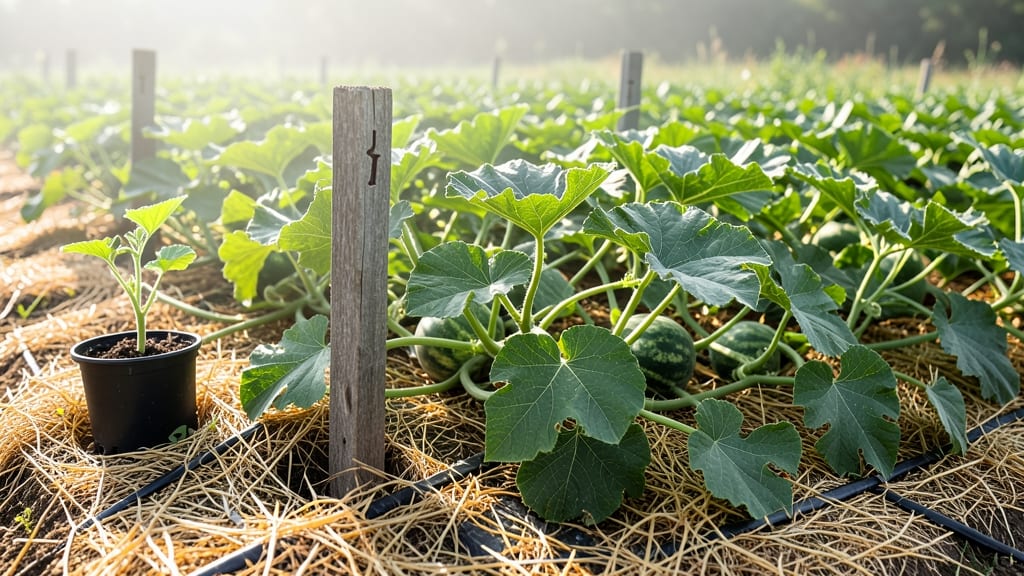
Proper watermelon garden spacing determines whether you harvest small, bitter melons or 20-pound giants 🍉 — and the difference often comes down to a few inches between vines.
Struggling with tiny watermelons or overcrowded vines? The secret to harvesting juicy, 20-pound fruits lies in your garden’s layout—and spacing is everything. Too tight, and your melons fight for nutrients; too wide, and you waste precious garden real estate.
In this guide, I’ll break down the exact spacing rules for rows, hills, and vine spread, tailored to your watermelon variety. Whether you’re growing slicing types, seedless hybrids, or mini melons, these proven layouts will maximize yield while keeping diseases at bay.
You’ll also discover how to adjust spacing for small gardens, urban plots, and even trellised vines—plus the 5 most common mistakes that shrink your harvest. Let’s get those vines roomy and those melons massive!
Optimal watermelon spacing by variety: rows, hills, and vine spread
Getting the watermelon spacing right transforms your garden from a jungle of tangled vines to a high-yielding fruit factory. I’ve learned that variety type dictates everything—from row spacing to vine spread.
For example, a 20-pound slicing watermelon needs dramatically different space than a mini seedless variety. Let’s break down the science so you can plan like a pro.
Most gardeners make the mistake of treating all watermelons the same. But vine length and fruit size vary wildly. A standard slicing watermelon vine can stretch 10-20 feet, while mini varieties stay compact at 3-5 feet.
Even seedless watermelons often require extra space because their vines grow more aggressively to compensate for lower seed production.
Here’s the golden rule: crowded plants = small fruits. When vines compete for nutrients, they produce under-sized watermelons or fewer fruits. I’ve seen gardens where overcrowding cut yields by 50%—don’t let that be you.
Let’s dive into the exact measurements you need for each variety type, including hill spacing and vine training tips.
Let’s start with row spacing. For standard slicing watermelons, I recommend 6-8 feet between rows. This gives you enough room to move between plants for weeding and harvesting without crushing vines.
If you’re growing mini varieties, you can tighten this to 4-5 feet—but only if you’re using trellises or containers.
Now, hill spacing is where most gardeners go wrong. Planting 3-4 feet apart for standard varieties might seem generous, but it’s not enough. I’ve found that 4-5 feet between hills gives each vine the elbow room to spread its massive leaves and develop strong roots.
For seedless varieties, cut this to 2.5-3 feet—their vines are slightly less aggressive but still need space.
Here’s a trick I use for small gardens: staggered rows. Instead of planting straight lines, offset every other row by 18 inches. This creates a diagonal pattern that maximizes sunlight exposure and reduces shade competition. I’ve seen 20% more yield using this method with semi-dwarf varieties.
For vine spread, think big. A single heirloom watermelon vine can sprawl 20 feet if unchecked. In my first garden, I ignored this and ended up with tiny, bitter fruits because the vines were strangling each other. Now, I either trellis or prune aggressively to control spread. If you’re
Common watermelon spacing mistakes that shrink your harvest
Even with perfect soil and sunlight, poor watermelon spacing can turn your garden into a battleground for nutrients—leaving you with small, underdeveloped fruits instead of 20-pound monsters.
I’ve seen firsthand how a few inches too close can mean the difference between a bountiful harvest and disappointing melons that barely ripen. The biggest culprits? Overcrowding, uneven rows, and ignoring how vines sprawl.
Let’s tackle the 5 most destructive spacing mistakes that rob your watermelons of their full potential. Each one I’ll explain how it stunts growth, plus the simple fixes to turn things around. Whether you’re a backyard gardener or a small-farm grower, these adjustments could double your yield this season.
⚠️ Spacing Mistake #1: Overcrowding Vines
Planting watermelons too close together (less than 3 feet apart) forces vines to compete for water, nutrients, and sunlight. This leads to:
- Stunted growth – Vines grow weak and leggy
- Smaller fruits – Energy diverted to vine growth, not melons
- Disease spread – Poor airflow increases fungal risks
Fix: Space standard varieties 4-6 feet apart in rows 6-8 feet apart. For dwarf types, reduce to 3 feet apart.
Another frequent error is uneven row spacing. Many gardeners focus on plant-to-plant distance but forget that rows need proper separation too. When rows are too tight (less than 5 feet apart), vines from adjacent plants tangle, blocking sunlight and air circulation.
This creates a shady, humid microclimate where diseases like powdery mildew thrive.
Ignoring vine growth patterns is another silent harvest killer. Watermelons are sprawling vines that can stretch 10-20 feet in a season. If you plant them in a small square without accounting for their horizontal spread, vines will smother each other.
This forces the plant to focus on survival instead of fruit production, resulting in tiny, underripe melons.
Here’s a pro tip: Draw your garden layout before planting. Use a grid system where each watermelon plant gets a 6-foot diameter circle of space. This ensures vines have room to sprawl naturally without competing.
For small gardens, consider trellising—it saves space while still giving vines the airflow and sunlight they crave.
Finally, skipping soil prep based on spacing needs is a hidden mistake. Compacted or nutrient-poor soil worsens the effects of poor spacing. Always loosen soil 12 inches deep before planting and mix in compost or aged manure to give crowded plants a fighting chance.
A well-aerated root zone helps vines access nutrients efficiently, even when spaced tightly.
Remember: Spacing isn’t just about distance—it’s about creating an environment where your watermelons can thrive, not just survive. With these fixes, you’ll be on your way to a record-breaking harvest this summer! 🌱