
Picking
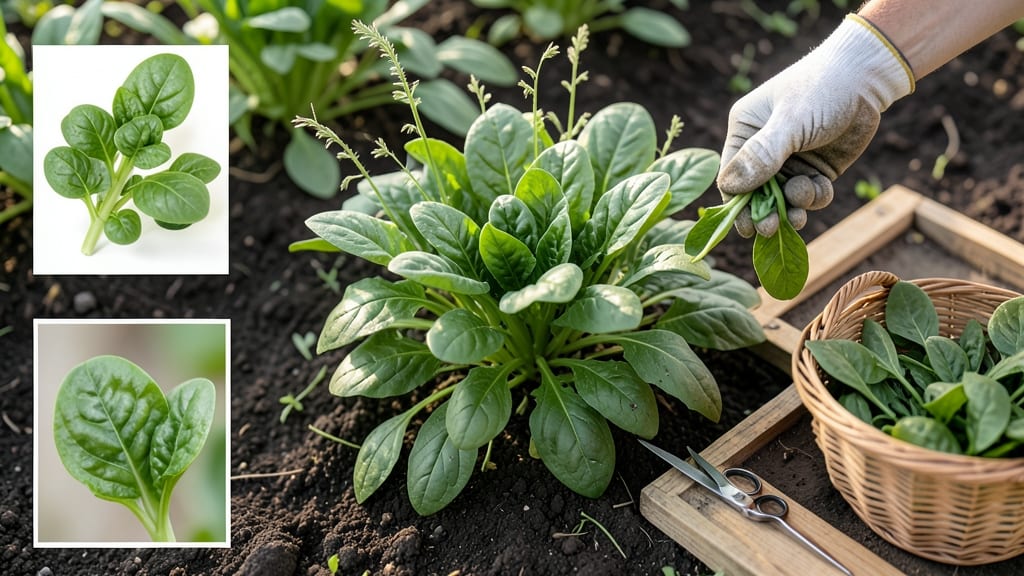
To pick spinach from garden at the perfect time means harvesting when leaves hit 4-6 inches—any earlier and you’re missing flavor, any later and the plant bolts before you can enjoy it.
Wondering why your spinach keeps bolting before you can enjoy a single leaf? Timing your harvest correctly is the secret to a bountiful, long-lasting crop—without sacrificing future growth. The key is leaf-by-leaf harvesting, where you snip the outer leaves first while leaving the inner ones to keep producing.
Spring spinach in Zone 6a thrives when planted in March–April, ready for harvest by May–June, while fall plantings (August–September) yield again in September–October. Miss the window, and you’ll end up with bitter, stringy leaves—or worse, flowers instead of greens.
In this guide, I’ll break down the exact stages to watch for, the tools to use for clean cuts, and how to avoid the three biggest mistakes that turn a promising crop into a sad, bolted mess.


Spinach harvesting stages: when to pick for maximum yield
Timing your spinach harvest correctly is the difference between a bountiful, continuous crop and a bitter, bolting disappointment. Spinach grows in distinct stages—each with its own optimal harvest window—and knowing these stages helps you extend your harvest season while keeping plants productive.
The key lies in recognizing the subtle visual cues that signal readiness, from tiny baby leaves to fully mature foliage.
Most gardeners make the mistake of waiting too long or harvesting too early, both of which reduce yield and quality. Baby spinach leaves (3-4 inches) are tender and perfect for salads, while mature leaves (4-6 inches) offer a heartier texture.
If you miss these windows, your spinach may bolt prematurely, sending up flower stalks and ruining the harvest. Let’s break down each stage so you can pick at peak perfection.
The seedling stage (1-3 inches) is all about growth, not harvest. During this phase, your spinach is establishing roots and leaves, and picking will stunt its development. Focus on keeping the soil moist and weed-free while providing partial shade to prevent stress.
If you’re impatient, you can snip a few outer leaves for microgreens, but avoid overdoing it—this stage is critical for future productivity.
When your spinach reaches the baby leaf stage (3-4 inches), it’s time to start harvesting selectively. These leaves are tender and packed with nutrients, making them perfect for salads or light cooking.
Use clean scissors or pruning shears to snip leaves at the base, leaving the inner leaves intact. This method encourages continuous regrowth and prevents bolting. Harvest in the morning after dew dries for the freshest flavor and crispest texture.
For the best flavor and texture, aim to harvest spinach at the mature leaf stage (4-6 inches). At this point, leaves are deep green, firm, and fully developed, offering a balanced flavor that’s ideal for sautéing or blending into smoothies.
The outer leaves are the first to reach maturity, so start there to avoid overcrowding the plant. If you let leaves grow beyond 6 inches, they’ll start to taste bitter and tough, signaling it’s past prime.
One of the biggest mistakes I see in gardens is waiting too long to harvest, which leads to bolting—a spinach grower’s worst nightmare. Bolting occurs when your spinach sends up a flower stalk, causing leaves to turn bitter and stringy.
This usually happens due to heat stress, long daylight hours, or maturity. If you notice yellowing leaves or flower buds, it’s time to harvest what you can and pull the plant to prevent seed spread.
For fall crops, bolting is less likely if you plant varieties like 'Winter Bloomsdale', which tolerate cooler temperatures.
To extend your harvest season, consider planting spinach in successive batches every 2 weeks. This staggered approach ensures you always have fresh, ready-to-harvest leaves while avoiding the overwhelming bolting risk of a single large planting. In spring and fall, spinach thrives in cooler temperatures (50-75
Leaf-by-leaf harvesting technique: how to extend spinach growth
Mastering the leaf-by-leaf harvesting method transforms your spinach from a one-time harvest into a continuous green machine. By focusing on the outer leaves first, you preserve the plant’s energy and encourage new growth—keeping your garden productive for weeks instead of days.
This technique works because spinach grows in a rosette pattern, where older leaves on the outside mature first. When you remove just these, the inner leaves stay tender and keep photosynthesizing, fueling more growth.
The key? Timing and precision—cut too much, and you stress the plant; cut too little, and it bolts.
Step-by-Step Leaf-by-Leaf Harvesting
- 🌱 Step 1: Wait for outer leaves to reach 4-6 inches—they’ll be deep green and firm to the touch.
- ✂️ Step 2: Use sharp scissors or pruning shears to cut leaves at the base, leaving 1 inch of stem attached.
- 🌿 Step 3: Harvest outer leaves first, working your way inward to avoid damaging younger leaves.
- 💧 Step 4: Water immediately after harvesting to replenish moisture lost during cutting.
- 🌡️ Step 5: Avoid harvesting in hot afternoons—morning or evening cuts reduce stress on the plant.
Your tools matter just as much as your technique. A sharp pair of scissors or pruning shears makes clean cuts that heal faster, while dull blades tear leaves and invite disease.
I like to keep a small pair dedicated to spinach harvesting—it’s worth the investment for healthier plants and longer harvests.
Pro tip: If your spinach starts to bolt (sending up flower stalks), it’s a sign you’ve waited too long. But don’t panic! Cut the entire plant at the base, compost it, and replant.
In Zone 6a, fall plantings often bolt faster due to shorter days, so prioritize harvesting outer leaves every 1-2 weeks to delay this fate.
For baby spinach lovers, you can harvest even smaller leaves—around 2-3 inches—but this method works best for mature leaves. The goal is balance: remove enough to enjoy fresh greens, but leave enough for the plant to keep growing.
With this approach, I’ve extended my spinach harvest by 4-6 weeks compared to cutting the whole plant at once.
Remember, spinach is a cool-season crop, so timing matters. In spring, aim for harvests in May-June, while fall plantings yield again in September-October. By following these steps, you’ll enjoy tender, flavorful spinach straight from your garden—without the heartbreak of bolting.