
Tools
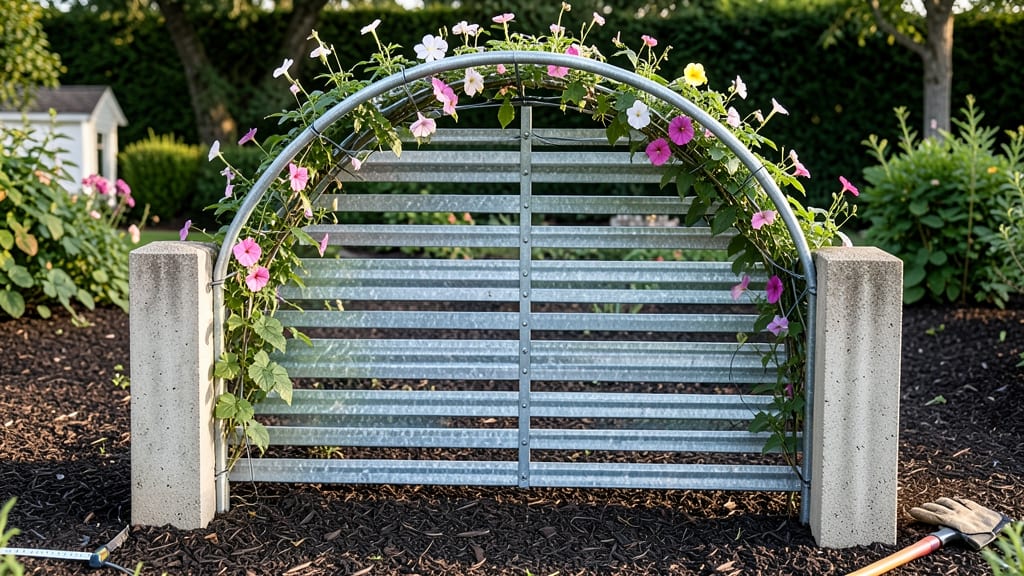
For a garden arch, standard cattle panels come in 48-inch-wide sizes ideal for small to medium designs, while 54-inch-wide panels suit taller or wider arches. Post spacing must match the panel width, and arch height typically ranges from 5 to 6 feet for walkways or 7 to 8 feet for vehicle access.
Choosing the right cattle panel size for your garden arch isn't just about aesthetics—it's about structural integrity. A 48-inch-wide panel creates a sturdy frame for most garden arches, while wider 54-inch panels handle heavier loads like climbing roses or trellis systems.
The width directly impacts how posts are spaced, so always match them precisely to avoid sagging over time. 🌿 I've found that adding 2-3 inches of extra space between panels and posts helps with seasonal expansion, especially in climates with temperature swings.
Height matters too: a 5-foot arch works beautifully for flower beds or seating areas, while 7-foot arches create dramatic walkway entries. Pro tip: measure your arch's intended clearance from the ground up—this determines how many panels you'll need vertically.
For example, a 6-foot-tall arch might require two stacked panels with a support beam in the middle.
💡 In This Article
- How Cattle Panel Size Affects Garden Arch Stability and Design
- Step-by-Step Guide to Measuring and Building a Sturdy Garden Arch
How cattle panel size affects garden arch stability and design
The width of your cattle panel directly determines how much weight your garden arch can safely support. A 48-inch-wide panel is the standard choice for most garden arches because its 4-foot span creates a balanced load distribution between posts.
This width handles typical garden plants like clematis or morning glories without sagging, thanks to its 16-gauge galvanized steel construction—think of it like a sturdy metal backbone that resists bending under the weight of vines or seasonal snow loads.
When you move to 54-inch-wide panels, you're essentially doubling the load-bearing capacity for heavier applications. These wider panels distribute weight more evenly across posts, making them ideal for arches supporting climbing roses (which can weigh 50-100 pounds per vine) or even small trellis systems.
The trade-off? You'll need deeper post holes—typically 2 feet deep for 48-inch panels and 2.5-3 feet deep for 54-inch panels—to maintain stability against wind forces. I've seen arches with 54-inch panels sway in 30 mph winds when posts weren't properly anchored!
Arch height plays a crucial role in both aesthetics and structural engineering. The curvature of your arch creates a natural force called compression that pushes outward at the base. A 5-foot-tall arch uses this compression efficiently, requiring only two panels stacked vertically with a simple horizontal support beam.
But when you reach 7 feet or taller, you'll need to add intermediate support posts every 4-5 feet to prevent the panels from bowing outward over time. This is why professional garden designers often use three-panel arches for heights above 6 feet.
Material choice matters just as much as size. Galvanized steel panels resist rust and last 20-30 years in outdoor conditions, but they can feel cold to the touch in winter. Wood alternatives like cedar offer warmth and natural aesthetics but require annual sealing to prevent rot.
The weight difference is significant too—steel panels weigh about 20-25 pounds each, while cedar panels of the same size can weigh 30-40 pounds, requiring heavier-duty posts and hardware.
Consider this real-world example: A 6-foot-tall arch using 48-inch-wide panels with 4-inch diameter posts spaced 4 feet apart creates a beautiful walkway entrance.
The posts should extend 6 inches above the top panel to secure the arch shape, while the bottom should be buried 12 inches deep in concrete for maximum stability. This design handles up to 100 pounds of plant weight while maintaining its shape through seasonal changes.
For wind resistance, the key is the arch's radius. A tighter curve (smaller radius) creates more structural tension, while a wider curve distributes forces more evenly. Most garden arches use a 3-foot radius for the centerline, which gives that classic graceful shape while keeping materials costs reasonable.
The wider your arch, the more critical this radius becomes—think of it like a bridge where the arch shape determines how much weight it can carry before sagging.