
Advice
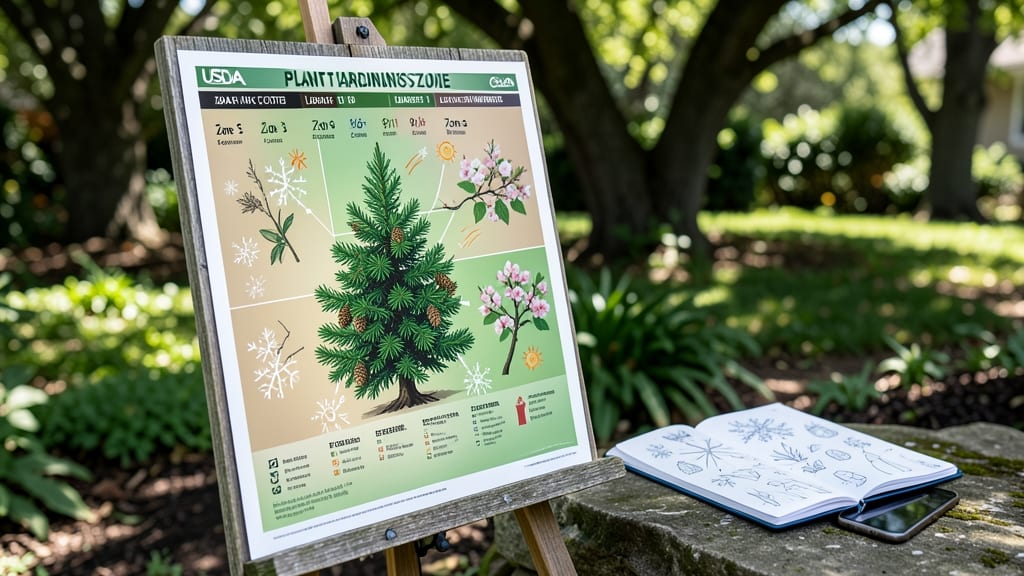
Understanding climate zones in gardening helps you select plants that will grow best in your area by analyzing temperature ranges, frost cycles, and seasonal patterns. Aligning your garden with your USDA zone maximizes plant health and productivity.
These gardening zones aren't just random divisions—they're based on average minimum winter temperatures, which directly impact what plants can survive. 🌱 For example, Zone 3 (below -40°F) supports hardy perennials like coneflowers, while Zone 10 (above 30°F) thrives with tropicals like hibiscus.
The USDA's interactive map makes finding your exact zone simple by entering your ZIP code, and many nurseries now display zone compatibility labels on plant tags.
What's fascinating is how these zones influence even microclimates within a single yard—south-facing walls can create Zone 5 conditions in a Zone 4 yard. This is why gardeners in transitional zones (like 6b/7a) often experiment with cold-hardy varieties of heat-loving plants, creating unique hybrid growing conditions.
💡 In This Article
- Understanding USDA Plant Hardiness Zones
- Best Plants for Each Major Gardening Climate Zone
Understanding USDA plant hardiness zones
The USDA Plant Hardiness Zone Map divides North America into 13 zones based on the average annual minimum winter temperature—the coldest temperature expected to occur in any given year. Each zone spans a 10°F range, with subzones (a and b) adding 5°F precision.
For example, Zone 5a ranges from -20°F to -15°F, while Zone 5b spans -15°F to -10°F. These temperature thresholds determine which plants can survive winter dormancy in your area, as most perennials and woody plants have specific cold tolerance limits.
Frost dates are equally critical because they signal when plants can safely emerge in spring and when they must harden off in fall. The map accounts for first and last frost averages, which vary by 1-3 weeks between adjacent zones.
For instance, Zone 6 (hardy to -10°F) typically has a 14-day longer growing season than Zone 5. This explains why peonies thrive in Zone 4 (-30°F to -20°F) but may struggle in Zone 8 (10°F to 20°F) due to insufficient winter chill requirements.
Finding your zone is simpler than you’d think. The USDA’s interactive tool lets you input your ZIP code or address to pinpoint your exact zone in seconds. Many smartphone apps (like Gardenate) also provide zone data alongside moon phase and frost alerts.
However, don’t rely solely on your postal code—microclimates created by hills, bodies of water, or urban heat islands can shift your effective zone by 1-2 levels. A south-facing slope in Zone 5 might mimic Zone 6 conditions, while a low-lying area could behave like Zone 4.
What’s often overlooked is how heat zones complement cold zones. The USDA’s companion Heat Zone Map categorizes areas by the number of days above 86°F, which affects tropical plants like bougainvillea (Zone 10+) or okra (Zones 5-11).
Pairing these maps reveals why a Zone 7 garden in Arizona might grow citrus trees while a Zone 7 garden in Michigan cannot—it’s not just about cold tolerance, but also about cumulative heat exposure.
For gardeners in transition zones (like 6b/7a), the challenge lies in selecting plants that bridge temperature extremes. Cold-hardy varieties of heat-loving plants (such as ‘Cold Hardy’ Geraniums or ‘Northern Spy’ Apples) push these boundaries.
These hybrids often come with detailed tags noting their chill hour requirements—the number of hours below 45°F needed to trigger flowering, a critical factor for fruit trees.
Here’s a pro tip: If you’re planting near a structure, account for the “wall effect”—south-facing walls can add 5-10°F of warmth. Conversely, north-facing areas may experience 2-3°F colder microclimates.
Always test your garden’s conditions for at least 3 years before committing to high-value plants like roses or grapes, which demand precise zone alignment.