
Tools
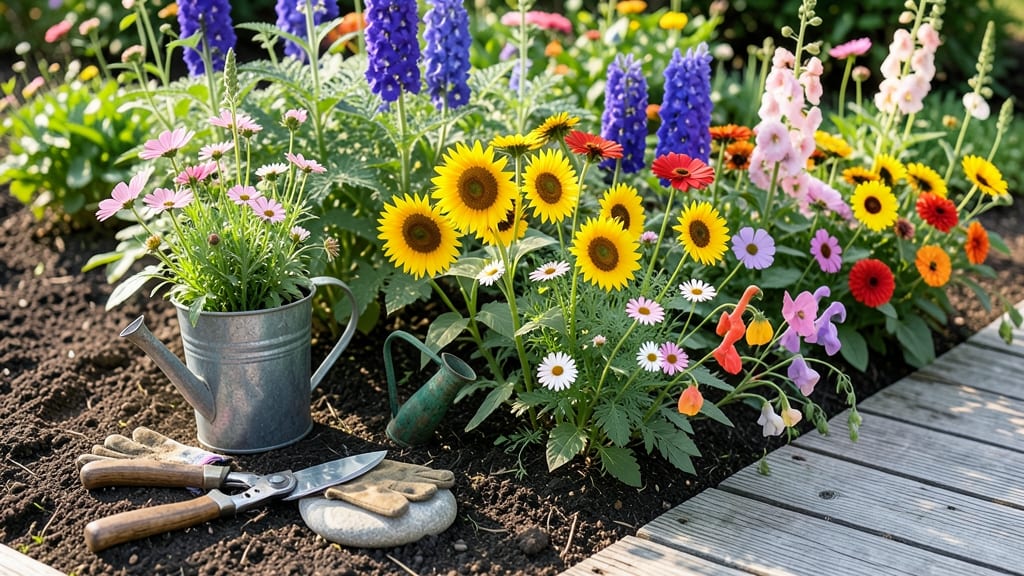
Creating a cutting garden means focusing on dramatic, long-stemmed blooms like zinnias, dahlias, and snapdragons arranged in layered beds for nonstop harvests. Maximize your garden's potential by ensuring full sun exposure, proper drainage, and strategic planting sequences to maintain vibrant flowers from spring until frost. Add structural plants like ornamental grasses to create visual interest and height variety.
A cutting garden isn't just about pretty flowers—it's a strategic design that prioritizes harvestable blooms with long stems and exceptional vase life. 🌸 The key is selecting plants that thrive in your climate while offering continuous color through seasonal transitions.
For example, early-season bloomers like cosmos can give way to late-season dahlias, ensuring you always have fresh cuttings. I've found that mixing annuals (like sunflowers) with perennials (such as black-eyed Susans) creates a self-sustaining system that reduces replanting work year after year.
This approach also works beautifully with companion planting. Pairing fragrant herbs like lavender with your flowers not only repels pests but adds another layer of sensory appeal. The layered bed technique isn't just aesthetic—it creates natural pathways for airflow, reducing disease risks while making harvesting easier.
When planning your layout, consider adding trellises for climbing varieties like clematis, which can dramatically increase your vertical growing space and harvest potential.
💡 In This Article
- Best Flower Types for Cutting Gardens
- Designing a High-Yield Cutting Garden Layout
Best flower types for cutting gardens
The most prized cutting garden flowers share three key traits: long, sturdy stems (typically 18-36 inches), exceptional vase life (often 7-14 days or longer), and vibrant color retention.
Zinnias, for example, produce stems that can reach 3 feet with minimal support, while dahlias offer 20-inch stems that hold their shape beautifully. 🌺 The secret lies in their thick, woody stems—zinnias develop stems with a 1/4-inch diameter, while snapdragons have hollow stems that stay crisp when cut properly at a 45-degree angle.
Annuals like sunflowers and cosmos dominate cutting gardens because they deliver immediate, abundant blooms, but perennials like peonies and hollyhocks offer multi-year rewards. Peonies, in particular, produce 2-3 inch blossoms on 2-foot stems that last 10-14 days in arrangements—a longer vase life than many annuals.
Self-seeding varieties like sweet alyssum create natural succession, while non-seeding types (like most dahlias) require strategic replanting. Companion planting amplifies this effect: marigolds repel nematodes that attack roses, while basil near tomatoes improves both growth and flavor.
Color diversity matters too—deep purples like salvia 'May Night' contrast stunningly with bright yellows from black-eyed Susans. The science behind this is simple: complementary colors create visual impact in arrangements. 🌈 For instance, pairing blue delphiniums with orange calendula creates instant high-contrast bouquets.
Most cutting flowers also contain natural preservatives: roses have 2-3% sugar content in their stems, while chrysanthemums produce a waxy coating that slows water loss—both factors extend vase life significantly.
Seasonal timing is critical for continuous harvests. Early bloomers like pansies (March-April) give way to mid-season favorites like zinnias (June-August), while late-season asters (September-October) bridge the gap before frost.
The key is staggered planting: sow cosmos every 3 weeks from spring to early summer for overlapping blooms. This creates what gardeners call "succession planting," ensuring you never have a harvest lull.
Don't overlook foliage plants—they add texture and height contrast that elevates arrangements. Ornamental grasses like fountain grass (3-4 feet tall) provide vertical interest, while silver-leafed plants like dusty miller add reflective surfaces.
The foliage-to-flower ratio should be 1:3 in arrangements: for every 3 stems of blooms, include 1 stem of foliage to create balance. This principle comes from traditional floral design where foliage serves as the "structure" that holds bouquets together.
One advanced technique is "deadheading" spent blooms—removing faded flowers encourages more production. For zinnias, this means pinching off blooms when they're half-open to redirect energy to new growth. The result?
A single zinnia plant can produce 10-15 stems over its growing season instead of just 3-5 if left unpruned. 🌿 This simple practice can triple your harvest volume with minimal effort.