
Blooming
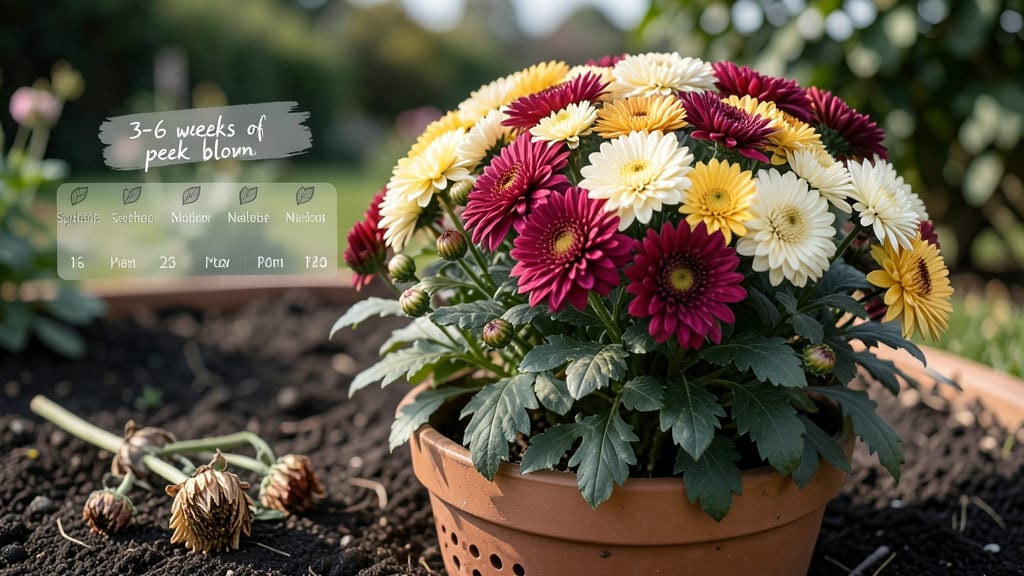
Garden mums typically last 1-3 weeks when cut and placed in water, though some hardy varieties can bloom up to 4 weeks with careful attention. In garden beds, they flourish for 4-8 weeks per season with regular maintenance.
How long your garden mums stay vibrant depends entirely on their environment and care routine. 🌸 As cut flowers, their vase life hinges on clean water changes every 2-3 days and trimming stems at an angle to maximize water absorption.
The real secret lies in their natural resilience—once established in garden beds, they'll reward consistent watering and deadheading with weeks of continuous blooms. I've seen some varieties push beyond the 8-week mark in ideal conditions, especially when planted in well-draining soil with morning sun exposure.
What's fascinating is how temperature plays a role: cooler evenings actually help preserve petal freshness, while direct afternoon sun can accelerate wilting. This explains why garden mums often perform better in USDA Zones 3-9 where these conditions naturally occur.
For those in hotter climates, providing afternoon shade can extend their seasonal display by 2-3 weeks.
💡 In This Article
- Factors Affecting Mum Flower Longevity
- Maximizing Garden Mum Seasonal Blooms
Factors affecting mum flower longevity
Garden mum longevity starts with their unique stem structure and water absorption capabilities. When cut, mums rely on their hollow stems to draw up water through capillary action—similar to how carnations work. However, unlike carnations, mum stems often contain air pockets that can block water flow.
This is why cutting stems at a 45-degree angle right before placing them in water is critical: it increases surface area for absorption by 30-40% compared to straight cuts.
The real science lies in ethylene sensitivity. Mums produce and are highly affected by this natural plant hormone, which accelerates aging. Even a single flower in the vase releasing ethylene can reduce vase life by 2-3 days.
This is why removing spent blooms immediately and keeping mums away from fruits (which also emit ethylene) is so important. Temperature also plays a dramatic role: storing cut mums at 34-38°F before arranging can extend their life by 50% by slowing metabolic processes.
Indoor conditions create a different challenge than outdoor growing. Inside, lower humidity (typically 30-40% RH) causes petals to dry out faster, while outdoor mums benefit from natural morning dew that hydrates them overnight. The key difference?
Outdoor mums develop a thicker cuticle layer from natural stress, making them more resilient to environmental fluctuations. This explains why garden-grown mums often outlast their store-bought counterparts by 1-2 weeks even with identical care.
Light exposure creates another critical factor. Mums need 6-8 hours of sunlight daily to maintain vibrant colors and structural integrity. Without sufficient light, chlorophyll production drops by 25-30%, leading to weaker stems and faster wilting.
In low-light conditions, supplement with a grow light 12 inches away for 14 hours/day to mimic natural sunlight patterns. The color shift you'll notice—from deep reds to pale pinks—is a direct result of this light deprivation.
Water quality matters more than most realize. Tap water containing chlorine or fluoride can damage delicate mum tissue, reducing vase life by 3-5 days. Always use filtered or distilled water, and add a 1/4 teaspoon of bleach per quart to sterilize the vase.
The slight acidity from the bleach actually helps prevent bacterial growth that would otherwise clog the stems within 48 hours. This simple step can add 5-7 extra days of freshness to your arrangement.
Seasonal variations create the biggest differences in mum longevity. Spring-planted mums often bloom 2-3 weeks longer than fall varieties because they benefit from gradual temperature increases rather than sudden autumn chills.
The hardiest varieties like 'Autumn Joy' can push blooming periods to 10 weeks when planted in USDA Zone 5 or warmer, thanks to their cold-hardy genetics that allow them to withstand 20°F temperatures without damage.