
Planting
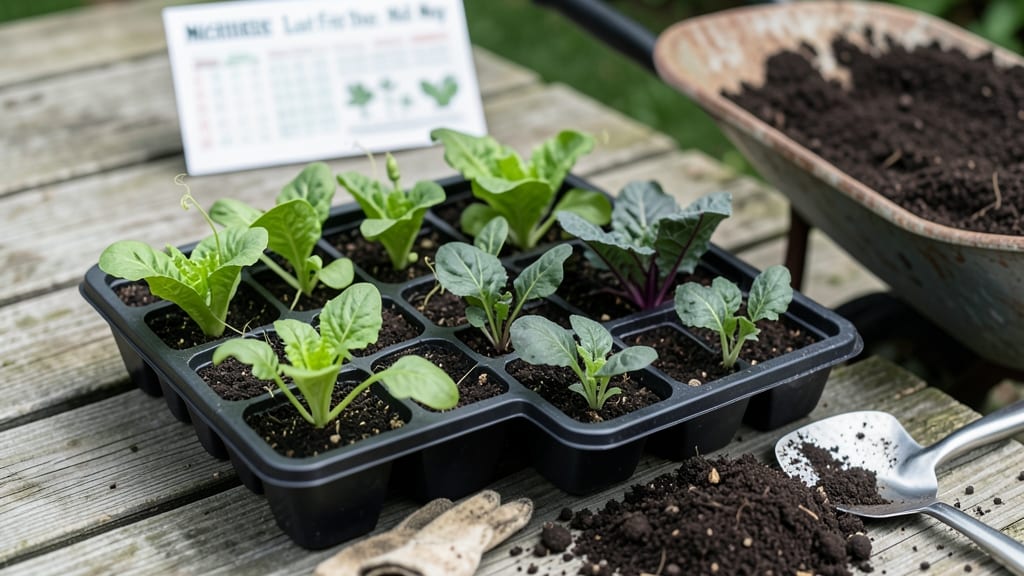
Planting a garden in Michigan means timing your seeds and seedlings to survive between late April and early October, a narrow window that demands precision.
Michigan’s unpredictable frost dates can turn a thriving garden into a frozen disappointment—or transform your harvest into a bountiful success. Timing your planting right means the difference between wilting seedlings and flourishing plants, but Michigan’s varied climate zones complicate things.
From the Upper Peninsula’s colder 5b zone to the 6b warmth of southern Michigan, frost-free dates shift by weeks.
Cool-season crops like lettuce and peas thrive when planted 4-6 weeks before the last frost, while tomatoes and peppers need the soil to warm up after mid-May—or risk stunted growth.
In this guide, I’ll break down Michigan’s planting zones, share frost-date tools, and give you a crop-by-crop schedule so you can maximize your harvest before the first frost hits in October.
Michigan’s planting zones explained: when to start seeds indoors vs. direct sowing outdoors
Michigan spans USDA Plant Hardiness Zones 5b, 6a, and 6b, which means frost dates and planting windows vary dramatically between the Upper Peninsula and southern regions.
In Zone 5b (northern Michigan), the last spring frost typically arrives around May 15, while Zone 6a/6b (southern Michigan) sees frost-free conditions by April 20-May 1. These differences dictate whether you’ll need to start seeds indoors or sow directly outside.
For warm-season crops like tomatoes, peppers, and basil, Michigan gardeners must begin seeds indoors 6-8 weeks before the last frost—often in early March for southern zones and late March for northern areas. Cool-season crops such as lettuce, spinach, and peas, however, can often be sown directly outdoors 4-6 weeks before the last frost, sometimes as early as mid-March in Zone 6b.
Here’s a quick reference for Michigan’s planting zones and frost-free dates:
In Zone 5b, where frost lingers longer, I recommend starting tomatoes and peppers indoors in early March to ensure they’re ready for transplanting after the last frost. For Zone 6a and 6b, you can begin seeds slightly earlier, sometimes as early as late February for heat-loving plants.
Always use grow lights if your indoor space lacks sufficient light.
Direct sowing outdoors is ideal for cold-hardy crops like peas, spinach, and kale. In southern Michigan (Zone 6b), you can even start planting these as early as late March, while northern zones (Zone 5b) should wait until mid-April.
The key is to monitor soil temperatures—most cool-season crops thrive when soil reaches 40-50°F.
For herbs like basil and cilantro, timing is critical. Basil, a warm-season herb, needs to be started indoors in March and transplanted after the last frost. Cilantro, however, is a cool-season herb that can be sown directly outdoors 4-6 weeks before the last frost.
Mixing up these planting strategies ensures a continuous harvest throughout the season.
One common mistake I see is planting warm-season crops too early. If you transplant tomatoes or peppers before the soil warms to 60°F, they’ll struggle to establish roots and may rot. Use a soil thermometer to check temperatures before planting, especially in cooler zones like Zone 5b.
In southern Michigan, you can often plant warm crops by April 25, but northern regions should wait until May 15.
To maximize your garden’s potential, consider succession planting. For example, sow a second crop of lettuce in late June for a fall harvest, or plant bush beans every 2 weeks from May to July.
This technique works especially well in Zone 6b, where the growing season is slightly longer. Always keep track of your planting dates with a simple garden journal to refine your schedule each year.
Finally, don’t forget about fall planting! In Michigan, you can extend the growing season by planting cool-season crops like spinach and radishes in late July or early August. These crops will mature before the first frost, often around October 15 in most zones.
With the right timing and a little planning, you can enjoy fresh produce well into autumn.
Michigan’s varied climate rewards gardeners who adapt their planting strategies to their specific zone. By following these guidelines and paying attention to frost dates, you’ll set your garden up for successful growth and bountiful harvests—no matter where you are in the state. 🌱
Last frost date calculator for Michigan: how to plan around unpredictable weather
Michigan’s frost dates can shift dramatically from year to year, leaving gardeners scrambling to adjust their plans. While the average last frost date for most of Michigan falls between April 15-30, late frosts in May aren’t uncommon—especially in the Upper Peninsula.
To avoid frost damage, I rely on a combination of historical data, local forecasts, and the 3-5-7 week rule for seedling maturity.
First, check your USDA hardiness zone (5b in northern Michigan, 6a-6b in southern regions). These zones help predict when your area typically warms up, but they’re just a starting point.
For example, Detroit’s last frost often arrives by April 15, while Traverse City might not see a consistent thaw until May 10. Always cross-reference with the Michigan State University Extension’s frost date maps for real-time updates.
- Step 1: Find your last frost date using local weather records or tools like the National Weather Service. For southern Michigan, this is often April 15-30; for northern areas, it can be May 10-20.
- Step 2: Use the 3-5-7 week rule: Subtract 3 weeks for fast-growing crops (like radishes), 5 weeks for medium-maturing plants (e.g., tomatoes), or 7 weeks for slow growers (e.g., peppers) from your last frost date.
- Step 3: Adjust for early vs. late varieties. Early varieties (like bush beans) can handle cooler soil, while late varieties (e.g., bell peppers) need warmer conditions—wait until soil temps hit 60°F.
- Step 4: Monitor weekly forecasts in late April/May. If a frost warning appears, cover tender plants with frost blankets or move potted plants indoors.
- Step 5: Plan for fall planting too! Count backward from your first frost date (typically October 10-20) to determine when to sow cool-season crops like kale or spinach.
For warm-season crops like tomatoes and peppers, I always start seeds indoors 6-8 weeks before the last frost. This gives seedlings a head start and ensures they’re robust enough to handle transplanting.
For cool-season crops such as lettuce or peas, I plant directly outdoors 4-6 weeks before the last frost—these hardy plants can handle lighter frosts.
Pro tip: Use row covers or cold frames to extend your planting window by 2-3 weeks in early spring or late fall. These tools create microclimates that protect young plants from unexpected frosts. I’ve even used them to grow spinach in March when the ground is still cold!
Don’t forget to account for microclimates in your garden. South-facing slopes warm up faster than shaded areas, while low-lying spots may stay frost-prone longer. If you’re unsure, test your soil temperature with a soil thermometer—most seeds need 50-60°F to germinate.
Finally, keep a gardening journal to track your frost dates and planting success over the years. Michigan’s climate is unpredictable, but with a little planning, you can turn its challenges into a bountiful harvest every season. 🌱