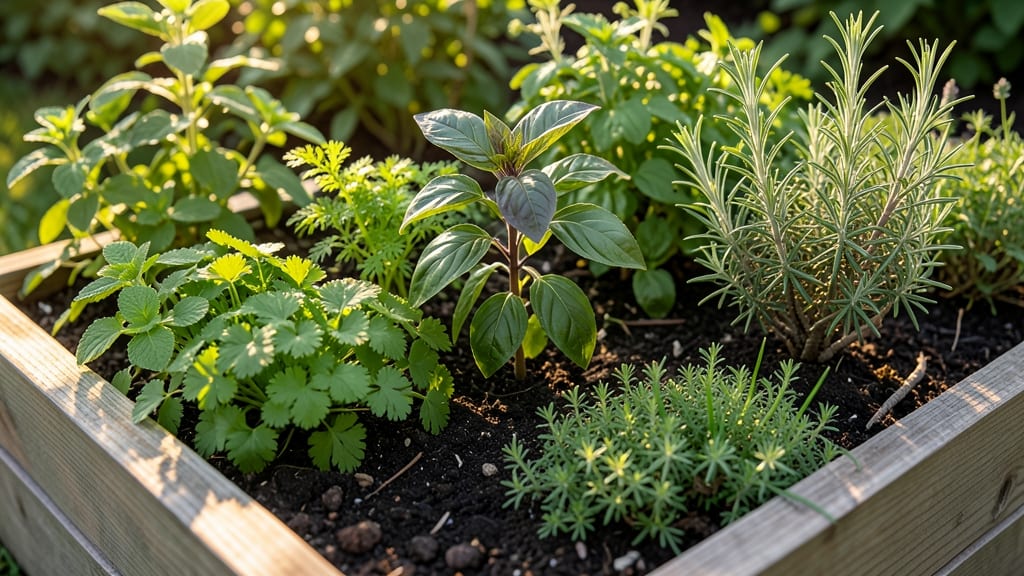
Planting herbs in the garden can turn your green space into a culinary powerhouse in just a few weeks, with flavors ready to harvest by summer.
Picture this: fresh basil for your homemade pesto, mint for summer drinks, and rosemary for roasted potatoes—all growing right outside your kitchen door. The best part? Many of these fast-growing herbs thrive with minimal effort, making them perfect for beginners and busy gardeners alike.
Whether you have a sunny backyard or just a few containers on a balcony, these 15 easy-to-grow herbs will give you a year-round supply of aromatic greens. From sun-loving varieties like thyme and oregano to shade-tolerant options like cilantro, there’s a spot for every herb in your garden.
In this guide, I’ll walk you through the top herbs to plant, their ideal growing conditions, and simple tips to keep them thriving. By the end, you’ll have a fragrant, functional garden that’s as rewarding to grow as it is to use.
🌱
When to Plant Herbs
Jan
❄️
Feb
❄️
Mar
🌱
Apr
🌱
May
🌱
Jun
🌱
Jul
☀️
Aug
☀️
Sep
🍂
Oct
🍂
Nov
🍂
Dec
❄️
15 Fastest-growing herbs for year-round garden harvests
If you're dreaming of a garden that gives back faster than your morning coffee habit, these 15 fastest-growing herbs are your secret weapon. From basil that sprouts in just 5 days to cilantro ready for harvest in 30, these powerhouses deliver flavor and fragrance without the wait.
Whether you're a beginner gardener or a seasoned green thumb, these herbs thrive in containers or garden beds, ensuring you'll always have fresh ingredients at your fingertips.
What makes these herbs stand out? Their rapid growth cycles and adaptability to various climates. Most can be sown directly into the soil or transplanted, and many even regrow after cutting.
Below, I’ve curated the crème de la crème of quick-sprouting herbs, complete with their ideal growing conditions and harvest timelines to help you plan your year-round herb garden like a pro.
Pro Tip: For maximum productivity, pair these herbs with companion plants like marigolds (to deter pests) or nasturtiums (which improve flavor). And don’t forget—regular pruning encourages bushier growth and more abundant harvests. Let’s dive into the specifics so you can start planting with confidence!
| Herb Name |
Sunlight Needs |
Growth Time (Days) |
Harvest Time |
Best Planting Season |
| Basil |
Full Sun (6-8 hrs) |
5-7 |
45-60 |
Spring-Fall |
| Cilantro |
Partial Sun (4-6 hrs) |
3-5 |
30-40 |
Spring-Fall |
| Dill |
Full Sun (6+ hrs) |
7-10 |
50-60 |
Spring-Summer |
| Parsley |
Partial Sun (4-6 hrs) |
10-14 |
60-75 |
Spring-Fall |
| Chives |
Full Sun (6 hrs) |
14-21 |
45-60 |
Spring-Fall |
| Mint |
Partial Sun (4-6 hrs) |
7-10 |
60-75 |
Spring-Summer |
| Thyme |
Full Sun (6+ hrs) |
21-30 |
90-120 |
Spring-Fall |
| Oregano |
Full Sun (6+ hrs) |
21-30 |
90-120 |
Spring-Fall |
| Rosemary |
Full Sun (
How to maximize herb growth: soil, watering, and sunlight secrets
Growing lush, flavorful herbs isn't just about planting seeds—it's about creating the perfect conditions for their growth. The right soil mix, watering schedule, and sunlight exposure can transform your herb garden from sparse to thriving.
Many gardeners overlook these basics, but mastering them ensures your basil, thyme, and cilantro reach their full potential.
Herbs like rosemary and oregano thrive in well-draining soil with a slightly alkaline pH, while moisture-loving mint and parsley need richer, more organic soil. Understanding these differences is key to avoiding stunted growth or disease.
Let's break down the essentials so you can create an herb garden that's both productive and beautiful.
🌱 Maximizing Herb Growth: Key Secrets
- 1
Use well-draining soil with 50% compost to prevent root rot in herbs like basil and thyme.
- 2
Water morning-only to reduce fungal risks—mint needs 1 inch weekly, while rosemary tolerates drought.
- 3
Place sun-loving herbs (e.g., oregano, thyme) in 6+ hours of direct sun daily.
- 4
Mulch with straw to retain moisture and deter weeds—parsley benefits most from this.
- 5
Fertilize with balanced NPK (10-10-10) every 4-6 weeks during growing season.
- 6
Prune regularly to encourage bushier growth—cilantro bolts if left unchecked.
- 7
Use companion planting: Pair basil with tomatoes to repel pests.
Seasonal adjustments are just as critical as initial planting. In summer, herbs like dill and chives may need extra shade to prevent wilting, while winter calls for protecting tender herbs like cilantro with mulch or row covers.
I've found that rosemary and thyme actually thrive in cooler months, making them perfect candidates for year-round harvests.
Don't underestimate the power of companion planting. Pairing herbs with vegetables or other herbs can deter pests and improve growth. For example, marigolds planted near basil repel whiteflies, while chives can boost the flavor of nearby carrots.
This natural synergy reduces the need for chemical interventions and keeps your garden thriving organically.
Finally, monitor your herbs for signs of stress—yellowing leaves often indicate overwatering, while crispy edges suggest underwatering or low humidity. Adjusting your care routine based on these visual cues ensures your herbs stay healthy and productive. With these secrets, you'll be harvesting fresh, vibrant herbs all season long.
🌿
★★★★★4.9(2 reviews)
|