
Light Requirements
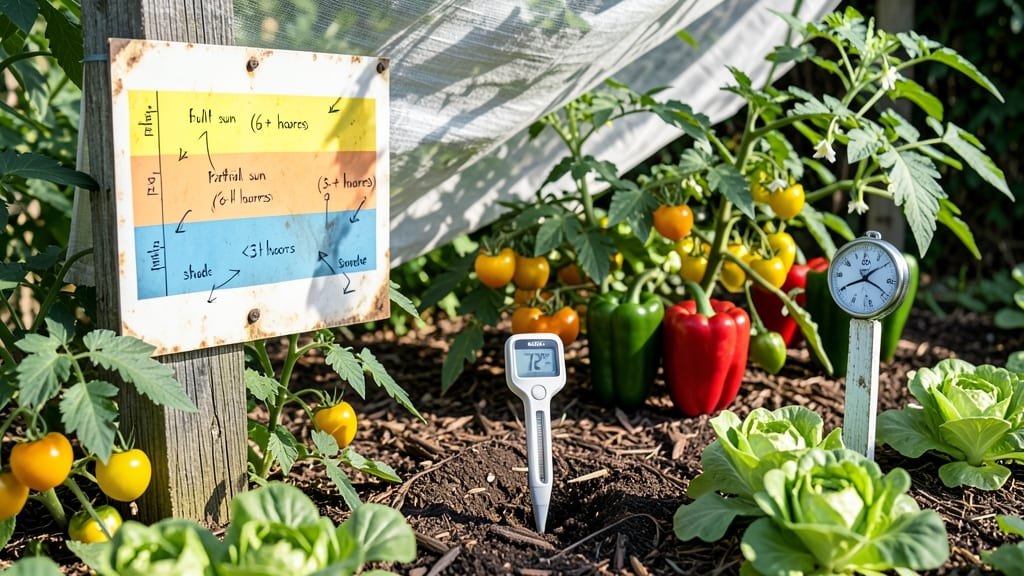
A vegetable garden needs how many hours of sun does a vegetable garden need—typically 6 to 8 hours of direct sunlight daily—for most crops to thrive, though some picky plants like lettuce or spinach do just fine with half that.
If you’ve ever planted tomatoes in a shady spot and watched them stretch toward the sky like they’re auditioning for a horror movie, you know how critical this gets.
Here’s the catch: not all veggies are created equal. Tomatoes, peppers, and cucumbers demand full sun, while leafy greens and herbs can handle a little afternoon shade. Misjudge the light, and you’re either burning your plants or watching them give up entirely.
I’ll break down the exact hours each crop needs and how to map your garden for peak productivity.
Climate throws a wrench into the mix—what works in sunny Arizona won’t cut it in a cloudy Pacific Northwest garden. We’ll cover how to adjust for your location, spot common sunlight mistakes, and even use simple tools to measure what your space is really getting.
No guesswork, just a bountiful harvest.
Ready to stop wasting seeds and start growing like a pro? Let’s dive into the light rules your vegetable garden actually needs to shine.


Sunlight requirements by vegetable type: full sun vs. partial shade breakdown
Understanding how many hours of sun your vegetable garden needs is the first step to avoiding common mistakes like leggy plants or poor fruiting. Most gardeners assume all vegetables thrive in full sun, but the truth is far more nuanced.
For example, tomatoes and peppers demand 6-8+ hours of direct sunlight, while leafy greens like spinach often bolt in excessive heat. Let’s break down the exact light requirements by category so you can design your garden for success.
I’ve planted everything from sun-loving tomatoes to shade-tolerant lettuce, and the difference in yield is staggering. A tomato plant in partial shade might produce half the fruit of one in full sun, while bush beans can thrive with just 4-6 hours of morning light.
The key is matching each plant’s needs to your garden’s microclimates—whether that’s a south-facing bed or a dappled shade spot under fruit trees.
Here’s the hard truth: Even "sun-loving" plants can struggle if they’re not getting the right type of sunlight. For instance, 6 hours of intense midday sun isn’t the same as 8 hours of gentle morning light.
Heat stress during peak hours can scorch leaves, while morning sun provides a gentler energy boost. Let’s start with the most critical category: full sun vegetables.
Let’s tackle the full sun vegetables first, as they’re the most demanding and often misunderstood. Tomatoes, for instance, need at least 6 hours of direct sunlight daily to produce sweet, flavorful fruit.
I once planted a cherry tomato variety in a spot that only got 4 hours of afternoon sun, and the yield was pitiful—tiny, watery tomatoes with no flavor. The lesson? Morning sun is non-negotiable for fruiting crops like peppers and eggplants, which also require 6-8+ hours.
Don’t assume all full sun plants are created equal. Cucumbers and squash can handle partial shade in hot climates, but they’ll still produce better in full sun. Meanwhile, corn needs 8+ hours to develop proper ears—any less, and you’ll end up with small, underdeveloped kernels.
Pro tip: If your garden lacks full sun, consider vertical trellises for vining plants like cucumbers or pole beans to maximize sunlight exposure.
Now, let’s move to partial sun/shade vegetables, which are often overlooked but can be lifesavers in shadier garden corners. Leafy greens like spinach and kale actually bolt (go to seed prematurely) in too much heat, so 4-6 hours of morning sun is ideal.
I grew Swiss chard last summer in a spot with dappled shade from a fruit tree, and it thrived while my full sun tomatoes wilted in the afternoon heat. Bush beans and radishes also fit here—they’re fast growers that appreciate gentler light conditions.
One of the biggest misconceptions is that all herbs need full sun. While basil and oregano love 6+ hours, parsley and cilantro can handle partial shade, especially in hotter climates.
I’ve seen cilantro bolt in full sun within weeks, while the same variety in morning shade stayed fresh for months. Always check seed packets for specific light recommendations—they’re your best guide!
Finally, let’s talk about low-light vegetables, the unsung heroes of shady gardens. Microgreens and some lettuce varieties (like 'Black Seeded Simpson') can thrive with just 2-4 hours of indirect light. These are perfect for north-facing beds or under deep shade trees.
I once grew a container garden on my north-facing porch and harvested arugula and microgreens all summer long—proof that you don’t need a sun-drenched plot to grow vegetables.
Here’s how to <
How to calculate and adjust sunlight in your garden for different seasons
Sunlight isn’t static—it shifts with the seasons, and what’s a sun-drenched spot in summer might turn into a shady corner in winter. If you’ve ever planted tomatoes in a spot that worked last year only to watch them struggle this season, you’ve hit the seasonal sunlight puzzle.
The key is understanding how to measure what your garden gets now and planning for changes ahead.
Most gardeners assume their space is either "sunny" or "shady," but the reality is far more nuanced. A 6-hour sun patch in June might drop to just 3 hours in December due to lower sun angles.
Without adjusting, you’ll either overcrowd shade-tolerant plants or waste space on sun-lovers that can’t thrive. I’ll show you how to map your garden’s light year-round and make smart adjustments.
Start by using a sunlight tracker—a simple DIY tool like a white stake marked with time slots. Place it in your garden for a week in each season to log how long each spot gets light.
For example, a 6 AM to 2 PM sun spot in spring might only get 5 hours in winter. This data lets you swap heat-loving plants for cold-hardy ones in low-light areas.
Buildings and trees are sunlight thieves. A newly planted oak tree can block 50% more light in 3 years than it does now. If you’re dealing with shade creep, plant fast-growing shade-tolerant crops like radishes or lettuce in the affected areas.
For permanent shade, consider vertical gardens or containers where you can move plants to brighter spots as needed.
Don’t let seasonal shifts derail your garden. By mapping sunlight now and planning for seasonal changes, you’ll avoid the heartbreak of wilted tomatoes or bolting greens.
Start with one bed, track its light, and adjust your planting schedule. Your future harvests will thank you—one sunny day at a time.