
Light Requirements
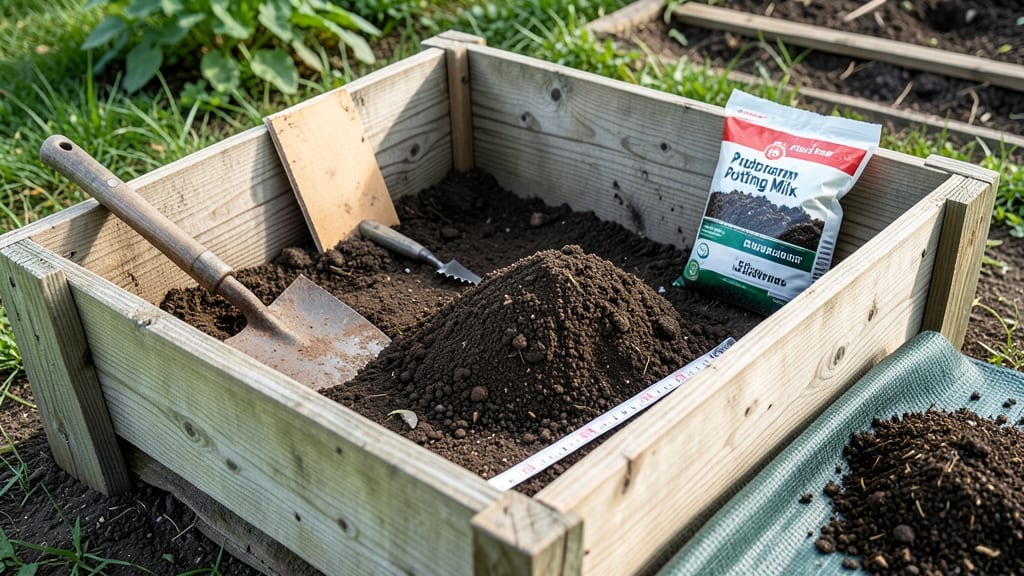
Filling a raised garden bed with the right amount of soil determines whether your plants thrive or struggle from day one 🌱 — and most gardeners guess wrong on both depth and volume.
Picture this: you’ve spent hours building your 4x8-foot raised bed, only to realize mid-project that you’ve bought half the soil you actually need. Or worse, you overfill it, wasting money and risking poor drainage. The good news? With a few simple calculations, you can nail the perfect amount every time.
In this guide, I’ll break down exactly how much soil fits in common raised bed sizes, which plants need deeper pockets (like carrots and potatoes), and how to mix soil for optimal drainage and fertility without breaking the bank.
No more second-guessing—just a foolproof formula for a bed that’s ready to grow.
You’ll also discover cost-saving tips, like how to layer materials for better structure and when to skip the expensive pre-mixed bags. Let’s get your raised bed perfectly prepped so your plants can focus on what matters—growing.
Raised garden bed soil depth guide by plant type: root requirements explained
Getting the soil depth right in your raised garden bed is like giving your plants the perfect foundation—too shallow, and roots struggle; too deep, and you waste money and space. The key? Matching soil depth to root requirements.
For example, carrots and potatoes need 12+ inches to develop fully, while lettuce and herbs thrive in just 6 inches. Understanding these needs ensures your plants grow strong and productive.
Most raised beds are built to 6-12 inches deep, but that’s not always enough. Deep-rooted plants like tomatoes, asparagus, and fruit trees demand 18-24 inches of soil to reach their full potential.
Meanwhile, shallow-rooted annuals like basil, radishes, and spinach will happily grow in 6-8 inches. The trick is planning your bed layout based on what you’re growing.
Here’s where it gets practical: layering your soil can maximize depth without digging deeper. Start with a 2-inch drainage layer of gravel or coarse sand at the bottom, then add 6-12 inches of nutrient-rich soil.
If you’re growing deep-rooted crops, consider extending the bed height or using container liners to create extra depth. This approach saves back-breaking work while giving roots room to stretch.
Why soil depth matters goes beyond just root space. Proper depth ensures even moisture distribution, prevents overheating in summer, and supports microorganisms that break down organic matter. For instance, tomatoes with restricted roots produce smaller fruits, while carrots in shallow soil may fork or split. Investing in the right depth now means fewer headaches later.
| Plant Type | Min Soil Depth | Ideal Depth | Notes |
|---|---|---|---|
| Shallow-Rooted Herbs | 6" | 6-8" | Basil, parsley, chives |
| Leafy Greens | 6" | 8-10" | Lettuce, spinach, kale |
| Root Vegetables | 12" | 12-18" | Carrots, potatoes, beets |
| Fruiting Plants | 12" | 18-24" | Tomatoes, peppers, squash |
| Perennial Flowers | 10" | 12-18" | Lavender, coneflowers |
| Shrubs/Trees | 18" | 24-36" | Blueberries, raspberries |
For shallow-rooted plants, focus on soil quality over depth. A mix of 60% topsoil, 30% compost, and 10% perlite gives herbs and greens the nutrients they need without requiring extra space.
These plants prioritize quick nutrient uptake, so adding a slow-release fertilizer at planting time boosts early growth. Just avoid overpacking the soil—roots need room to breathe!
Deep-rooted plants, however, demand more space. Tomatoes and carrots won’t reach their full potential in a 6-inch bed. Instead, aim for 18+ inches of loose, aerated soil.
If your bed isn’t deep enough, try interplanting: place shallow-rooted crops like radishes between rows of carrots. This maximizes space while meeting everyone’s needs.
Another common mistake? Ignoring drainage. Even with the right depth, compacted soil or poor layering can suffocate roots. Always start with a 2-inch gravel layer at the bottom to prevent waterlogging.
For sandy soils, add organic matter like coconut coir to retain moisture, while clay-heavy soils benefit from gypsum or perlite to improve structure.
If you’re repurposing native soil, test it first for pH and nutrients. Most vegetables prefer a 6.0-7.0 pH, while blueberries need acidic soil (4.5-5.5). Amend with lime to raise pH or sulfur to lower it before filling your bed.
For herbs like rosemary and thyme, slightly alkaline soil (7.0-8.0) works best—so adjust your mix accordingly.
Finally, rotate your crops to maintain soil health. Heavy feeders like tomatoes and peppers deplete nutrients faster, so follow them with light feeders like lettuce or beans. This practice keeps your soil balanced and reduces the need for constant amendments.
With the right depth and mix, your raised bed will become a self-sustaining ecosystem for years to come.
Ready to dig in? Start by measuring your bed’s dimensions, then calculate the cubic feet of soil needed based
How to calculate soil volume for your raised bed: step-by-step formula
Calculating the exact amount of soil for your raised bed starts with measuring its dimensions and accounting for the depth your plants need. A 4x8-foot bed filled to 12 inches might seem straightforward, but forgetting to subtract the height of your existing ground or drainage layer can leave you short.
I’ll walk you through the exact formula, including how to adjust for landscape fabric or gravel bases that reduce usable space.
First, grab a tape measure and note your bed’s length, width, and height. For example, a standard 4x8-foot bed with 12-inch sides requires 12 cubic feet of soil per foot of depth.
But if your bed sits on a gravel base or landscape fabric, subtract that thickness from your total depth before calculating. Skipping this step is a common mistake that leads to last-minute soil runs to the nursery.
Here’s the formula: (Length × Width × Depth) ÷ 27 = Cubic Yards. For a 4x8-foot bed filled to 12 inches (1 foot), the math is simple: 4 × 8 × 1 = 32 cubic feet.
Divide by 27 to convert to cubic yards (32 ÷ 27 ≈ 1.18 cubic yards). This tells you exactly how much soil to buy—no guesswork!
⚠️ Common Mistake: Forgetting to Account for Existing Ground Level
If your raised bed sits directly on grass or hardpan, you don’t need extra soil for a base—just fill to your desired depth. However, if you’ve added 4 inches of gravel or landscape fabric, subtract that from your total depth before calculating. For example, a 12-inch-deep bed on 4 inches of gravel only needs 8 inches of soil, not 12.
Pro Tip: Use a level to ensure even soil distribution. Uneven beds can cause poor drainage and root stress.
For deeper-rooted plants like carrots or potatoes, aim for 18 inches of soil. Using the same 4x8-foot bed, the calculation becomes 4 × 8 × 1.5 = 48 cubic feet (or 1.78 cubic yards).
Always round up when buying soil—you’d rather have a little extra than scramble for more mid-project.
Cost-saving tip: Mix your own soil blend with 60% topsoil, 30% compost, and 10% perlite. This reduces expenses while improving drainage and fertility. Pre-mixed raised bed soil is convenient but often overpriced for large beds. Measure each component separately to maintain consistency.
Finally, account for settlement. Organic matter like compost will break down over time, so add an extra 2-3 inches of soil to compensate. For example, if your bed needs 12 inches, fill it to 14-15 inches initially. This ensures your plants have enough depth as the soil settles.
Now you’re ready to fill your raised bed with confidence—no more overbuying or running out of soil mid-project. Happy gardening! 🌱