
Light Requirements
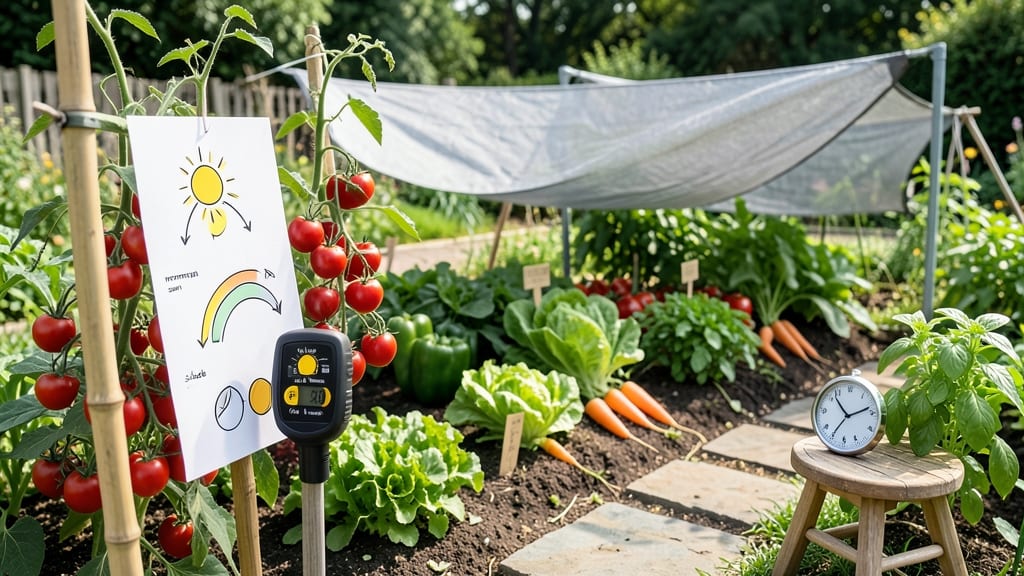
A vegetable garden needs how much sun does a vegetable garden need to thrive—6 to 8+ hours of sunlight daily is the golden rule for growing strong, productive plants 🥬. Struggling to decide where to plant your tomatoes or lettuce?
Sunlight is the single most critical factor in vegetable garden success, and getting it wrong can mean the difference between a bountiful harvest and wilted disappointment.
Too little light and your plants stretch toward the sky like they’re reaching for a hug, while too much can scorch delicate leaves. But here’s the good news: most vegetables thrive with the right balance, and even shade-loving crops can produce well if you know their needs.
In this guide, I’ll break down exactly how much sun your favorite veggies need — from sun-hungry tomatoes to shade-tolerant greens — and how to assess your garden’s light conditions like a pro.
You’ll also learn how to fix common sunlight mistakes and adjust for your climate, so you can grow a garden that’s as efficient as it is beautiful.

Sunlight requirements for vegetable gardens: full sun vs partial shade explained
Understanding your garden's sunlight exposure is the first step to growing a thriving vegetable patch. Sunlight isn't just about warmth—it's the power source for photosynthesis, the process that fuels plant growth.
Without enough light, your vegetables will struggle to produce energy, leading to weak stems, poor yields, and bland flavors. Think of sunlight as the fuel gauge for your garden: too little, and your plants run on fumes.
Most gardeners categorize sunlight into three zones: full sun, partial shade, and deep shade. But what do these terms really mean? Full sun typically means 6 or more hours of direct sunlight daily, while partial shade ranges from 3 to 6 hours.
Deep shade, with less than 3 hours, is usually reserved for leafy greens or herbs that thrive in lower light. Misjudging these zones can turn your garden into a disappointment instead of a harvest.
Why does sunlight matter so much? Vegetables like tomatoes, peppers, and cucumbers need full sun to develop sweet flavors and sturdy structures. Without enough light, they'll produce bitter, undersized fruits. On the other hand, leafy greens like spinach or lettuce can actually bolt (go to seed prematurely) if they get too much sun during hot summers. It's all about matching the plant to its ideal light conditions.
Let's start with full sun gardens, which are ideal for most vegetables. These areas receive 6 or more hours of direct sunlight per day.
This is the sweet spot for fruiting vegetables like tomatoes, peppers, and eggplants, which need intense light to develop their characteristic flavors and vibrant colors. For example, a tomato plant in full sun will produce larger, sweeter fruits compared to one in partial shade.
The extra light also strengthens the plant's cell walls, making it more resistant to diseases like blight.
But not all vegetables thrive under the harshest sunlight. Leafy greens and herbs often prefer partial shade, which means 3 to 6 hours of sunlight daily.
This category includes vegetables like lettuce, spinach, and Swiss chard, which can actually become bitter or bolt (go to seed) if exposed to too much direct sun during hot weather.
Partial shade is also great for root crops like carrots and beets, as they focus their energy on growing below ground rather than producing leaves.
If your garden only gets less than 3 hours of sunlight daily, you're dealing with deep shade.
While this might seem limiting, it's still possible to grow certain vegetables and herbs, though your options will be more restricted. Microgreens, arugula, and some herbs like cilantro or parsley can thrive in these conditions. However, expect slower growth and smaller yields.
For deeper shade areas, consider using reflective surfaces or grow lights to supplement natural light.
One common mistake gardeners make is assuming all sunlight is equal. The quality of light matters just as much as the quantity. For instance, morning sun is gentler and less intense than afternoon sun, which can scorch leaves.
If you're planting heat-sensitive vegetables like basil or lettuce, giving them morning sun and afternoon shade can make a huge difference in their survival and productivity.
To determine your garden's sunlight exposure, observe your space for a full day. Use a sunlight tracker or a simple app to log how many hours of direct light each area receives.
Pay special attention to obstructions like trees, fences, or buildings, as they can cast moving shadows throughout the day. If you're planning a new garden bed, place it where it will receive the most consistent sunlight, ideally in a south-facing location in the Northern Hemisphere.
Once you've mapped your garden's sunlight zones, group plants with similar light requirements together. This not only maximizes your space but also makes maintenance easier. For example, place tomatoes and peppers in full sun beds and lettuce and spinach in partial shade areas.
If you're working with limited space, consider vertical gardening techniques, like trellises for cucumbers or pole beans, to make the most of your sunlight.
Remember, seasonal changes affect sunlight exposure.
In summer, days are longer, and the sun is more intense, while in winter, shorter days mean less light overall. Adjust your planting schedule accordingly, and don't be afraid to use seasonal shade cloth or temporary covers to protect sensitive plants from too much heat or light.
With the right approach, you can create a vegetable garden that thrives year-round, no matter your sunlight conditions.
Best vegetables for low-sun gardens: thriving plants under 6 hours of sunlight
Not all hope is lost if your garden only gets 3-6 hours of sunlight. Many vegetables thrive in low-light conditions, especially leafy greens, root crops, and herbs.
These shade-tolerant plants can produce healthy yields even in partial shade gardens, making them perfect for north-facing beds, under trees, or urban balconies.
When selecting vegetables for low-sun gardens, focus on plants that prioritize leaf production over fruit development. While yields may be smaller than full-sun varieties, flavor and texture often remain excellent. The key is choosing varieties bred for shade tolerance and providing consistent moisture to compensate for reduced photosynthesis.
Low-Sun Vegetable Gardening: Pros & Cons
- Expands gardening options to shady areas
- Reduces heat stress on plants
- Lower water needs in some cases
- Great for urban/container gardening
- Slower growth compared to full sun
- Smaller yields for fruiting plants
- Higher risk of pests in damp conditions
- Requires more frequent thinning
My top shade-tolerant vegetables for 3-6 hours of sunlight include leaf lettuce, spinach, kale, Swiss chard, radishes, carrots, beets, and bush beans. Herbs like cilantro, parsley, and chives also excel in low-light conditions.
For root vegetables, choose shorter varieties like 'Paris Market' carrots or 'Detroit Dark Red' beets, as they mature faster in cooler, shaded environments.
When planting in low-sun areas, prioritize well-draining soil enriched with compost to improve nutrient uptake. Morning sunlight is ideal because it provides gentle warmth without the intense heat of afternoon rays.
If your garden gets less than 3 hours of sun, consider container gardening near a south-facing window or using grow lights for 4-6 hours daily.
Harvesting in shady gardens requires patience—most leafy greens take 2-3 weeks longer to mature compared to full-sun counterparts. However, regular harvesting (like picking outer leaves from lettuce) encourages continuous production.
For root crops, test soil moisture weekly to prevent forked or stunted growth, which is common in low-light conditions.
Don't overlook microgreens and sprouts for your low-sun garden—they thrive in indirect light and can be grown year-round indoors. Pair them with slow-growing herbs like dill or mint to maximize your shady harvest.
With the right choices, even 6 hours of sunlight can yield a productive, flavorful garden.