
Light Requirements
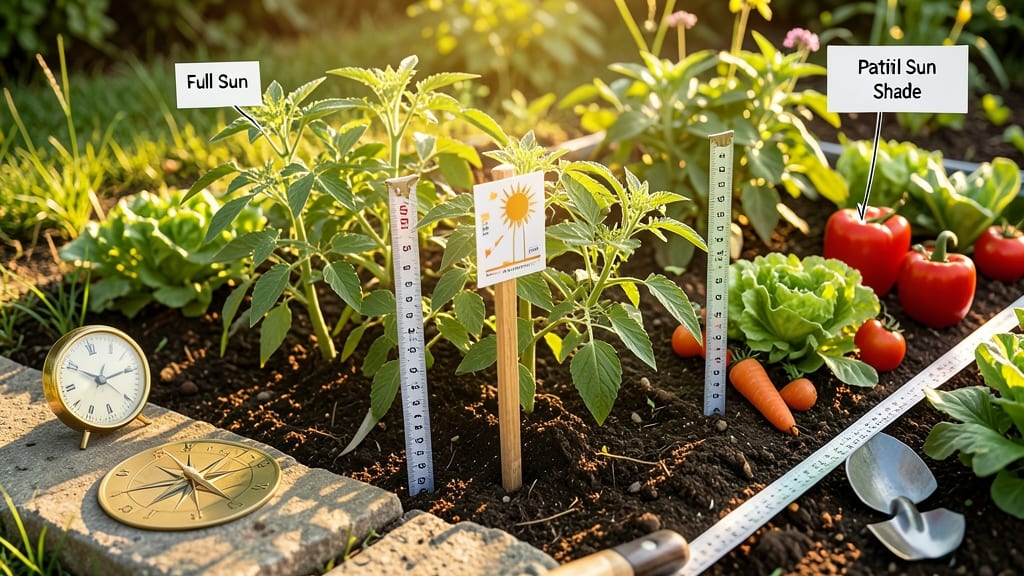
A veggie garden needs how much sun does a veggie garden need—typically 6 to 8 hours of direct sunlight daily—to thrive, but not all plants demand the same amount.
Some even prefer shade. If you’ve ever watched your tomatoes bolt in the heat or your lettuce turn bitter, you know sunlight is everything.
Too little sun and your plants stretch weakly toward the sky; too much, and they crisp into sad, flavorless husks. The key is matching each crop to its ideal light conditions, whether that’s a sunny border for peppers or a dappled spot for greens.
Below, I’ll break down the exact hours your garden needs, how to measure sunlight like a pro, and the simple tweaks that can save a struggling harvest.
You don’t need a degree in horticulture to get this right—just a few tools and a little strategy. We’ll cover how to group plants by sun tolerance, spot hidden shade traps in your yard, and fix common mistakes that waste your hard work.
Ready to turn your patch of dirt into a sun-smart powerhouse?
By the end, you’ll know exactly where to plant every seed, how to stretch sunlight in tight spaces, and which crops to pair for maximum efficiency. Let’s get growing!

Sunlight requirements by vegetable type: full sun vs partial shade explained
Sunlight is the lifeblood of your vegetable garden—without it, even the hardiest plants will struggle. Most vegetables thrive with 6-8 hours of direct sunlight daily, but some tolerate partial shade, while others wilt without enough light.
The difference between full sun and partial shade can mean the difference between a bountiful harvest and a disappointing one. Understanding these needs ensures your plants grow strong, produce flavorful yields, and resist pests and diseases.
Photosynthesis—the process that fuels plant growth—relies heavily on sunlight. When plants get the right amount, they develop sturdy stems, rich flavors, and higher yields. Too little sun leads to leggy, weak plants, while too much can scorch leaves or stress delicate varieties.
Climate zones and seasonal variations also play a role, so I’ll break down how to adjust for your specific growing conditions to maximize success.
Here’s a quick reference for the most common vegetables and their sun requirements. Use this as your guide to map out your garden layout and avoid common mistakes like planting sun-loving tomatoes in the shade of a tree.
| Vegetable | Sunlight Needs | Growth Impact of Incorrect Sun | Climate Adjustments |
|---|---|---|---|
| Tomatoes | 6-8+ hours (full sun) | Poor fruit set, weak stems, disease susceptibility | Use shade cloth in hot zones (Zones 9-11) |
| Peppers | 6-8 hours (full sun) | Slow ripening, bitter flavor, blossom drop | Mulch to retain heat in cooler zones (Zones 3-6) |
| Leafy Greens (Lettuce, Spinach, Kale) | 3-6 hours (partial shade) | Bitter taste, bolting, weak growth | Provide afternoon shade in hot climates |
| Cucumbers | 6-8 hours (full sun) | Poor fruit development, powdery mildew | Train vines on trellises for better airflow |
| Carrots | 4-6 hours (partial sun) | Deformed roots, slow growth | Plant in spring/fall for cooler temps |
| Beans (Bush & Pole) | 6-8 hours (full sun) | Reduced pod production, weak vines | Use reflective mulch in low-light areas |
| Onions & Garlic | 5-6 hours (partial sun) | Mild flavor, small bulbs | Plant early spring for long daylight exposure |
| Herbs (Basil, Oregano, Thyme) | 6-8 hours (full sun) | Stunted growth, weak aroma | Container gardening for flexibility |
For tomatoes and peppers, full sun is non-negotiable—they’re heavy feeders that need intense light to develop sweet flavors and robust structures. If you’re in a hot climate like Zone 9 or 10, provide afternoon shade to prevent leaf scorch while still ensuring they get morning sun for energy.
In cooler zones (Zones 3-5), extend the growing season with cold frames or row covers to give them extra light.
On the other hand, leafy greens like lettuce and spinach actually prefer partial shade, especially in the hottest months. Too much sun causes them to bolt (go to seed) prematurely, turning bitter.
Plant these in areas that get morning sun and afternoon shade, or use shade cloth if your garden is fully exposed. This trick works wonders for spring and fall crops when temperatures are milder.
Seasonal adjustments are key. In summer, even partial-shade plants may need more light, while winter crops can handle less. For example, carrots and radishes planted in late summer will thrive with just 4-5 hours of sun as days shorten.
Pay attention to your garden’s microclimates—areas near fences or buildings may get less light, while open spaces bask in full sun.
One of my biggest mistakes early on was planting basil in a shady spot because I assumed it was like its leaf
How to measure sunlight in your garden and adjust plant placement
Measuring sunlight in your garden is the first step to creating a thriving veggie patch. Most vegetables need 6-8 hours of direct sunlight daily, but some tolerate less—like leafy greens—while others, like tomatoes, wilts without full sun.
Start by observing your garden from sunrise to sunset to map out sunlight hotspots and shadows cast by fences, trees, or structures.
Use a simple trick to track sunlight: Place a white board or stakes in different garden spots. Mark the shadows every hour to see how much sun each area gets. Morning sun (cooler) and afternoon sun (hotter) behave differently, so note both.
This helps you group plants by their sunlight tolerance and avoid common mistakes like planting sun-lovers in shade.
⚠️ callout warning
🥕 Full-sun plants (tomatoes, peppers, corn) need 6-8+ hours of direct sun—any less, and they’ll produce fewer fruits or bitter flavors. 🌿 Partial-shade plants (lettuce, spinach, herbs) with 3-6 hours of sun will bolt or wilt in full sun. 🌳 Deep shade (under trees) is only for shade-tolerant plants like Swiss chard.
Pro Tip: If your garden has patchy sunlight, use reflective mulch (like white gravel) or rotate crops seasonally to balance exposure.
Once you’ve mapped your garden, group plants by their sunlight needs. Place full-sun lovers (like peppers and cucumbers) in the sunniest spots, while partial-shade plants (like basil or kale) can thrive in 3-6 hours of morning sun.
Avoid overcrowding—spread out plants to ensure each gets its required sunlight without competing for light.
If you notice yellowing leaves or stunted growth, it’s often a sign of inadequate sunlight. Move the plant to a sunnier spot or supplement with a grow light if space is limited.
Conversely, wilting or sunburned leaves mean the plant is getting too much harsh afternoon sun—provide afternoon shade with a cloth row cover or partial shade cloth.
Adjust your garden layout seasonally. In summer, longer daylight hours mean more sun exposure, while winter brings shorter days and weaker light. Use seasonal crop rotation to match plant needs with available sunlight.
For example, plant winter greens (spinach, kale) in partial shade where summer crops like tomatoes once thrived.
With a little observation and tweaking, you’ll create the perfect sunlight balance for your veggie garden. Start small, track your results, and soon you’ll be harvesting abundant, healthy produce all season long! 🌱