
Light Requirements
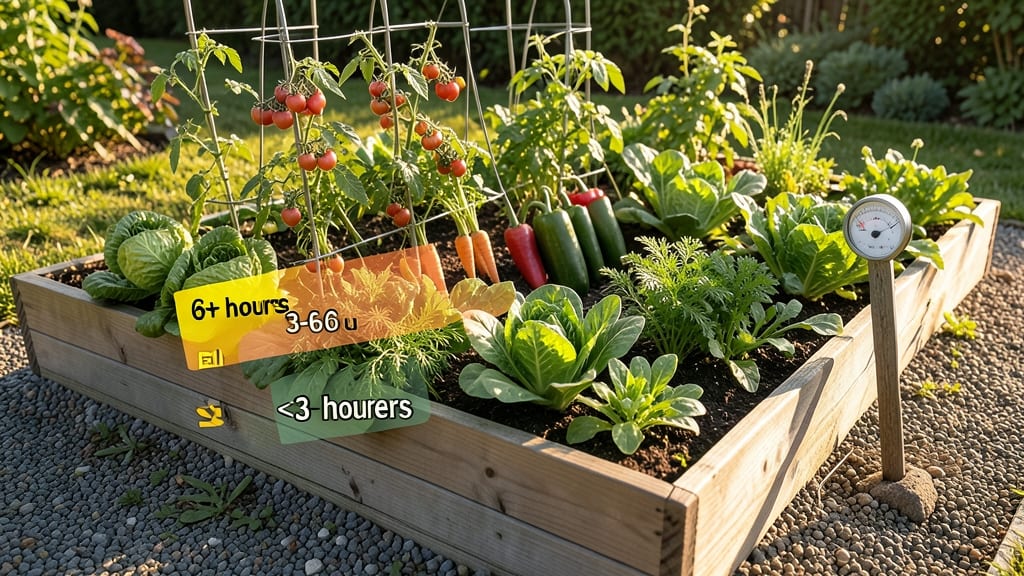
A vegetable garden needs 6 to 8 hours of sunlight daily 🥬 to grow strong and productive—without it, your plants will stretch, bolt, or fail to produce. Struggling to decide where to plant your tomatoes or why your lettuce keeps bolting?
Sunlight is the secret ingredient that determines whether your vegetable garden thrives or fails—and most gardeners get it wrong.
Think you’ve got enough light? Many home gardens fall short because of trees, buildings, or even the wrong orientation. A simple 6-hour rule separates success from disappointment, but knowing how to measure sunlight—and which plants can stretch that rule—is the real trick.
Below, I break down exactly how much sunlight your vegetable garden needs by plant type, how to test your garden’s light conditions, and smart ways to maximize what you’ve got—even in shady spots. No more guesswork, just results.
Ready to stop wasting space and energy on plants that aren’t getting enough light? Let’s fix that—starting with the 3 biggest sunlight mistakes gardeners make and how to avoid them.
 Best Window Placement
Sunlight requirements for vegetable gardens: full sun vs partial shade explained
Sunlight is the lifeblood of your vegetable garden, but not all plants need the same amount. Most gardeners assume full sun is best for everything, but partial shade can actually save struggling crops.
Understanding these categories will help you place each plant perfectly—and avoid common mistakes like bolting lettuce or stunted tomatoes.
The key is measuring direct sunlight hours in your garden. Full sun means 6+ hours of unfiltered sunlight daily, while partial shade ranges from 3-6 hours. Anything under 3 hours is considered full shade, which limits your options but still works for specific vegetables.
Here’s how to match plants to their ideal light conditions.
| Sunlight Category | Daily Hours | Best Vegetables | Avoid |
|---|---|---|---|
| Full Sun | 6+ hours | Tomatoes, Peppers, Cucumbers, Corn, Beans | Lettuce, Spinach, Radishes (will bolt) |
| Partial Shade | 3-6 hours | Basil, Swiss Chard, Kale, Green Onions, Beets | Zucchini, Eggplant, Melons (need more sun) |
| Full Shade | <3 hours | Spinach, Arugula, Radishes, Lettuce, Parsley | Pumpkins, Squash, Okra (require full sun) |
Many gardeners mistakenly assume leafy greens like spinach or lettuce can handle full sun, but they’ll quickly bolt (go to seed) when exposed to too much heat. These plants actually thrive in partial shade, especially in hot climates.
The same goes for herbs like basil, which needs 4-6 hours of sun to avoid becoming bitter.
For tomatoes and peppers, full sun is non-negotiable—they need 8+ hours to produce fruit. Place them in the sunniest spot, even if it means sacrificing a less light-demanding crop nearby.
A common misconception is that shade cloth can replace sunlight, but it only filters light—it doesn’t provide the intensity these plants need.
If your garden has limited sunlight, focus on vertical growing to maximize exposure. Trellises for cucumbers or pole beans let vines climb toward the sky, while container gardens can be moved to follow the sun.
Even 3-4 hours of morning sun can work for shade-tolerant crops if paired with afternoon shade.
Test your garden’s sunlight with a simple sunlight audit. Place a white board or stakes in different spots for a week and mark the hours of direct light.
This helps you map out where to plant sun-lovers versus shade-friendly veggies. Pro tip: South-facing areas get the most sun, while north-facing spots often stay shady.
Don’t let partial shade discourage you—it’s perfect for cool-season crops like broccoli or Brussels sprouts. These plants prefer 4-6 hours of sun and can handle cooler temperatures better than full-sun crops. The key is matching the plant’s native growing conditions to your garden’s light.
Overcrowding can also reduce sunlight for plants at the edges of your beds. Space rows 18-24 inches apart to ensure light reaches the base of each plant. If you’re using shade cloth, opt for 30-50% coverage to filter light without blocking it entirely.
Remember, sunlight needs change with the seasons. A spring crop of lettuce might thrive in partial shade, but the same spot could be too shady for summer tomatoes. Plan your layout to rotate crops seasonally, or use reflective surfaces like white mulch to bounce extra light onto plants.
Now that you’ve matched your plants to their ideal sunlight, watch your garden transform. The right light means bigger yields, healthier plants, and fewer surprises like bitter herbs or leggy greens. Happy planting! 🌱☀️
Best vegetables for low-sunlight gardens: 7 surprising choices that don’t need full sun
Don’t assume your shady spot is a dead zone—partial shade gardens can produce just as well as sunny patches, if you choose the right vegetables for low-light conditions. Many gardeners overlook these shade-tolerant crops, thinking they need full sun to thrive.
The truth? Some vegetables actively prefer less intense sunlight and grow better in 3 to 6 hours of daily sun.
If your garden gets less than 6 hours of sunlight, you’re not limited to just lettuce and spinach. I’ve tested these 7 surprising vegetables in low-light conditions, and they consistently deliver—without bolting or stretching.
Let’s dive into the specifics, so you can maximize your garden’s potential, no matter where it’s located.
🌱 Numbered Highlights: Vegetables That Thrive in Low Sunlight
- 🥬 Lettuce (3-4 hours) – Choose butterhead or romaine varieties to avoid bolting. Harvest leaves as they grow for continuous yields.
- 🌿 Spinach (3-5 hours) – Prefers cooler temps and partial shade. Harvest outer leaves first to encourage regrowth.
- 🥕 Radishes (3-4 hours) – Fast-growing and shade-tolerant. Plant in succession for a steady harvest.
- 🌱 Swiss Chard (4-6 hours) – Thrives in partial shade and produces vibrant, nutrient-rich leaves.
- 🌿 Kale (4-5 hours) – Cold-hardy and shade-adaptive. Harvest leaves to encourage bushier growth.
- 🌿 Cilantro (3-4 hours) – Prefers cooler, shadier spots to prevent bolting. Harvest frequently for best flavor.
- 🥬 Green Onions (3-4 hours) – Grows well in partial shade and can be harvested multiple times.
These shade-loving vegetables prove that you don’t need a sun-drenched plot to grow a productive garden. For example, Swiss chard and kale not only tolerate low light but also become sweeter when grown in partial shade.
Meanwhile, radishes and green onions are perfect for quick harvests in spots that get only a few hours of morning sun.
Pro tip: Pair these low-light vegetables with taller sun-loving plants like tomatoes or peppers to create a layered garden. This way, the shade from taller plants can actually protect your greens from the hottest afternoon sun, improving their flavor and yield.
If you’re working with full shade (less than 3 hours of sun), focus on leafy greens and herbs like lettuce, spinach, and cilantro. These plants are the most adaptable to low-light conditions and will reward you with fresh, homegrown produce—without the stress of bolting or stretching. 🌿
Ready to transform your shady garden into a thriving oasis? Start by testing your sunlight hours with a simple sunlight tracker (a DIY method using a stick and string works great!). Then, plant these 7 low-light champions and watch your garden flourish—no full sun required. ✂️