
Watering
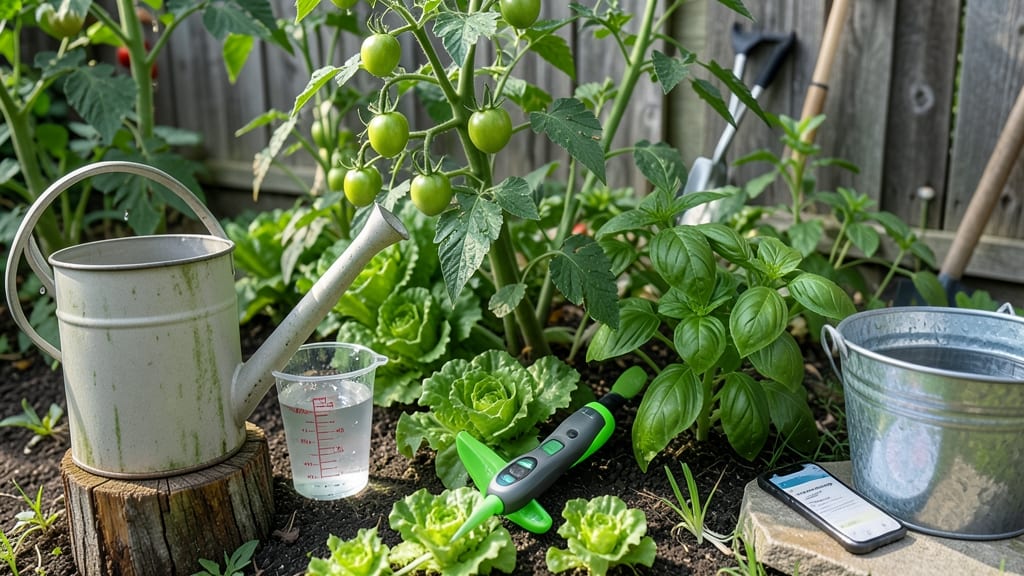
Watering your vegetable garden the right amount keeps 🥕 thriving without wasting a drop—here’s the science-backed schedule you need by plant type.
Overwatering or underwatering your vegetable garden can ruin months of hard work—yet most gardeners guess rather than follow data-driven schedules. Discover the exact watering amounts and timing your plants need to thrive, based on science and plant type.
Tomatoes, peppers, and leafy greens all have different thirst levels, and soil type plays a huge role. Sandy soil drains fast, while clay holds moisture for days—so a one-size-fits-all approach won’t cut it.
I’ll break down the ideal inches per week for each crop, plus how to adjust for rain or heatwaves.
You’ll also learn when to water (morning is best), how to spot overwatering vs. underwatering, and the smart tools that save time and boost yields—no more guesswork, just healthy harvests.
Science-backed watering requirements by vegetable type (with exact inches per week)
Watering your vegetable garden isn't a one-size-fits-all task—each plant has unique hydration needs based on its root depth, growth stage, and USDA zone.
Research from the University of California Cooperative Extension shows that 1 inch of water per week is the baseline, but tomatoes need 2-3 inches while carrots thrive with just 0.75-1 inch. The key? Deep watering that reaches 6-12 inches below soil surface to encourage strong roots.
To avoid guesswork, I test soil moisture by sticking my finger 2 inches deep—if it feels dry, it's time to water. Leafy greens wilt faster in heat, while root crops like potatoes need consistent moisture to prevent cracking.
Let's break down the exact inches per week for your most common veggies, plus drought tolerance rankings to plan ahead for dry spells.
Tomatoes top the list with 1.5-2.5 inches per week because their deep taproots need consistent moisture to prevent blossom-end rot. I've learned the hard way—skipping water on tomatoes when temps hit 90°F+ causes fruit to split or develop leathery texture.
For peppers, aim for 1-1.5 inches and taper off as they near harvest to improve flavor.
Leafy greens like lettuce and spinach are surprisingly drought-tolerant, needing just 0.75-1.25 inches weekly. The trick? Morning watering prevents fungal diseases like downy mildew.
I mulch heavily with straw to keep soil 60-70°F—cooler roots mean slower bolting in heat. Root crops like carrots and potatoes are the most forgiving, thriving on 0.75-1 inch and handling dry spells better than most.
For deep-watering techniques, I use a soaker hose set to run for 20-30 minutes every 2-3 days instead of daily shallow watering. This mimics natural rainfall and encourages roots to grow deeper.
Pro tip: Place a rain gauge in your garden to track exactly how much water you're applying—many h
How to adjust watering for climate, soil, and season (avoid these 3 costly mistakes)
Your vegetable garden's watering needs change with the season, climate, and even your soil type. What works for sandy soil in Arizona won't cut it for clay soil in Oregon.
Ignoring these factors leads to 3 common mistakes: underwatering (wilting leaves), overwatering (mushy roots), and inconsistent schedules (stressed plants). Let's fix that with science-backed adjustments.
First, check your local rainfall and adjust your watering schedule accordingly. If your area gets 1 inch of rain in a week, skip watering entirely for drought-tolerant crops like zucchini or beans.
For humid climates (like the Southeast), water early in the morning to prevent fungal diseases from lingering moisture. In arid regions (like the Southwest), deep watering every other day is better than shallow daily sprinkles.
⚠️ callout-warning ⚠️
⚠️ 3 Costly Watering Mistakes
- Mistake 1: Watering based on schedule, not soil moisture. Sandy soil drains in 30 minutes—clay holds water for days.
- Mistake 2: Ignoring seasonal shifts. Summer heat demands 2x more water than spring.
- Mistake 3: Skipping deep watering (only wetting top 1 inch) forces roots to stay shallow.
💡 Fix: Use a soil moisture meter ($10) to check 2 inches deep before watering.
Next, tailor your watering to your soil type. Sandy soil drains like a sieve—water every 1-2 days with 1-2 inches per session. Clay soil holds moisture like a sponge, so water every 3-4 days with ½ inch at a time.
Test your soil: Dig a 6-inch hole—if it's dry at 2 inches deep, water. If damp, wait.
Seasonal changes demand flexible adjustments. In spring, focus on establishing roots—water lightly but frequently. By summer, increase to 1-2 inches weekly (more if temps hit 90°F+).
In fall, reduce to ½ inch weekly as plants prepare for dormancy. Winter watering? Only if temps stay above 40°F—most veggies rest.
Watch for warning signs of over/underwatering. Wilting leaves (especially in afternoon) mean underwatering or root stress. Yellowing leaves (not from pests) signal overwatering or poor drainage. Fungal growth (white mold, black spots) means you're watering too late in the day.
Adjust immediately—these issues can kill plants in 48 hours.
For quick troubleshooting, use this decision flowchart:
- Check soil moisture (stick your finger in—if dry at 2", water).
- Adjust for weather: Rain? Skip watering. Heatwave? Water daily.
- Time it right: Morning (6-9 AM) for best absorption.
- Deep water: Aim for 6-12 inches deep to encourage strong roots.
- Mulch (2-3 inches) to retain moisture and regulate temperature.
Pro tip: Group plants with similar water needs together. Pair thirsty tomatoes with peppers (both need 1-2 inches weekly) and drought-tolerant kale with carrots (both prefer ½ inch weekly). This saves time and ensures consistent care. Start adjusting today—your harvest depends on it! 🥕