
Fertilization
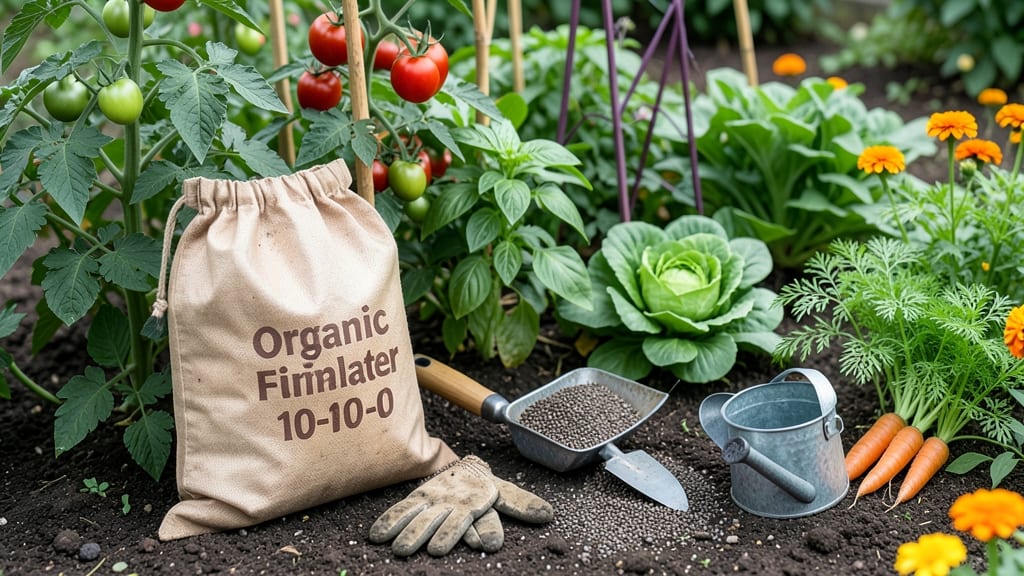
Fertilizing your garden too often or too little can leave your plants struggling—the right frequency keeps them thriving without wasting resources or harming soil health.
Most gardeners guess wrong on timing, leading to either stunted growth or burned leaves. The truth? A soil-test-driven schedule tailored to your plants’ needs—whether they’re hungry annuals or slow-growing perennials—makes all the difference.
In this guide, we’ll break down how often to feed your Garden Vegetables & Flowers (General) 🌱 based on their growth stage, soil type, and season, plus how to spot over- or under-fertilization before it’s too late.
You’ll leave here with a customizable plan that saves time, money, and your plants—no more second-guessing when to reach for the fertilizer.

Soil test results: the science behind your fertilization frequency
Your soil test results are like a nutrient report card for your garden—revealing exactly what your plants need to thrive. The three key metrics—NPK ratios, organic matter, and pH levels—dictate how often and what type of fertilizer to apply.
Ignoring these numbers often leads to either over-fertilization (leaf burn) or under-fertilization (stunted growth). For example, a sandy soil drains nutrients quickly, requiring more frequent feeding than clay soil, which holds nutrients longer but can become compacted.
Let’s break down what your soil test reveals and how to translate those numbers into a personalized fertilization schedule. A balanced NPK ratio (like 10-10-10) signals general-purpose feeding, while a high phosphorus result (e.g., 5-20-10) means prioritizing blooming plants like tomatoes or roses.
Meanwhile, organic matter percentages below 5% indicate your soil needs compost or aged manure to improve structure and nutrient retention.
Your pH level is another critical factor. Most vegetables and flowers thrive in a slightly acidic to neutral range (6.0-7.0). If your test shows a pH below 6.0, your plants may struggle to absorb nutrients like phosphorus and iron, leading to yellowing leaves (chlorosis).
In contrast, a pH above 7.5 can lock out essential nutrients like nitrogen and phosphorus, causing stunted growth. Adjusting pH takes time—aim for gradual changes of 0.5 points per month to avoid shocking your plants.
For sandy soils, nutrients leach away quickly, so I recommend applying a slow-release fertilizer every 3-4 weeks during the growing season. Pair this with a mulch layer (like straw or wood chips) to retain moisture and reduce evaporation.
In clay soils, nutrients linger but compacted soil can suffocate roots.
Here, I focus on organic amendments like compost or aged manure to improve drainage while feeding plants every 6-8 weeks. Loamy soils, the gardener’s gold standard, hold nutrients well and drain adequately—ideal for a balanced fertilization schedule every 5-6 weeks.
Watch for nutrient deficiencies like yellowing leaves (nitrogen deficiency) or weak stems (phosphorus deficiency). For example, tomatoes in phosphorus-deficient soil may produce small, misshapen fruits. In this case, switch to a high-phosphorus fertilizer (like bone
Plant-specific fertilizing schedules by growth stage
Every plant has a unique growth cycle that dictates when it needs nutrients most. Vegetables like tomatoes and peppers demand heavy feeding during fruiting, while flowers such as roses thrive with phosphorus-rich fertilizers when buds form.
Even trees have different needs—young fruit trees need frequent feeding, while mature oaks may only require a spring boost. Understanding these stages helps you avoid wasting fertilizer or starving your plants.
Container plants also follow different rules because their root systems are confined.
They often need more frequent feeding—every 3-4 weeks—than in-ground plants, which can access deeper soil nutrients. Organic fertilizers like compost tea or fish emulsion break down slower, so they’re ideal for container gardens, while fast-acting synthetic fertilizers work better for in-ground plants with larger nutrient reserves.
Here’s how to align your fertilizing schedule with your plants’ natural rhythms:
Apply balanced fertilizer (10-10-10) at planting, then again when plants reach 4-6 inches tall. Focus on nitrogen for leafy growth.
Switch to high-phosphorus (5-10-10) when buds form. Feed every 4-6 weeks for continuous blooms or fruit production.
Use a low-nitrogen formula (e.g., 5-5-5) 6-8 weeks before first frost to strengthen roots for winter.
Feed every 3-4 weeks with water-soluble fertilizer. Flush soil monthly to prevent salt buildup.
Skip fertilizing—plants don’t need nutrients when they’re resting. Resume in early spring with a soil test.
For fast-growing vegetables like zucchini or cucumbers, I recommend a liquid fertilizer every 2 weeks during peak growth. These plants devour nutrients quickly, so don’t skimp!
Meanwhile, slow-growing perennials like lavender or asparagus only need feeding in early spring and after harvest. Always water thoroughly after applying fertilizer to prevent root burn.
Pro tip: Adjust for your climate. In hot, dry regions, plants need more frequent watering (and thus more frequent light feeding) to compensate for nutrient loss. In cooler climates, stretch feeding intervals to every 6-8 weeks. Always check soil moisture before fertilizing—dry soil can’t absorb nutrients efficiently.
Remember, less is often more—especially with synthetic fertilizers. Over-fertilizing leads to leaf burn, stunted growth, or even plant death. When in doubt, test your soil every 2-3 years to fine-tune your schedule.
Your plants will thank you with vibrant blooms, bountiful harvests, and stronger roots! 🌿