
Watering
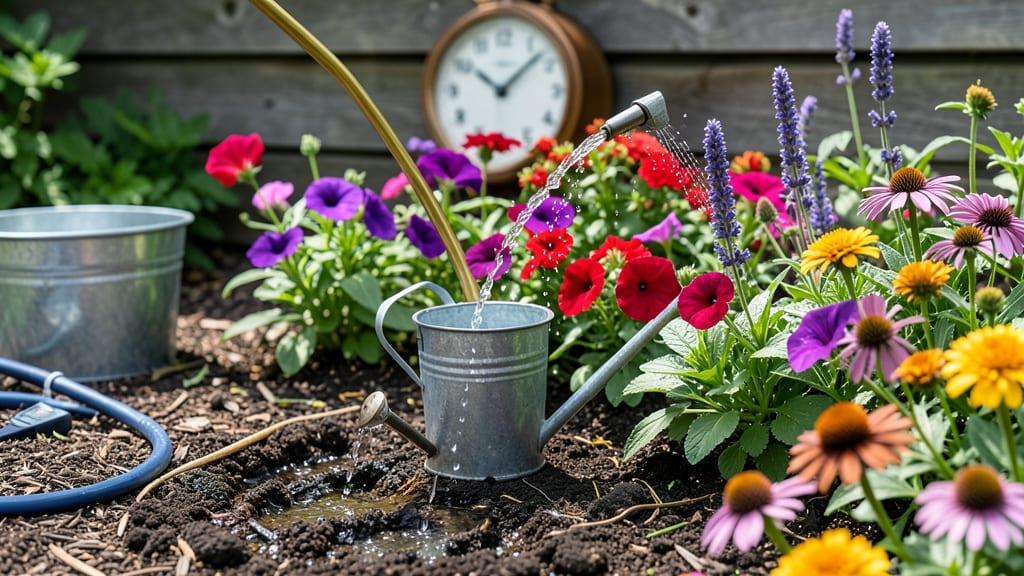
To water a flower garden properly means giving each plant the right amount at the right time — and skipping the guesswork with a schedule that adapts to heat, soil, and seasonal shifts.
Overwatering or underwatering your flower garden can turn vibrant blooms into wilted disappointments — so knowing the exact watering schedule for each plant type is your secret weapon for a thriving garden. 🌱
Most gardeners struggle with this balance, especially when summer heat cranks up the evaporation rate or heavy rains make the soil soggy. But here’s the good news: once you learn the key signs of thirsty or waterlogged roots, you’ll never second-guess your watering again.
Below, I break down a seasonal watering guide by plant type, plus the best techniques to save time and water — like deep soaking in the morning and mulching to lock in moisture.
Seasonal watering schedule for flower gardens by plant type
Watering your flower garden isn’t a one-size-fits-all task—it depends on whether you’re growing annuals, perennials, or seasonal blooms. Each type has unique moisture needs, especially as seasons shift.
For example, petunias and marigolds (annuals) thrive with daily watering in summer, while daylilies (perennials) prefer deep but less frequent watering. Understanding these differences ensures your flowers stay vibrant and healthy without wasting water.
Climate plays a huge role too. In hot, dry regions, you might need to water twice daily, while cooler, humid climates may only require watering every 2-3 days. Always check the top 1-2 inches of soil—if it’s dry, it’s time to water.
Mulching around plants helps retain moisture, reducing how often you need to water. This seasonal guide breaks down the ideal watering schedule for different flower types, so you can keep your garden thriving year-round.
Spring is all about establishing roots, so focus on deep watering rather than frequent shallow sessions. For newly planted annuals, like geraniums or cosmos, aim for 1-1.5 inches of water per week.
Perennials, such as black-eyed Susans, benefit from a weekly deep soak to encourage strong root growth. Mulch with 2-3 inches of organic material (like straw or wood chips) to lock in moisture and protect roots from temperature swings.
Summer demands the most attention, especially in heatwaves where evaporation speeds up. Morning watering (before 10 AM) is critical—it reduces fungal diseases like powdery mildew and gives roots time to absorb moisture before the day heats up. Container-grown flowers, such as pansies or violas, may need watering twice daily in extreme heat.
Always check soil moisture by sticking your finger into the soil; if it feels dry past 1 inch, water thoroughly.
Fall is a transition period where watering needs gradually decrease. Perennials like hostas or sedum still need regular watering until the first frost, but reduce frequency to every 5-7 days. Annuals, however, should be watered 2-3 times per week until they finish blooming.
Avoid overwatering in fall, as soggy soil can lead to root rot before winter dormancy sets in. Focus on evening watering in cooler climates to help plants prepare for winter.
Winter watering is minimal, but not non-existent. Evergreen perennials, like heuchera or hebe, may need a monthly drink if your region experiences dry winters. Bulbs, such as daffodils or tulips, should remain completely
Signs your flower garden needs water (and when to adjust)
Your flower garden sends clear signals when it's thirsty, but many gardeners miss them because they assume a rigid watering schedule works for all plants. Wilting leaves or dry soil are obvious red flags, but subtle changes like yellowing foliage or drooping petals also mean it's time to water.
The key is learning how each plant type communicates its needs.
Environmental factors like heatwaves or drought conditions can double your watering needs overnight. For example, a 7-day watering schedule in spring might turn into daily watering during a 90°F heatwave.
Pay attention to how your local climate affects evaporation rates—this is how you create a custom watering plan that keeps your flowers happy without wasting water.
⚠️ How Often to Water Flower Garden?
Most flower gardens need 1-1.5 inches of water weekly, but adjust based on these signs:
- 🌱 Wilting leaves by noon → Water immediately
- 🌡️ Soil 1-2 inches dry → Water every 2-3 days
- ☀️ Heatwave (90°F+) → Water daily in morning
- 🌧️ Heavy rain → Skip watering 2-3 days
Pro Tip: Use a soil moisture meter for accuracy—guessing leads to over/underwatering.
Start by checking the soil moisture before watering. Stick your finger 1-2 inches deep—if it feels dry, your flowers need water.
For container gardens, lift the pot: if it's light, water thoroughly. Perennials like coneflowers or daylilies can handle drought better than annuals like petunias, which wilt within hours without moisture.
Watch for leaf color changes too. Yellowing leaves often mean overwatering, while brown, crispy edges signal underwatering. Morning wilting that recovers by evening is normal, but evening wilting means your plants are desperate for water. Adjust your schedule based on these cues—your garden will thank you with longer-lasting blooms.
Create a custom watering schedule by tracking these patterns for 2 weeks. Note when you water, how much, and the weather conditions.
For example, if your roses need water every 3 days in spring but every day in July, adjust accordingly. Mulching with 2-3 inches of organic matter (like straw or shredded leaves) can reduce watering needs by 30-50% by locking in moisture.
Don’t ignore the time of day either. Watering in the early morning (5-9 AM) gives roots time to absorb moisture before the heat evaporates it. Avoid evening watering, as wet foliage overnight invites fungal diseases like powdery mildew.
If you must water in the evening, use a drip irrigation system to keep leaves dry.
Finally, group plants with similar water needs together in your garden layout. For instance, succulents and lavender thrive with minimal watering, while impatiens and begonias need consistent moisture.
This zonal watering approach saves time and ensures no plant gets neglected. With these signs and adjustments, your flower garden will stay lush, healthy, and blooming all season! 🌷