
How To
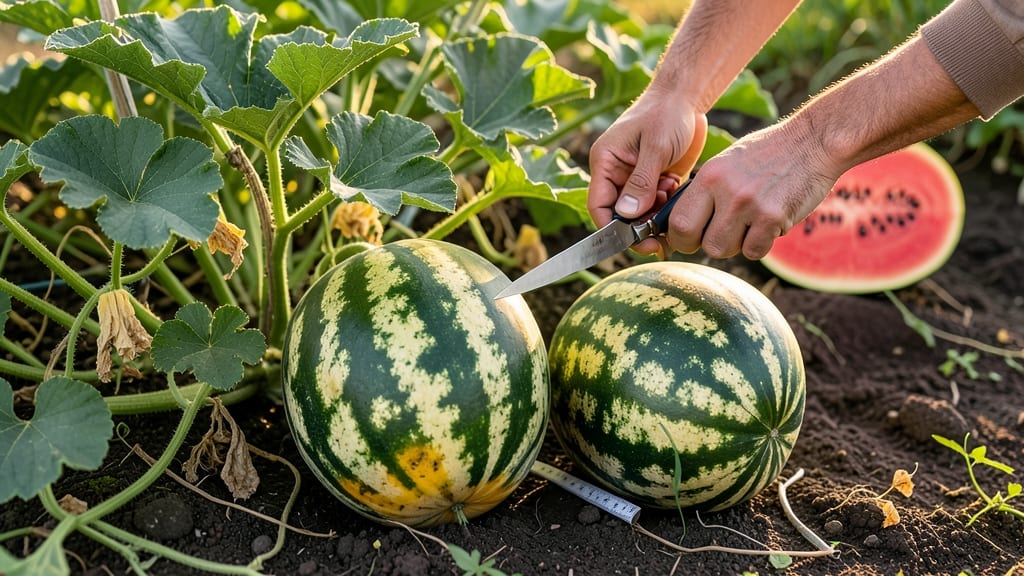
To know when to pick watermelon from your garden, watch for 5 key signs that signal peak ripeness—because timing makes all the difference between a juicy, sweet harvest and a bland disappointment.
Ever wondered why some watermelons burst with sweetness while others stay bland and hard—even after weeks on the vine? Picking 🍉 watermelons at the perfect ripeness is an art, but these foolproof cues will help you avoid guesswork.
From the creamy blossom-end color to the telltale "thump" sound when tapped, each clue gives you a clear signal. Even the tendril near the stem tells a story—when it dries and turns brown, that’s your green light to harvest.
Below, I’ll walk you through every step—visual checks, the science behind the "thump," and how to adjust for your USDA Zone 6a climate. No more overripe melons or underwhelming bites!

5 Visual and physical signs your watermelon is ripe for picking
Picking a watermelon at the right moment means the difference between a juicy, sweet explosion and a bland, watery disappointment. Many gardeners wait too long, hoping for bigger size, only to end up with overripe melons that fall apart.
The key is learning to read your plant's signals—visual cues and physical changes that reveal when nature's clock has ticked to perfection.
Don’t rely on days since planting or vine length alone—watermelons mature at different rates depending on variety, weather, and soil conditions. Instead, focus on these five foolproof signs that your watermelon is ready to harvest.
Each clue builds on the last, giving you confidence that you’re picking at peak ripeness for maximum flavor and texture.
- 1 Blossom End Color Change: Look at the bottom (blossom) end of the watermelon. A ripe melon will show a cream or yellowish discoloration where it sat on the vine. Avoid melons with green spots—they’re not ready yet.
- 2 Tendril Dryness: Check the small vines (tendrils) near the stem. When they turn brown and crispy, it’s a sign the melon is nearing ripeness. If they’re still green, wait a few more days.
- 3 Thump Test: Tap the melon with your knuckles. A ripe watermelon produces a deep, hollow sound. If it sounds dull or flat, it’s underripe. Overripe melons may feel mushy when tapped.
- 4 Field Spot: The underside (field spot) where the melon rested on the ground will turn from white to yellow or cream. This indicates full ripeness and sugar development.
- 5 Stem Separation: Gently wiggle the melon. If the stem pulls away easily (without tearing the fruit), it’s ready. A stubborn stem means it needs more time on the vine.
Pro tip: Combine these signs for accuracy.
For example, a melon with a yellow blossom end and crispy tendrils but a dull thump might need 1-2 more days to reach full sweetness. Regional variations matter too—southern climates often ripen melons faster due to higher heat, while cooler areas may need extra time.
One common mistake is assuming bigger size means riper flavor. Some varieties reach full sweetness before reaching their maximum weight. Always prioritize the color, sound, and texture over size alone. Even heirloom varieties like 'Moon and Stars' or 'Crimson Sweet' follow these same ripeness rules.
If you’re growing watermelons in containers, note that they may ripen slightly earlier due to limited root space. Monitor the field spot and tendril dryness more closely, as container-grown melons can overripe faster when exposed to intense heat.
A light mulch around the base helps regulate soil temperature and extends the harvest window.
Once you’ve confirmed ripeness, harvest on a dry morning to prevent rot. Use a sharp knife or pruners to cut the stem, leaving a small portion attached to the melon.
This helps preserve freshness during storage. Store ripe watermelons in a cool, dry place (50–55°F) for up to 2 weeks, or enjoy them immediately for peak flavor.
Remember, the best watermelons are those picked at the right moment—when the vine signals readiness through color, sound, and texture. With these five signs as your guide, you’ll never second-guess your harvest again. Happy picking! 🍉
How to test watermelon ripeness without cutting it open (science-backed methods)
When your watermelons reach 75-90 days after planting, it’s time to test for ripeness—but how do you know without slicing them open? Science reveals subtle clues that go beyond the standard thump test.
From the field spot to stem separation, these advanced methods ensure you harvest melons at their sweetest peak.
Most gardeners rely on basic cues like rind color or size, but expert growers use additional techniques to confirm ripeness. For example, the field spot (a yellowish patch on the ground where the melon rests) is a telltale sign of full maturity.
This method, combined with stem dryness and ground discoloration, creates a foolproof system for picking perfect watermelons.
Comparison Table: Traditional vs. Expert Ripeness Tests
| Method | How to Test | Ripeness Indicator | Expert Tip |
|---|---|---|---|
| Rind Color | Check for deep, consistent color with a cream/yellow blossom end. | Solid hue, no streaks. | Look for a crease at the blossom end—this signals maturity. |
| Thump Test | Tap the melon—dull sound means ripe, hollow sound means underripe. | Deep, resonant thud. | Use your knuckles, not your palm, for accuracy. |
| Field Spot | Inspect the ground discoloration where the melon rests. | Yellowish patch (field spot) indicates ripeness. | A large, defined spot means peak sweetness. |
| Stem Dryness | Check if the stem near the fruit is dry and brown. | Brown, papery stem. | If the stem separates easily, the melon is ready. |
| Tendril Check | Look for dry, brown tendrils near the stem. | Tendrils turn brown and crispy. | Green tendrils mean the melon isn’t ripe yet. |
The field spot is one of my favorite expert tricks because it’s often overlooked. When a watermelon rests on the ground, it creates a yellowish patch where it touches the soil.
This happens because the melon’s sugars leach out as it ripens, staining the ground. A large, well-defined spot means the melon is ready to harvest.
Another game-changer is the stem separation test. Gently twist the stem near the fruit—if it snaps cleanly or pulls away with minimal force, the watermelon is at peak ripeness.
This method works because the stem’s natural abscission layer (a separation layer) develops as the fruit matures, making it easier to detach.
For extra precision, combine these methods. For instance, if the rind is deep green but the field spot is faint, wait a few days. Conversely, if the stem is dry and the field spot is pronounced, it’s time to pick—even if the thump test isn’t perfect.
This layered approach minimizes guesswork and maximizes sweetness.
Pro tip: Harvest on a cool morning when sugars are concentrated. Avoid picking after a hot day, as the melon’s moisture content can skew your tests. With these science-backed methods, you’ll never second-guess your watermelon harvest again! 🍉