
Watering
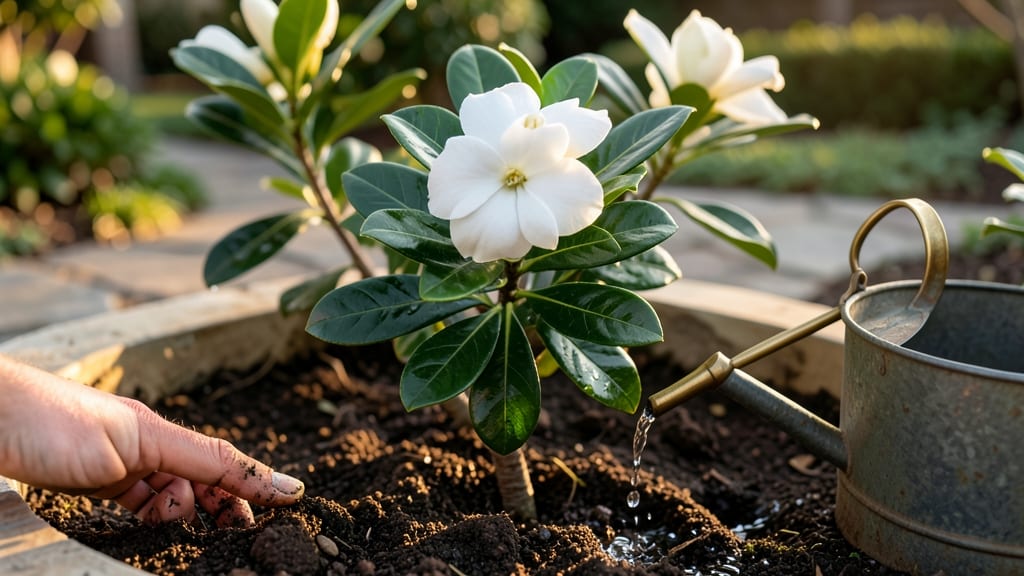
To water gardenia plants correctly means giving them just the right amount of moisture without drowning their roots — the key to those glossy leaves and intoxicating blooms 🌸.
Struggling to keep your gardenia thriving? Too much water causes root rot, while too little leads to crispy edges and lost flowers. The trick is consistency: deep, infrequent watering that keeps the soil evenly moist but never soggy.
In this guide, I’ll walk you through the perfect watering schedule for each season, how to check soil moisture like a pro, and the subtle signs your gardenia is either thirsty or drowning. No guesswork — just fragrant, healthy plants.
You’ll also discover three pro tips to optimize watering for maximum blooms, including the best time of day to water and how mulch can save you hours of maintenance. Let’s get your gardenia drinking right!
The perfect watering schedule for gardenia plants by season
Gardenia plants thrive when their watering routine matches the seasonal rhythms of growth and dormancy. As a tropical shrub, gardenias crave consistent moisture but despise soggy roots—balancing these needs is key to those fragrant blooms you adore.
The ideal soil moisture is like a damp sponge: never bone-dry, never waterlogged. Let’s break down how to adjust your watering schedule to keep your gardenia happy year-round.
Understanding your gardenia’s hydration needs starts with recognizing how temperature and humidity shift across seasons. In summer’s heat, evaporation speeds up, while winter’s chill slows water absorption. Even container-grown gardenias dry out faster than in-ground plants because pots lack moisture retention.
I’ll walk you through the perfect watering frequency for each season, plus how to check soil moisture like a pro.
🌱 Pro Tip: Always water at the base of the plant to avoid wetting the leaves, which can lead to fungal diseases like powdery mildew. Use a soaker hose or watering can with a narrow spout for precision.
| Season | Frequency | Water Amount | Soil Check | Environmental Notes |
|---|---|---|---|---|
| Spring | Every 7-10 days | 1-1.5 gallons | 1-2 inches deep | Warmth increases growth; monitor bud formation |
| Summer | Every 2-3 days | 1.5-2 gallons | Top 2-3 inches | High heat = faster evaporation; water early morning |
| Fall | Every 10-14 days | 1 gallon | 1.5-2 inches deep | Cooler temps slow growth; reduce frequency |
| Winter | Monthly (light) | 0.5 gallon | Top 1 inch | Dormant phase; avoid soggy soil |
In spring, your gardenia wakes up from dormancy and needs a gentle increase in water to support new growth. Aim for deep watering every 7-10 days, allowing the top 1-2 inches of soil to dry slightly between sessions.
This is when you’ll see those buds forming, so consistent moisture is critical. If your gardenia is potted, check soil moisture daily—containers dry out much faster.
When summer arrives, your watering routine should shift to every 2-3 days with 1.5-2 gallons per plant. The key here is morning watering—this reduces evaporation and gives roots time to absorb moisture before the heat peaks.
If you notice drooping leaves by midday, it’s a sign you’re not watering deeply enough. Stick your finger 2-3 inches into the soil; if it’s dry, it’s time to water again.
As fall cools the air, your gardenia’s water needs decrease gradually. Cut back to every 10-14 days and reduce the amount to 1 gallon. The goal is to keep the soil consistently damp but not soggy.
This is also the time to prune spent blooms and prepare for winter. If your gardenia is outdoors in Zone 6 or warmer, it may still need light watering, but always check the soil first.
During winter, most gardenias enter a dormant phase, and their water needs drop dramatically. In Zone 6, reduce watering to monthly with just 0.5 gallons—enough to keep the top 1 inch of soil slightly moist.
Overwatering in winter can lead to root rot, so err on the side of underwatering if you’re unsure. If your gardenia is potted and indoors, increase humidity with a pebble tray or humidifier to mimic its tropical habitat.
One of the biggest mistakes gardeners make is ignoring humidity. Gardenias love 60-70% humidity, but indoor air (especially in winter) can drop to 20-30%. If your plant’s leaves start
Your gardenia plant might be silently screaming for help if you're not paying attention to its watering needs. Too much or too little water can cause dramatic changes in its leaves, stems, and overall health. The key is learning to read your plant's signals before it's too late. Start by checking the soil moisture—stick your finger about 1 inch deep into the soil. If it feels damp but not soggy, you're likely on the right track. However, if the soil is either bone-dry or muddy, your gardenia is sending you an SOS. If your gardenia leaves are turning yellow and feel mushy, you're likely overwatering. This often leads to root rot, where roots turn brown and smell foul. To fix this, let the soil dry out completely for a few days, then repot in fresh, well-draining soil. On the flip side, brown, crispy edges on leaves or drooping stems signal underwatering. In this case, give your gardenia a deep watering until water runs out the drainage holes. For potted gardenias, soaking the pot in water for 10-15 minutes can help revive thirsty roots. For container gardenias, always ensure the pot has drainage holes and use a mix of peat moss, perlite, and garden soil to improve aeration. If you notice white mold or black spots on leaves, reduce watering immediately and treat with a fungicide. Remember, gardenias thrive on consistency. Adjust your watering based on the season, humidity, and temperature. In winter, reduce watering to once a week or even less, as growth slows down. With the right balance, your gardenia will reward you with glossy leaves and heavenly-scented blooms.Signs your gardenia is overwatered or underwatered (and how to fix it)
How to Water Gardenia: Pros & Cons
✅ DO:
❌ DON'T: