
Picking
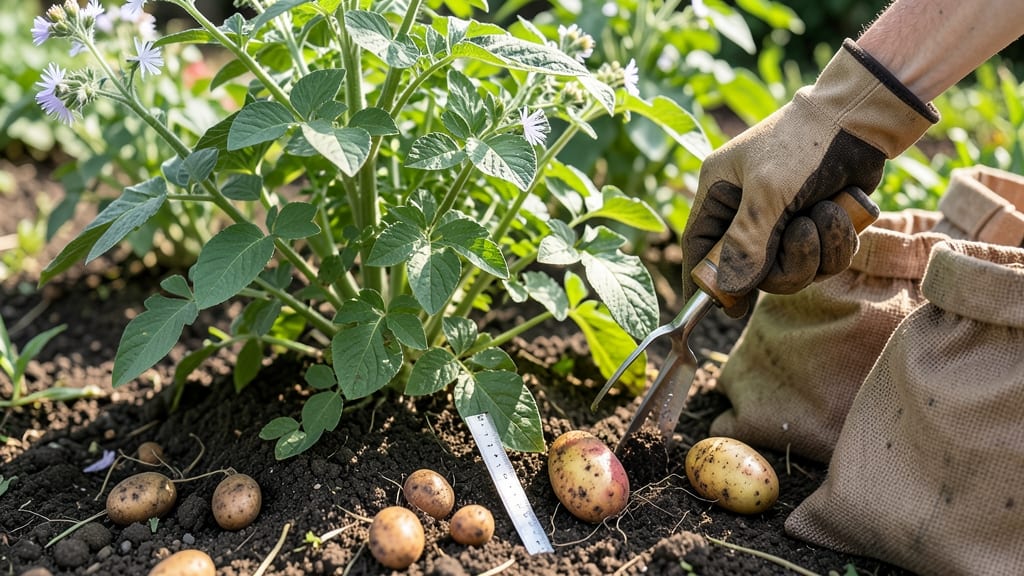
Harvest potatoes from your garden when the foliage yellows and dies back, or after 70-120 days of growth—timing this right ensures tubers are firm, flavorful, and free of pests.
Timing your potato harvest wrong can mean the difference between floury, perfect spuds and tough, underripe tubers—so knowing exactly when to dig matters more than you think. Miss the window, and you risk mealy potatoes or even sprouting tubers that’ll rot in storage.
Most gardeners wait until the plants flower and then count 4-6 weeks before harvesting. But soil temperature and variety also play a role: cooler climates like USDA Zone 6a may need an extra week or two, while early varieties can be ready sooner.
Below, I’ll walk you through the foolproof finger-poke test, size and skin cues, and how to adjust for your region—so you never dig too soon or too late again.


How to use the finger-poke test for perfect potato harvest timing
Timing your potato harvest is an art—and the finger-poke test is my go-to trick for nailing it. This simple method lets you check tuber readiness without digging up your entire crop too soon.
Start testing about 4-6 weeks after flowering, when most varieties begin forming mature tubers. The key? Feeling for resistance in the soil, not just guessing by foliage color.
Before you poke, wait for a dry, warm day (65°F+). Wet soil sticks to your fingers and gives false readings, while cold soil can bruise tender tubers.
Early-maturing varieties like Red Pontiac may test ready in 70-90 days, while late varieties like Russet Burbank need up to 120 days. Always adjust for your climate—cooler regions take longer.
When to Harvest Potatoes Using the Finger-Poke Test
- Wait until 4-6 weeks after flowering—this is when tubers bulk up fastest.
- Choose a dry, sunny day (soil should be crumbly, not muddy).
- Gently poke 3-4 inches deep near the plant base with your index finger.
- If you feel firm resistance (like hitting a small rock), tubers are ready.
- For new potatoes, harvest when you feel pea-sized resistance (earlier than mature harvest).
- If soil feels loose with no resistance, wait 1-2 weeks and retest.
- Avoid testing if soil is waterlogged or frozen—it skews results.
What you’re actually feeling is the tuber’s skin thickness and the soil’s compaction around it. A ready potato will resist your finger like a walnut shell, while an underripe one feels like poking into soft clay.
Pro tip: Test in multiple spots—some tubers mature faster than others, especially in uneven soil.
Seasonal variations matter too. In hot climates, potatoes mature faster (test earlier), while in cool, short seasons, they need extra time. If your plants flowered late due to cool weather, add 2-3 weeks to your testing window.
Also, hill soil around plants (pile dirt over stems) to encourage deeper tuber formation—this makes the finger-poke test more reliable.
Watch for foliage signals alongside the finger test: yellowing leaves mean it’s time to harvest soon, but don’t dig yet if your finger test shows tubers aren’t firm. For storage potatoes, wait until leaves fully die back (blacken and crisp).
Early varieties like Yukon Gold can be harvested when leaves yellow, while late varieties need that full die-back.
One common mistake? Testing too late and finding shriveled, mealy potatoes. Overripe tubers lose moisture and become gritty—irreversible damage. If your finger test shows resistance but leaves are still green, wait 5-7 more days.
For new potatoes, harvest when tubers are golf-ball sized (even if leaves are green), but store them in the fridge to prevent sprouting.
After your finger test confirms readiness, dig carefully with a fork or hands to avoid piercing tubers. Cure harvested potatoes in a dark, humid spot (60-70°F) for 1-2 weeks to thicken their skins and improve storage life. Skip curing for new potatoes—they’re best eaten fresh.
Regional tweaks: In Zone 5 or cooler, start testing later (after May 15) to avoid frost damage. In Zone 8+**, begin testing by early April to beat summer heat.
Always adjust for your last frost date—potatoes hate cold soil, so never test if temps dip below 50°F.
Mastering the finger-poke test takes practice, but once you get it, you’ll never guess harvest timing again. Start small with a test patch of one variety, and soon you’ll predict harvests like a pro—no more tough, underripe spuds or wasted effort digging too early!
Ideal potato size and skin color guide for harvesting
Potatoes reach peak flavor and texture when harvested at the right size and skin color. Unlike many vegetables, potatoes don’t ripen after picking, so timing matters. For new potatoes, you’ll harvest small, while storage potatoes need full maturity.
The key? Watch both size ranges and skin cues—they’re your garden’s way of signaling "dig me now!"
Most gardeners focus on foliage signals like yellowing leaves, but tuber size and skin thickness are equally critical. A golf-ball-sized potato (1-2 inches) is perfect for new potatoes, while baseball-sized tubers (3-4 inches) are ideal for storage.
Skin color also shifts from thin and translucent to thick and protective—a clear sign of readiness. Let’s break down the specifics for your favorite varieties.
| Potato Type | Ideal Size Range | Skin Color Cues | Harvest Time |
|---|---|---|---|
| New Potatoes (All Varieties) | 1-2 inches (golf ball) | Thin, slightly translucent | 4-6 weeks after planting |
| Russet Potatoes | 3-4 inches (baseball) | Rough, tan-brown, thick skin | 90-120 days after planting |
| Yukon Gold Potatoes | 2.5-3.5 inches | Golden-yellow, firm skin | 80-100 days after planting |
| Purple Potatoes | 2-3 inches | Deep purple, waxy texture | 75-90 days after planting |
| Storage Potatoes (All) | 3+ inches (tennis ball+) | Thick, opaque, no green | After foliage yellows (2-3 weeks) |
For Russet potatoes, aim for baseball-sized tubers with rough, tan-brown skin—this variety needs full maturity for that classic fluffy texture. Yukon Golds, on the other hand, reach perfection at 2.5-3.5 inches with a golden-yellow hue, often just as their leaves start yellowing. Purple potatoes are ready slightly earlier, around 75-90 days, when their skin develops a deep, waxy purple.
If you’re growing for storage potatoes, prioritize size over color. Tubers should be at least 3 inches wide with a thick, protective skin—this prevents bruising and extends shelf life.
A quick test: press your thumbnail into the skin. If it doesn’t dent, the potato’s ready. Thin-skinned tubers bruise easily and spoil faster, even in cool storage.
Watch for foliage signals too: when 70% of leaves yellow and die back, it’s time to dig for storage potatoes. For new potatoes, harvest before the plant flowers or the tubers will toughen.
Pro tip: Dig a test potato 2-3 weeks before expected harvest—if it’s ready, the rest will be soon! 🥔
Regional climate matters too. In cooler zones (USDA 3-5), potatoes mature slower—wait for consistent 60°F soil temps before digging. In warmer zones (USDA 7-9), harvest earlier to avoid heat stress.
Always cure potatoes for 1-2 weeks in a dark, 50-60°F space to toughen skins and improve storage life. 🌱