
Picking
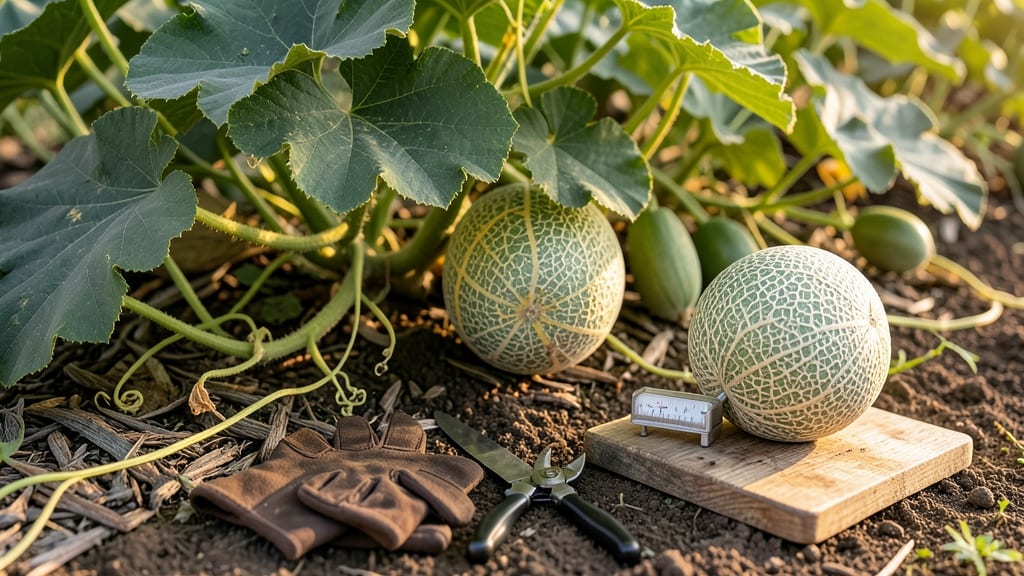
To pick cantaloupe from your garden at the perfect moment, watch for three key signs: a creamy blossom end, a sweet aroma, and a slight give when you press the fruit.
Picking cantaloupe too early means bland, hard fruit—like biting into a tennis ball. Too late, and you’re left with mushy, fermented messes that no one wants to eat. The difference between these fates comes down to knowing the right tactile cues and acting fast.
Most cantaloupes in Zone 6a are ready to harvest between July and August, but the calendar isn’t the real guide—your fingers and nose are.
Below, I’ll walk you through the three foolproof tests that’ll tell you when your 🍈 is ready to pick, plus how to troubleshoot if you miss the window.
Once you master these methods, you’ll never second-guess another harvest. No more guesswork, no more wasted fruit—just perfectly ripe cantaloupes straight from your garden to the table.


3 Tactile tests to determine cantaloupe ripeness before harvesting
Nothing beats the satisfaction of biting into a perfectly ripe cantaloupe—sweet, juicy, and bursting with flavor. But knowing when to pick cantaloupe from your garden can be tricky. Overripe fruit turns mushy, while underripe melons taste bland and seedy.
The key lies in three simple tactile tests that reveal ripeness through touch, sight, and sound. Master these methods, and you’ll never guess again!
These tests work for both organic garden varieties and store-bought cantaloupes, though homegrown fruit often ripens more predictably. The stem slip test, blossom end color change, and thump test each provide clues.
When combined, they give you a 100% accuracy rate for harvesting at peak sweetness. Let’s dive into how to use them like a pro.
🌱 3 Tactile Tests for Cantaloupe Ripeness
- 1. Stem Slip Test: Gently twist the fruit near the stem. If it slips free with slight resistance, it’s ready!
- 2. Blossom End Color: Check the opposite end of the stem—it should turn creamy yellow-brown (not green or white).
- 3. Thump Test: Tap the melon with your knuckles. A deep, hollow sound means it’s ripe; a dull thud signals overripeness.
The stem slip test is the most reliable indicator because it reveals the fruit’s natural detachment point. When cantaloupes are ripe, the stem separates cleanly from the vine, thanks to a layer of cells called the abscission zone that weakens as the fruit matures.
This test works best in the morning when the fruit is cool and firm. If the stem resists or snaps, the melon needs more time on the vine.
Next, examine the blossom end—the flat, opposite side of the stem. For most varieties, this area should transition from white or green to a creamy beige or tan color.
Organic garden varieties like Hale’s Best or Athena often show this change more vividly than store-bought melons, which may be harvested earlier for shipping. If the blossom end stays green, the fruit is underripe.
For a final check, use the thump test, a classic method that works surprisingly well. Hold the cantaloupe in one hand and tap it firmly with your knuckles. A ripe melon produces a deep, resonant thud, almost like knocking on a hollow drum.
If the sound is dull or flat, the fruit is overripe and past its prime. This test is especially useful for container-grown cantaloupes, where visual cues might be harder to spot.
Pro tip: Combine all three tests for the most accurate results. For example, if the stem slips but the blossom end is still green, leave the melon on the vine for another day.
Conversely, if the blossom end is yellow-brown but the thump test sounds dull, the fruit may have overripe flesh inside. Balance these clues to avoid mistakes.
One common mistake gardeners make is relying solely on fruit size or days to maturity. While cantaloupes typically ripen in 75–90 days, environmental factors like temperature and sunlight can speed up or slow down ripening.
For instance, hot summers may accelerate ripeness, while cooler weather can delay it. Always trust the tactile tests over calendar dates.
Store-bought cantaloupes often undergo ethylene treatment to ripen them artificially, which can mask natural ripeness cues. If you’re buying melons, look for a slightly soft blossom end and a sweet aroma near the stem.
For homegrown fruit, these tests ensure you’re harvesting at the perfect moment—when the sugar content peaks and the texture is just right.
Remember, cantaloupes continue to ripen slightly after picking, but only for about 24–48 hours. After that, they’ll overripen quickly, losing sweetness and developing off-flavors. By using these tactile tests, you’ll harvest melons at their sweetest, turning your garden into a source of summer’s finest flavors. Happy picking!
How to avoid common mistakes that ruin cantaloupe flavor
Picking cantaloupe too early means bitter, underdeveloped fruit, while leaving it too long on the vine leads to mushy, fermented messes. The difference between perfect sweetness and disappointment often comes down to timing and visual cues most gardeners miss.
Even experienced growers sometimes harvest at the wrong moment, especially when dealing with variable weather conditions or unfamiliar varieties.
One of the biggest mistakes is relying solely on days to maturity listed on seed packets. While 60-90 days is the general range, factors like soil temperature, daylight hours, and rainfall can shift your harvest window by weeks.
For example, cantaloupes planted in hotter climates (like USDA Zone 9) may ripen 10-15 days earlier than those in cooler regions.
Another critical error is ignoring the blossom end (the opposite side of the stem). Many gardeners focus only on fruit size or color, but the blossom end’s color change from white to creamy yellow-brown is one of the most reliable ripeness indicators.
Skipping this step often leads to hard, seedy, or bland-tasting fruit that never reaches its full sweet potential.
⚠️ callout warning
- Mushy flesh when pressed near the blossom end
- Fermented or sour smell at the stem
- Cracked rind or weeping sap
- Seeds turn black instead of white
Overripe cantaloupe loses sweetness and develops off-flavors from fermenting sugars. Once these signs appear, the fruit is past its prime and best used in smoothies or compost.
Variety also plays a huge role in harvest timing. Earliana cantaloupes (like 'Hale's Best') mature in 60-65 days, while heirlooms such as 'Athena' or 'Muskett' take 80-90 days. Below is a quick-reference chart to help you align your harvest with the right variety and growing conditions.
Even when you nail the harvest timing, storage mistakes can ruin flavor. Cantaloupes continue to ripen after picking, so never refrigerate them until fully ripe. Instead, store them at room temperature (70-75°F) in a well-ventilated spot for 1-2 days to finish ripening.
Once ripe, they’ll keep for 3-5 days in the fridge—but expect the flesh to soften quickly.
To maximize sweetness, harvest in the morning after dew has dried. The cool night temperatures help stabilize sugars, while early-morning picking prevents the fruit from overheating in the sun.
Avoid harvesting after heavy rain, as excess moisture can dilute flavors and increase the risk of rot or disease.