
Picking
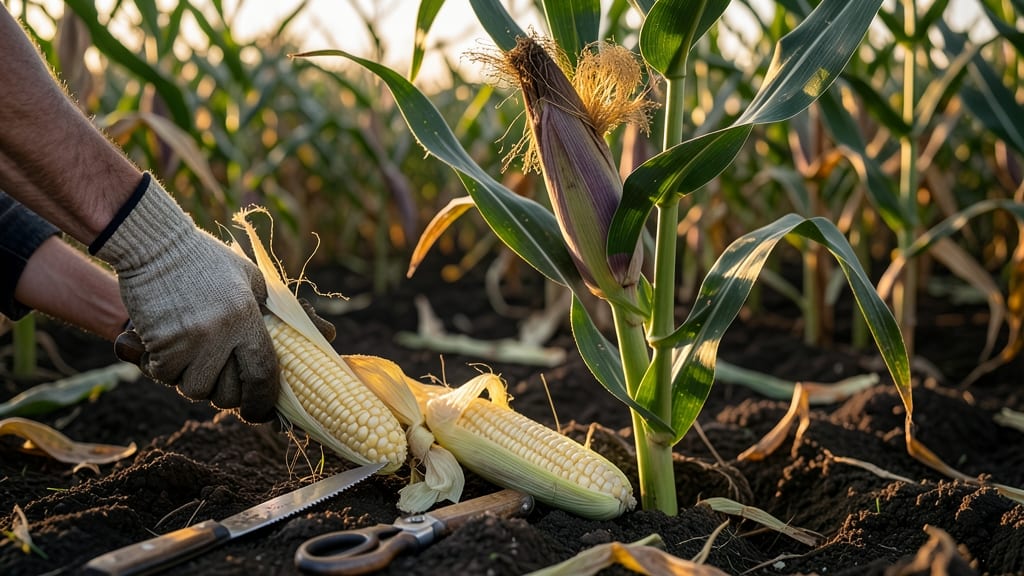
To pick corn from your garden at its sweetest, watch for silks turning brown and kernels reaching the milky stage—this is the 60- to 75-day window after pollination when flavor peaks.
Nothing beats the taste of fresh-picked corn straight from your garden—but timing is everything. Harvest too early, and you’ll miss peak sweetness; too late, and you’ll get tough, dry kernels. Here’s how to master the perfect harvest window for garden-fresh corn.
Most varieties hit their prime when the husk stays snug and kernels press like butter—not watery or starchy. In USDA Zone 6a, that’s typically July through early September, but heat waves can speed things up.
Below, I’ll break down the 3 key signs of ripe corn, how to test sweetness, and pro tips to keep your harvest fresh longer—so you can enjoy that buttery goodness all season.


3 Visual signs to harvest sweet corn at peak ripeness
Harvesting sweet corn at the perfect moment transforms your garden into a treasure trove of buttery, juicy kernels. The difference between peak sweetness and starchy disappointment often comes down to three key visual cues.
Ignoring these signs can mean missing the sweetest window, which typically lasts just 24-48 hours. Let’s break down what to watch for to ensure your corn is harvested at its prime.
First, pay attention to the silks—those long, thread-like strands emerging from the ear. When they first appear, they’re bright green and moist, signaling pollination has begun. But here’s the secret: the silks should turn completely brown and crispy before you harvest.
This browning indicates the plant has finished fertilizing the kernels, and the sugars are now concentrated in the plump, tender kernels.
Next, examine the kernels themselves. At peak ripeness, they’ll be firm to the touch but still slightly milky when pierced with your thumbnail. If you press a kernel and see a white, creamy liquid, that’s your cue to harvest.
This is the milk stage, where sweetness reaches its maximum. Wait too long, and the kernels will transition to the dough stage, becoming starchy and less flavorful.
Finally, check the husk surrounding the ear. A tight, green husk that wraps snugly around the ear is a good sign. If the husk starts to loosen or yellow, the corn may be past its prime.
However, don’t wait until the husk turns fully brown—this is a late-stage indicator that the corn has dried out and lost sweetness.
🌽 3 Visual Signs to Harvest Sweet Corn
- 1. Brown, Crispy Silks: Silks should turn from bright green to dry brown, signaling pollination is complete.
- 2. Milky Kernels: Press a kernel—if it releases white, creamy liquid, it’s at peak sweetness.
- 3. Tight, Green Husks: Husks should stay snug and green; avoid harvesting when they loosen or yellow.
Pro Tip: Harvest in the morning when temperatures are cooler to preserve sweetness.
Timing is everything, especially when it comes to regional climates. In warmer zones (USDA 8-10), corn may mature faster, so keep an eye on those silks and kernels.
In cooler zones (USDA 3-6), the growing season is longer, but you’ll still need to monitor the same visual cues. Pro tip: Harvest a few ears every 1-2 days once they start ripening to ensure you don’t miss the sweet spot.
One common mistake is waiting for the husk to fully brown. By then, the corn is often overripe and starchy. Instead, focus on the silks and kernels—these are the most reliable indicators.
If you’re unsure, do the thumbnail test: press a kernel gently. If it’s firm with a milky center, it’s ready. If it’s doughy or hard, it’s past its prime.
For heirloom varieties, which often have thicker husks, the kernels may take slightly longer to reach peak sweetness. Give them an extra day or two to develop fully. Meanwhile, hybrid varieties tend to ripen more uniformly, so you can harvest them all at once once the silks turn brown.
Always prioritize the visual cues over guesswork—your taste buds will thank you!
Once you’ve mastered these three signs, you’ll never again miss the perfect harvest window. The next time you’re standing in your garden, take a moment to check the silks, kernels, and husks.
When all three align, you’re just minutes away from garden-fresh, sweet corn that rivals anything you’ve bought at the store.
Remember, the sweetness window is short, so don’t hesitate once you spot these signs. Grab your pruners or sharp knife, twist the ear gently, and enjoy the fruits of your labor—literally! With practice, you’ll become a corn-harvesting pro in no time.
How to test corn sweetness: the milk, dent, and dry stages explained
Testing corn sweetness is all about understanding the kernel stages. The milk stage delivers peak sweetness, while the dent stage signals starchy development, and the dry stage means it’s past its prime. Here’s how to tell them apart with a simple finger press test—no fancy tools needed!
Start by peeling back the husks and removing the silks from one ear. Gently squeeze a kernel between your thumb and forefinger. If a milky liquid oozes out, it’s ready to eat!
This stage typically occurs 18-24 days after pollination, depending on the variety. Heirloom corn often stays sweet longer than hybrids.
If the kernel feels doughy but firm and no liquid appears, it’s in the dent stage. This is when corn starts converting sugars into starches, making it less sweet. Most commercial corn is harvested here for storage, but gardeners should aim for the milk stage for the best flavor.
| Stage | Kernel Test | Sweetness Level | Days After Pollination |
|---|---|---|---|
| Milk Stage | Milky liquid when pressed | Peak sweetness | 18-24 days |
| Dent Stage | Doughy, no liquid | Moderate sweetness | 25-35 days |
| Dry Stage | Hard, no moisture | Starchy, dry | 36+ days |
For heirloom varieties, the sweetness window may last 3-5 days longer than hybrids. I’ve found that varieties like Country Gentleman or Golden Bantam stay in the milk stage just a bit longer, so don’t rush to harvest them.
Always test a few kernels from different ears to account for variability in your garden.
If you miss the milk stage, don’t despair! Corn in the dent stage can still be delicious when cooked properly—just boil or grill it longer to soften the starches. But for that buttery, juicy sweetness we all love, the milk stage is non-negotiable. 🌽
Pro tip: Harvest in the morning when sugars are at their peak. Store ears in the fridge with husks intact to preserve freshness for up to a week. For longer storage, blanch and freeze kernels—just be sure to test their sweetness before freezing! 💧