
Picking
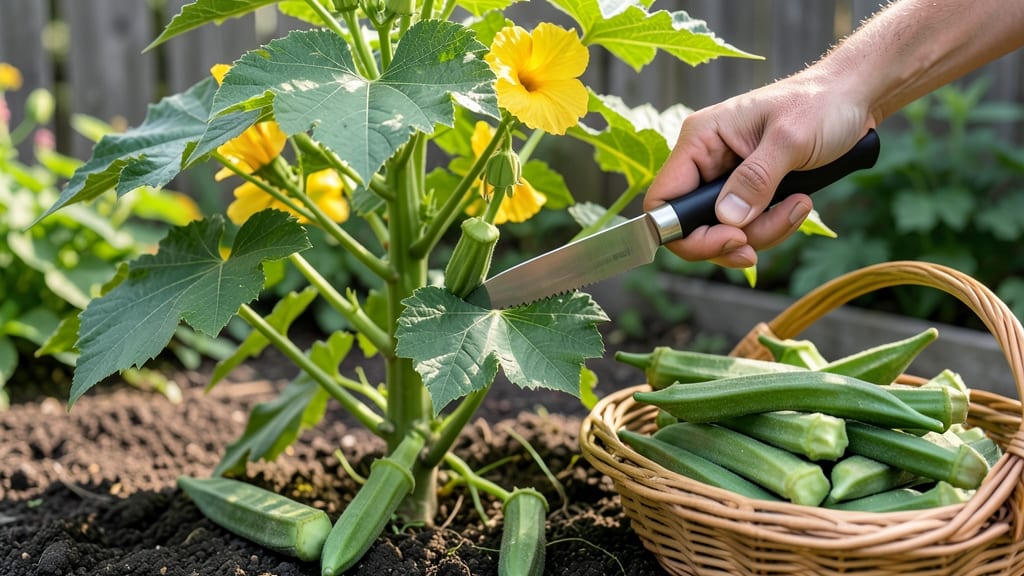
Okra is best picked when to pick okra from the garden at pods that are 2–3 inches long and still tender, before the seeds harden or the skin turns woody.
Picture this: you’ve nurtured your 🌱 okra plants all summer, and now the pods are growing fast—but wait too long, and they’ll go from crisp and delicious to tough as a board. That’s why knowing the exact moment to harvest makes all the difference.
Size isn’t the only clue. Check the skin for a slight fuzzy texture and a deep green color, and pinch the stem—it should snap cleanly, not resist. These small details tell you whether your okra is ready for the kitchen or still needs a few days on the vine.
In this guide, I’ll walk you through the perfect timing, how often to pick for more pods, and what happens if you wait too long. Master these tricks, and you’ll enjoy a steady harvest all season long.


Okra pod size guide: exact inches for peak harvest timing
Harvesting okra at the perfect size ensures tender, string-free pods with the best flavor. The ideal window is narrow—2 to 3 inches—where texture and taste peak before woody fibers develop.
Missing this window means tough, seedy pods that even pressure cookers can't salvage. Let’s break down the exact measurements and visual cues to time your harvest like a pro.
Most okra varieties reach harvestable size 50–70 days after planting, but environmental factors like heat, humidity, and daylight can shift this timeline by weeks.
In hot, southern climates (USDA Zones 8–10), pods mature faster—sometimes in just 45 days—while cooler northern regions (Zones 6–7) may take up to 70 days. Always adjust your expectations based on your local growing season.
Here’s the golden rule: Harvest pods when they’re 2–3 inches long, with a slightly fuzzy texture and deep green color. At this stage, the pods are crisp, tender, and packed with nutrients.
Use a sharp knife or pruners to cut the stem cleanly, leaving a small portion attached to encourage more pods to form.
Regional variations matter—okra in Florida or Texas often grows faster due to longer, warmer days, while Midwest or Northeast gardens may see slower development. If your pods exceed 3 inches, they’re past their prime and will develop woody fibers and large seeds, making them less enjoyable to eat.
🌱Pro Tip: Use a ruler or measuring tape to check pod length daily during peak harvest season. This habit prevents overgrowth and ensures a steady supply of fresh okra.
Environmental factors like temperature and humidity can speed up or slow down okra’s growth. In hot, dry climates, pods may mature faster and require more frequent harvesting. Conversely, cooler or cloudy conditions can delay maturity, so don’t rush—wait for the 2–3 inch benchmark before picking.
Pay attention to the pod’s texture—it’s the best indicator of readiness. A perfect okra pod should feel slightly fuzzy but not woody when you run your thumb along its surface.
If it feels hard or rough, it’s past its prime. Similarly, the color should be a vibrant, deep green; pale or yellowing pods are a sign of overripeness.
🌿Regional Tip: In southern states, okra may produce pods year-round, but focus on harvesting during the hottest months (June–September) for the best flavor. In northern regions, aim to harvest before the first frost in October to avoid bitter, woody pods.
If you’re growing heirloom varieties like ‘Clemson Spineless’ or ‘Emerald,’ expect slightly larger pods (up to 4 inches) at peak harvest. However, even these varieties taste best when picked at 2–3 inches.
Always prioritize consistent harvesting—removing pods regularly encourages the plant to produce more, extending your harvest season by weeks.
🔍Final Check: Before harvesting, gently squeeze the pod. If it yields slightly under pressure (like a ripe avocado), it’s ready. If it’s rock-hard, wait a few days. This simple test saves you from picking too early or too late!
Seed stage checklist: how to test okra readiness before picking
Testing okra pods for readiness is the secret to harvesting tender, flavorful vegetables. I’ve learned that relying solely on size can be misleading—seed development and pod firmness are just as critical.
The right moment balances tenderness with nutritional value, so let’s break down the exact tests I use every harvest season.
Start by examining the pod length—ideal okra should measure between 2 and 3 inches. But don’t stop there! A 2-inch pod might still be too young if the seeds inside aren’t fully developed.
This is where the real science comes in, and skipping these steps often leads to disappointment.
⚠️ callout warning
Picking okra based on size alone is risky. Overripe pods (4+ inches) develop woody fibers and hard seeds, while underripe pods (under 2 inches) lack flavor. Always perform the seed softness test—press firmly on the pod tip. If the seed inside feels firm but not hard, it’s ready!
🌱 Pro Tip: Use a kitchen scale for precision—ready pods should weigh 1.5–2 oz.
Next, check the seed color through the pod’s thin skin. Mature okra seeds should appear dark brown or black when viewed against light. If they’re still pale yellow or green, the pod needs more time.
This visual cue is my fail-safe—never harvest okra with light-colored seeds, as they’ll be bland and seedy.
For the ultimate test, perform the firmness squeeze. Gently press your thumb and forefinger along the pod’s length. A ready pod will yield slightly but not collapse. If it feels spongy or hollow, it’s overripe.
This tactile check is non-negotiable—I’ve learned the hard way that skipping it leads to tough, stringy okra that’s nearly inedible.
Don’t forget to inspect the pod surface. Ready okra has a slightly fuzzy texture, not the smooth, glossy look of immature pods. A fuzzy surface indicates the pod has reached peak tenderness.
If you see yellowing or wrinkling, it’s past its prime and should be harvested immediately—even if it’s not your preferred size.
Finally, check the stem attachment. Pinch the pod where it meets the stem—it should snap cleanly. If it resists or tears, the pod is either too young or overripe. This final test confirms everything else you’ve observed, giving you the confidence to harvest at the perfect moment.
By mastering these four tests—length, seed color, firmness, and surface texture—you’ll never miss the ideal harvest window again. Consistency is key: I harvest my okra plants every 2–3 days to maintain this balance, ensuring a steady supply of tender pods all season long.