
Picking
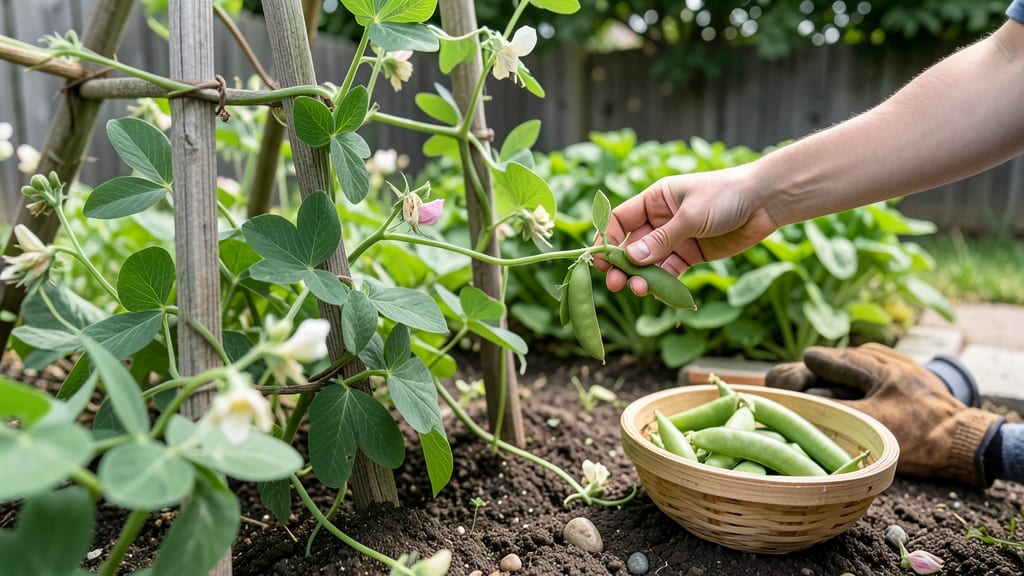
To pick peas from your garden at their sweetest, wait until pods reach 2-3 inches and snap easily when bent—any earlier and you’ll miss peak flavor, any later and they turn tough.
Peas are one of the fastest-growing vegetables in your garden—but harvesting them too early or too late can ruin their sweetness. Timing is everything when it comes to picking peas at their peak for maximum flavor and productivity.
Look for pods that are bright green, slightly curved, and firm to the touch. If seeds are visible inside, you’ve waited too long. The key? Harvest in the morning when pods are cool and crisp for the best taste.
In this guide, I’ll break down the exact size and color cues, how often to pick for continuous harvests, and the common mistakes that turn sweet peas bitter.


Pea pod size & color: exact signs your peas are ready to harvest
Knowing when to pick peas from your garden is all about reading the pod size and color cues—each type of pea (snap, snow, or shelling) has its own perfect moment. Harvest too early, and you’ll miss sweetness; too late, and the pods turn tough or bitter.
Let’s break down the visual and physical signs that tell you your peas are at their peak.
For snap peas, the ideal harvest window is when pods reach 2 to 3 inches long and are bright green with a slight curve.
The pods should feel firm but tender—if they snap easily when bent, they’re ready. Snow peas are best picked when pods are 3 to 4 inches long, flat, and still pale green, with no visible seeds. Shelling peas, meanwhile, should be harvested when pods are 2 to 2.5 inches long and the seeds inside are just starting to form but aren’t yet hard.
Regional variations can shift harvest timelines by 1 to 2 weeks, depending on your USDA zone. In cooler climates (Zones 3-5), peas mature faster—often in 50 to 60 days60 to 75 days.
Always check your seed packet for days to maturity as a baseline, but trust your eyes and fingers for the final call.
Color is your best friend when deciding if peas are ready. Look for vibrant green pods (not yellowing or dull). Overripe peas develop a woody texture and may even split open, signaling it’s past time to harvest. Seed visibility is another key clue: if you can see large, developed seeds through the pod, you’ve waited too long.
A gentle squeeze test is a foolproof way to check ripeness. Press a pod lightly with your thumb and forefinger—if it gives slightly (like a ripe peach), it’s ready. If it feels hard or rubbery, leave it on the vine for another day or two.
For shelling peas, listen for the telltale crunch when you bite into the pod—this confirms the peas inside are tender and sweet.
Morning harvests are ideal because peas lose sweetness quickly in heat. Pick them early, and store them in the fridge for up to 5 days to preserve flavor.
If you’re unsure whether a pod is ready, err on the side of harvesting sooner—peas continue to ripen off the vine but lose quality fast once picked. Pro tip: Use sharp scissors or pruning shears to avoid damaging the plant.
Watch for regional maturity shifts. In cooler climates (like the Pacific Northwest), peas may mature 10 to 14 days earlier than in hotter zones (like the Southwest).
Pay attention to your local first frost date too—spring-planted peas should be harvested 2 to 3 weeks before frost, while fall-planted varieties can handle light frosts.
One common mistake is ignoring pod shape. Curved pods (like those of sugar snap peas) are always ready when they’re slightly swollen at the seam. Flat pods (like snow peas) should be fully elongated but still flexible.
If pods start to yellow or shrivel, your plant is signaling it’s done producing for the season.
Extend your harvest by picking consistently
How often to harvest peas for maximum yield & sweetness
Harvesting peas at the right frequency keeps your plants productive and ensures the sweetest flavor. Daily picking is ideal during peak production, but overharvesting can stress plants. The key is balance—remove only mature pods while leaving younger ones to develop.
I’ve found that mornings after dew dries are the best time to harvest, as pods are crispest then.
If you miss a day or two, don’t panic—peas won’t spoil on the vine, but their flavor and texture will decline. Overripe peas become tough, starchy, and lose sweetness, which also signals the plant to redirect energy to seed production instead of new pods.
This can shorten your total harvest window, so consistency is critical for a prolonged yield.
For snap peas and snow peas, aim to harvest every 2-3 days once pods start forming. Shelling peas can handle slightly longer gaps—every 3-4 days—since their sweetness peaks later in development. Always check pods for readiness before harvesting; a quick pinch test (they should yield slightly) confirms ripeness.
- Pick daily during peak production (when pods appear every 2-3 days). This encourages more flowers and pods to form.
- Harvest every 2-3 days for snap/snow peas and every 3-4 days for shelling peas once pods mature.
- Stop harvesting when 50% of pods turn yellow or brown—this signals the end of the plant’s productive cycle.
- Use clean scissors or fingers to avoid damaging vines; twist pods gently to snap them cleanly at the stem.
- Extend the season by succession planting every 2 weeks—this ensures a continuous harvest for 6-8 weeks.
Proper spacing plays a huge role in harvest frequency. Crowded plants compete for sunlight and nutrients, slowing pod development. Trellis-supported peas spaced 2-3 inches apart produce more efficiently than bush varieties, which need 4-6 inches between plants.
I’ve seen trellised peas yield 30-50% more simply because airflow and light reach all pods.
To extend your harvest season, try succession planting every 2-3 weeks in early spring or late summer. This staggered approach ensures you’re always picking fresh pods while older plants fade.
In cooler climates, a light row cover can push harvests into early fall, adding 2-3 extra weeks of productivity before frost.
Remember, the goal is to keep your pea plants happy and productive. Regular harvesting isn’t just about flavor—it’s about telling your plants, “Keep going!” By following these tips, you’ll enjoy a bounty of sweet, tender peas all season long. Happy harvesting! 🌱✂️🌿