
Picking
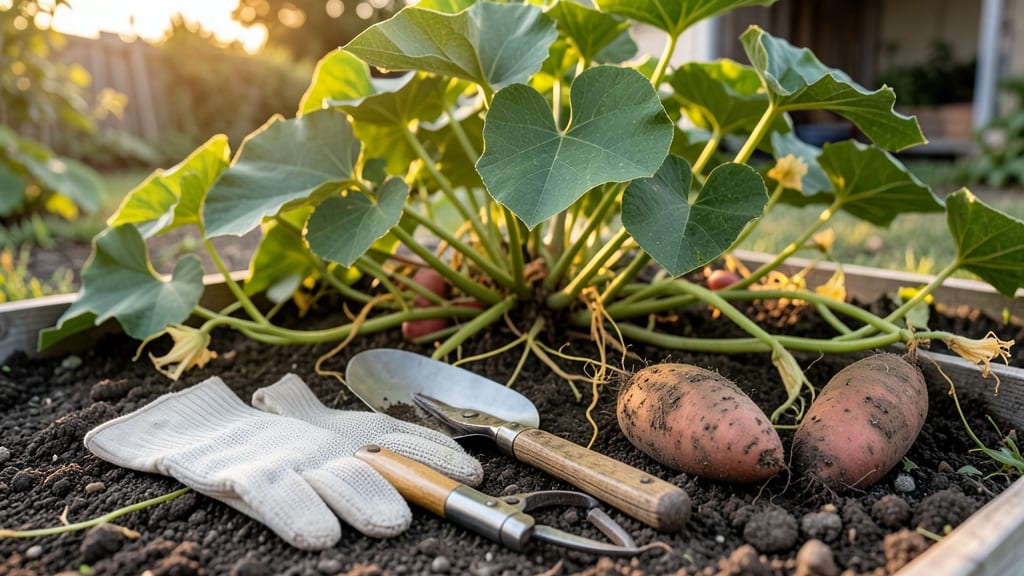
To pick sweet potatoes from the garden at the perfect time means waiting until the vines yellow and the skin slips easily—90 to 120 days after planting, depending on your zone.
Sweet potatoes are a gardener’s reward—juicy, starchy, and packed with flavor—but knowing exactly when to harvest them is the difference between perfect storage potatoes and woody, bitter tubers.
If you dig too early, the tubers won’t have developed their signature sweetness or thick skin. Too late, and a frost can ruin your harvest before you even notice. The key? Watching for three clear signs: vine color, skin toughness, and leaf drop.
Below, I’ll break down the skin slip test, how to adjust care as harvest nears, and what to do if you miss the window—so you end up with a pantry full of flavorful, long-lasting sweet potatoes instead of a pile of disappointments.


How to use the skin slip test for perfect sweet potato harvest timing
Harvesting sweet potatoes at the right time transforms your garden into a stash of storage-friendly tubers instead of woody, tough rejects. The skin slip test is my go-to method because it cuts through guesswork—no more relying on vague days-after-planting estimates.
This simple trick lets you feel the difference between a perfect potato and one that needs more time.
Here’s the secret: when the skin slips easily from the tuber (like a tight glove coming off), that’s your cue to harvest. But timing matters—test too early, and you’ll dig up undersized potatoes. Test too late, and you risk frost damage or shrunken tubers.
I’ll walk you through exactly when to test, what to look for, and how to avoid common mistakes that turn your harvest into a gamble.
Before you dig, know this: the skin slip test works best after 90-120 days of growth, when vines start yellowing. But don’t wait until they’re completely dead—that’s a missed opportunity for peak flavor and storage life.
Below, I’ve broken down the key indicators and included a quick-reference table to keep you on track.
To perform the skin slip test, gently peel back a small section of the skin near the tuber’s neck (where it connects to the vine). If it slips off like a sleeve, your sweet potato is ready. If it resists or tears, give it another week.
Pro tip: Test 3-4 tubers from different plants—some varieties ripen faster than others. I once missed my harvest because I only tested one tuber, only to find the rest were still underripe!
Why does this test work? The skin’s toughness is nature’s timer. As starches convert to sugars, the skin naturally loosens its grip on the tuber. This happens 2-3 weeks before the vines fully die back, so you’re not waiting until the last minute.
For short-season climates, this is especially critical—you don’t want to gamble on frost nipping your crop before it’s ready.
Regional differences matter here. In Zone 7 and warmer, you might have a 2-week window to harvest after the skin slips. But in Zones 5-6, act faster—frost can sneak in within days.
I’ve learned the hard way that October’s first frost is no joke, even if your sweet potatoes look perfect. Always check your local frost dates and adjust your harvest timeline accordingly.
One mistake I see often is digging too aggressively when the skin slips. Sweet potatoes are fragile when ripe, so use a fork or your hands to gently loosen soil around the base of the plant.
Avoid stabbing downward—you’ll puncture the tubers. After harvesting, let them cure in warm conditions (80-85°F) for 5-10 days to develop their sweetness and toughen the skin for storage.
Remember: the skin slip test isn’t just about ripeness—it’s about quality. Tubers harvested at this stage store 3-4 months longer than those picked early or late. Plus, they’ll have that deep, caramel-like flavor that turns sweet potatoes from a side dish into a star.
Next time you’re in your garden, grab a few tubers and give the slip test a try—your future meals will thank you!
Sweet potato vine guide: when to stop fertilizing and what to watch for
Your sweet potato vines are the first clue about harvest timing—when they start yellowing and dying back, it’s time to pause care and focus on tuber maturity.
Over-fertilizing late in the season can actually reduce storage quality, so knowing when to stop feeding is just as critical as when to plant.
Watch for leaf drop and vine yellowing, which signal the plant is redirecting energy to tuber development. This shift usually happens 8-10 weeks after flowering, but exact timing depends on your climate zone and variety. In cooler regions, frost risk accelerates this process.
⚠️ WARNING: Over-Fertilization Risks ⚠️
- Vines turn yellow and begin wilting (signals tuber maturation)
- Leaves drop more than 50% (plant shifts resources underground)
- Frost threatens within 2-3 weeks (tubers won’t develop properly)
Why it matters: Late-season nitrogen promotes vine growth, not tuber development. This leads to small, woody potatoes that store poorly.
Instead of fertilizing, focus on water reduction—cut back to bi-weekly deep watering to harden the skins. This helps tubers develop thicker, storage-friendly skins. Avoid overhead watering, which can spread diseases like black rot as vines senesce.
Your sweet potato tubers are ready when they’re 2-3 inches in diameter and the skin slips easily when you gently peel back a small section. This skin slip test is your final check before harvest—if the skin resists, wait another week.
In short-season climates, prioritize harvest before the first frost. Even a light freeze can ruin tuber quality, making them bitter and unfit for storage. Use straw mulch to insulate soil if frost is imminent, but don’t delay harvest indefinitely.
Once you’ve stopped fertilizing, monitor for pests like sweet potato weevils, which thrive in stressed plants. Handpick damaged leaves and remove them from the garden to prevent tuber infestation. Healthy, well-timed care now means longer storage life and sweeter potatoes later!