
Planting
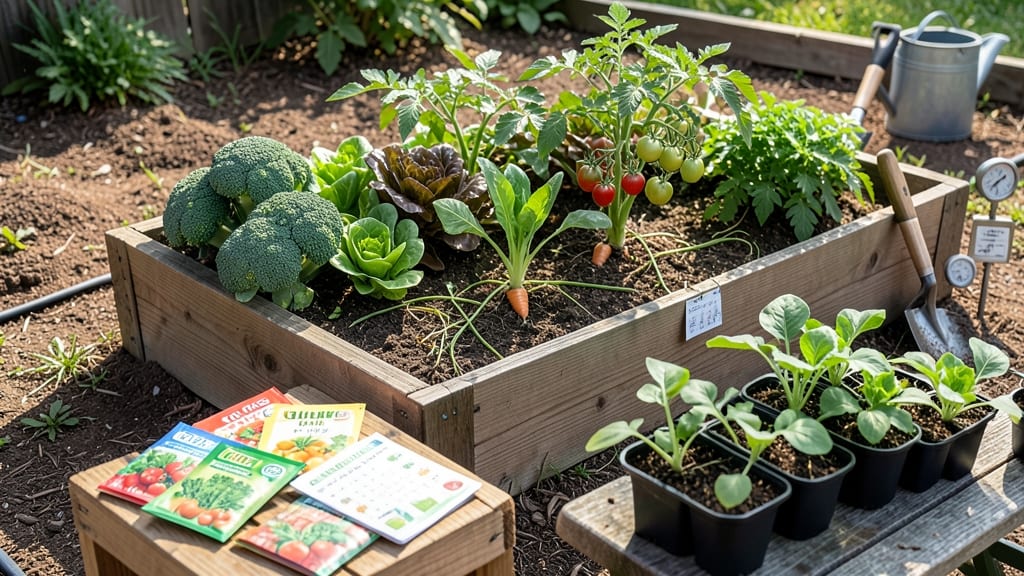
To plant a vegetable garden in California at the best time means timing it with your microclimate—whether you’re in foggy coastal Zone 10 or the 9a desert where winter frosts linger.
California’s diverse microclimates—from coastal fog to desert heat—mean planting your vegetable garden at the wrong time can spell disaster for your harvest. Get the exact months to start seeds, transplant seedlings, and extend your growing season based on your region’s unique conditions.
Inland valleys like Sacramento hit 90°F by May, while coastal Santa Barbara stays mild year-round. That’s why a one-size-fits-all calendar fails: your neighbors’ timing might be all wrong for your garden.
Below, I break down the perfect planting windows for each zone, plus succession strategies to keep your harvests rolling from January through December.
California planting calendar by microclimate: coastal vs. valley vs. desert timelines
California’s three distinct microclimates—coastal, Central Valley, and desert—create wildly different planting windows for your vegetable garden. The coastal fog belt (e.g., San Francisco) allows year-round growing, while the Central Valley (e.g., Sacramento) has defined frost dates, and the desert (e.g., Palm Springs) demands heat-tolerant varieties.
Below, I’ve broken down the ideal planting months for 20+ common crops, including frost-sensitive tomatoes and peppers, plus cool-season lettuce and kale.
Use this guide to time your seed starting, transplanting, and succession plantings for maximum yields. Remember: coastal gardens can direct-sow almost anytime, while valley and desert zones rely on frost-free dates and heat tolerance thresholds.
For example, tomatoes thrive in the valley’s spring and fall but bolt in desert summers unless you choose heat-set varieties.
| Crop | Coastal (Zone 10) | Central Valley (Zone 9b) | Desert (Zone 9a) |
|---|---|---|---|
| Leafy Greens (Lettuce, Spinach, Kale) | Year-round (avoid summer heat) | Sept–March (transplant) | Oct–Feb (shade cloth in summer) |
| Tomatoes | Feb–Sept (transplant) | Feb–April or Aug–Sept | Feb–March (heat-tolerant varieties) |
| Peppers | Feb–Sept (transplant) | March–April or Sept | Feb–March (shade in summer) |
| Carrots | Feb–Nov (direct-sow) | Sept–April (avoid summer) | Oct–Feb (shade cloth) |
| Beans (Bush/Pole) | March–Sept (direct-sow) | April–June or Aug–Sept | March–April (avoid summer) |
| Cucumbers | March–Sept (transplant) | April–May or Sept | Feb–March (drip irrigation) |
| Broccoli | Jan–Aug (transplant) | Sept–Oct or Feb–March | Oct–Nov (shade cloth) |
| Basil | Feb–Oct (transplant) | March–April or Sept | Feb–March (avoid summer) |
For coastal gardens, the key is avoiding summer heat stress. For example, lettuce bolts in temperatures above 80°F, so I plant it in spring and fall even in San Francisco. Use shade cloth (30–50%) to protect seedlings from coastal sunburn during June–August.
In the
How to adjust planting times for your specific county: using USDA zones and local weather data
California’s USDA hardiness zones range from 9a to 11, but your exact planting dates depend on more than just your zone. Local weather patterns, elevation changes, and even urban heat islands can shift ideal planting windows by weeks.
For example, San Diego’s coastal zone 10 allows year-round planting, while Fresno’s inland zone 9b requires careful timing to avoid summer heat stress.
To get precise planting dates, combine USDA zone data with real-time NOAA climate maps and UC Master Gardener reports. These free tools account for microclimates like wind exposure (coastal areas) or urban heat islands (city centers).
For instance, Sacramento’s elevation differences can create a 2-week variation in frost dates between downtown and suburban areas.
Here’s how to fine-tune your planting schedule using these resources:
Let’s say you’re in Sacramento (zone 9b). The UC Master Gardener recommends planting cool-season crops like broccoli in October–November and warm-season crops like tomatoes in March–April.
However, if your garden sits in a south-facing urban heat island, you might push tomato planting to late April to avoid bolt risk from early heatwaves.
For San Diego (zone 10), the rules are different. You can plant lettuce in January and still harvest by June, but coastal fog can delay tomato ripening.
To work around this, use black plastic mulch to warm the soil or choose heat-tolerant varieties like Solar Fire tomatoes. In contrast, Fresno’s desert zone requires shade cloth for summer crops to prevent wilting.
Start by mapping your garden’s microclimate. Note wind exposure, nearby buildings (which trap heat), and soil type. Then, cross-reference these factors with USDA zone data, NOAA frost maps, and UC Master Gardener guides to create a custom planting timeline.
For example, my Sacramento garden in a sunken bed stays 5°F cooler than my raised beds, so I plant peppers in the raised beds 2 weeks earlier than in the sunken area.