
Planting
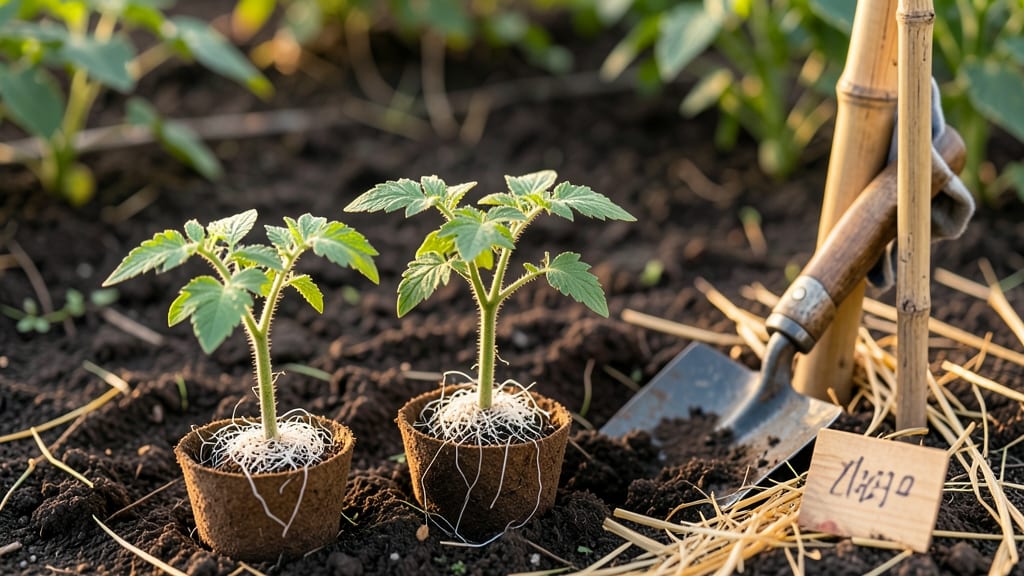
To plant tomato seedlings in the garden, wait until after your last frost date and when soil temperatures hit at least 60°F—any earlier, and you risk stunted growth or frost damage.
Timing your tomato seedlings perfectly can mean the difference between a bountiful harvest and wasted effort—get it wrong, and frost or heat stress can ruin your plants before they even take root.
In USDA Zone 6a, where many gardeners live, that window typically opens in late April or early May, but regional variations mean your exact date could be weeks earlier or later.
Below, I break down the ideal soil temps, frost-free deadlines by zone, and how to adjust for early or late varieties to maximize your 🍅 harvest.
Optimal soil temperature and frost-free deadlines for planting tomato seedlings by USDA Zone
Planting tomato seedlings at the right time is critical—soil temperature and frost-free dates determine whether your plants thrive or struggle. Tomatoes need warm soil (55-65°F) to establish roots quickly, and transplanting too early risks cold damage or stunted growth.
In colder climates, this means waiting until late spring, while warmer zones can start as early as February. Let’s break down the ideal planting windows by USDA zone so you can time it perfectly for your region.
First, check your last frost date—this is your starting point. Tomatoes are frost-sensitive, so planting before the last frost (or even a few weeks after) can lead to transplant shock or death. However, soil temperature matters more than air temperature.
Use a soil thermometer to confirm the ground has warmed to at least 55°F at a depth of 2-4 inches. For most varieties, 60-65°F is ideal for robust root growth.
Here’s a zone-by-zone breakdown of when to plant, including soil temperature thresholds and frost-free deadlines. Northern zones (3-7) have shorter growing seasons, while Southern zones (8-11) can plant earlier but must avoid summer heat stress for certain varieties.
In Northern zones (3-6), the window is tight—you’ll need to harden off seedlings for 7-10 days before transplanting to prevent shock. Start seeds indoors 6-8 weeks before your last frost date, then move them outside only when nighttime temps stay above 50°F.
For example, in Zone 5, this means starting seeds in early April for a late May planting.
Southern gardeners (Zones 8-11) enjoy longer seasons but must watch for heat stress. Plant early varieties in February to avoid the brutal summer heat, which can cause blossom drop.
In Zone 10, you can even plant a fall crop in August for a late harvest, but choose heat-tolerant varieties like ‘Solar Fire’ or ‘Heatmaster.’
Don’t rely solely on frost dates—always check soil temperature. Cold soil slows root growth, making seedlings vulnerable to disease. If your soil is still chilly, wait a week or two or use black plastic mulch to warm it faster.
Pro tip: Bury a soil thermometer at planting depth for accuracy, especially in microclimates like south-facing beds that warm up quicker.
One common mistake is planting too early to "beat the heat," but cool soil stresses seedlings more than summer heat does. If you’re in a transitional zone (7-8), consider two plantings: one in early spring for early varieties and another in late summer for heat-tolerant types.
This stretches your harvest and maximizes yield.
For container gardening, soil warms faster, so you can plant 2-3 weeks earlier than in-ground. Just ensure pots have drainage holes and use heat-retentive materials like fabric grow bags. In Zone 6, this might mean planting in late April instead of mid-May.
Finally, keep an eye on weather forecasts for late frosts. Even after your average last frost date, a cold snap can devastate young plants. If frost is predicted, cover seedlings with row fabric or a cloche for protection.
With the right timing, your tomato seedlings will thrive, not just survive!
How to adjust planting time for early vs. late varieties and short vs. long seasons
Adjusting your tomato planting schedule for early vs. late varieties and short vs. long growing seasons can double your harvest potential. In regions with 90-day growing seasons, like Zone 4-5, choose early-maturing varieties (e.g., 'Stupice' or 'Early Girl') to avoid frost.
Meanwhile, long-season zones (Zone 7-10) can support late-blooming varieties like 'Brandywine' or 'Cherokee Purple' for fall harvests.
Your growing season length determines which tomato varieties thrive. Short seasons benefit from determinate (bush) tomatoes that ripen quickly, while long seasons allow for indeterminate (vining) tomatoes that produce all season.
For example, 'Roma' (60-70 days) works in Zone 5, but 'Sungold' (80+ days) needs Zone 8+ for full maturity.
🌱 Early vs. Late Varieties: Pros & Cons
- ✅ Ripen in 50-70 days
- ✅ Ideal for short seasons
- ✅ Lower risk of late blight
- ❌ Smaller fruit size
- ❌ Limited flavor depth
- ✅ Larger, flavorful fruit
- ✅ Better for long seasons
- ✅ Continuous harvest
- ❌ Vulnerable to early frost
- ❌ Requires season extension
Extend your growing season with seasonal tools like row covers or cold frames. For early planting in Zone 4-5, use floating row covers to protect seedlings until soil warms to 55°F+.
In Zone 7-10, shade cloth (30-50%) helps heat-sensitive varieties like 'Black Krim' avoid sunscald during summer.
Calculate your planting window by subtracting your variety’s days to maturity from your first frost date. For example, in Zone 6 (180 frost-free days), a 70-day tomato should be planted by June 10 for a fall harvest. Use succession planting every 2-3 weeks to stagger harvests in long seasons.
For short-season zones, prioritize cool-season varieties like 'Mountain Merit' (resistant to cracking) or 'Glacier' (tolerates 50°F nights). In hot climates (Zone 9-10), opt for heat-tolerant varieties such as 'Solar Fire' or 'Heatmaster' that thrive in 90°F+ temperatures without bolting.
Always monitor soil temperature—tomatoes need 60°F+ to thrive. Use a soil thermometer to avoid planting too early, even if air temps are warm. Pair early varieties with season extenders (e.g., hoop tunnels) for a 3-4 week head start in cold regions.