
Tools
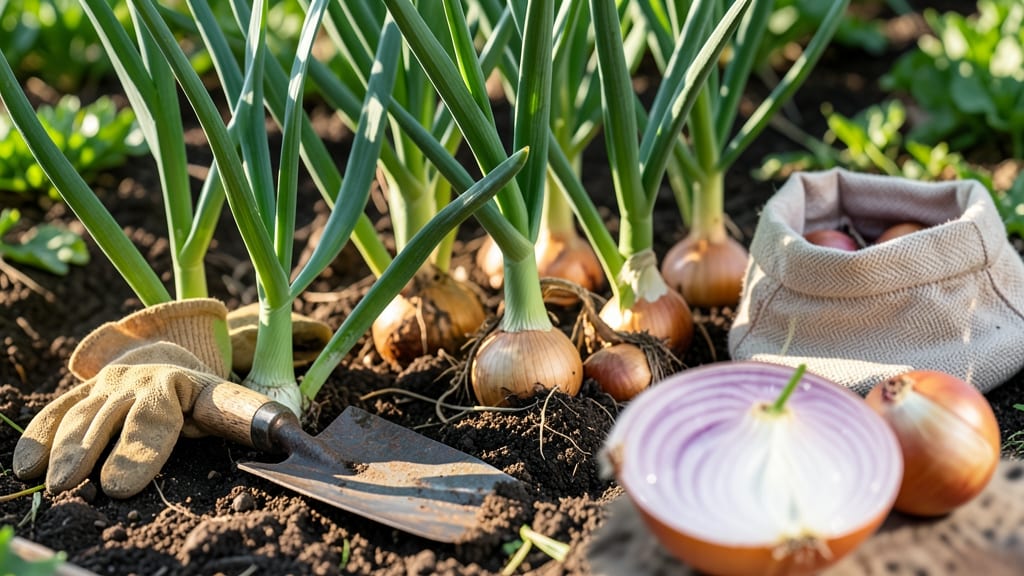
Pull onions from your garden when their tops yellow and fall over—this classic tops fall over test is your cue for peak flavor and storage success.
Picture this: you’ve nurtured your 🧅 from tiny sets to lush green tops, but harvest too soon and you’re left with tiny, pungent bulbs. Wait too long, and they split or rot in the ground. The right moment makes all the difference, and it’s easier to spot than you think.
Most onion varieties in USDA Zone 6a reach this stage between June and July, but climate plays a role. Warmer regions may mature faster, while cooler areas could need an extra week or two.
The key is watching for those telltale signs: bulbs about 1-2 inches wide and tops that flatten like a bow.
Below, I’ll break down the exact visual cues, how to adjust for your local growing conditions, and what to do once you’ve pulled them—because the harvest isn’t over when they leave the soil.
The tops fall over test: how to know when onions are ready
There's nothing worse than pulling an onion too early—only to find a tiny, pungent bulb that lacks sweetness—or waiting too long and ending up with a split, bitter mess. The tops fall over test is my foolproof method for determining the perfect harvest moment.
When your onion tops turn straw-colored and flop dramatically, that's nature's signal it's time to dig. This simple visual cue saves hours of guesswork and ensures you get the best flavor and longest storage life.
But here's the catch: not all onions follow the same timeline. Short-day varieties (like Texas Early White) mature faster in warm climates, while long-day onions (such as Yellow Sweet Spanish) need cooler temperatures to trigger bulb formation.
Even the bulb size matters—aim for 1-2 inches in diameter for ideal fresh eating or storage. The good news? Once you master this test, you'll never second-guess harvest time again.
Step-by-Step: The Tops Fall Over Test
- 1 Check leaf color: Look for 50-70% of tops turning yellow (not green). Healthy green leaves mean the bulb isn't ready.
- 2 Test top stability: Gently push the top down. If it stays flat (not springing back up), it's ready. Upright tops need more time.
- 3 Measure bulb size: Dig up one onion to check for 1-2 inch diameter. Smaller bulbs (under 1 inch) lack flavor, while larger ones may split.
- 4 Inspect the neck: The stem should tighten and feel papery. A soft neck means the bulb isn't mature enough.
- 5 Harvest timing: Pull onions on a dry morning after dew evaporates. Wet soil makes bulbs prone to rot during curing.
Timing your harvest correctly isn't just about flavor—it's about storage potential too. Onions pulled at the right moment develop a protective papery skin that prevents spoilage. If you harvest too early, the bulbs won't store well and may sprout.
Conversely, waiting too long risks bolt formation (flowering) or splitting, which ruins the bulb's integrity. For long-term storage (6+ months), aim for harvests in late summer when bulbs have fully matured.
Pro tip: If you're growing onions for fresh eating (not storage), you can harvest slightly earlier when bulbs reach 1 inch in diameter. These "baby onions" have a milder taste and work great in salads.
But for cooking or long-term storage, always wait for the full tops fall over signal. The difference in flavor and texture is night and day.
Climate plays a huge role in harvest timing. In hot climates (like Zone 9-10), onions may mature in just 90 days, while cooler regions (Zone 3-5) can take 120 days. Pay attention to your local last frost date—most onions need 100-120 frost-free days to reach maturity.
If you're unsure, plant a test row 2-3 weeks before your expected harvest date to monitor progress.
One common mistake is assuming all onions are ready at once. Bulb maturity varies by variety and even within the same patch. That's why I recommend harvesting in stages: Start with the onions showing the most yellowing, then check others every 3-5 days.
This staggered approach ensures you get the best quality from each plant. And remember—never pull onions by their tops. Always grasp the bulb base to avoid damaging the skin.
After harvest, onions need 10-14 days of curing in a dry, shaded area with good airflow. This drying process hardens the skin and prevents rot. If you skip curing, your onions will store poorly and may spoil within weeks.
For best results, tie them in small bunches and hang them upside down or lay them out on a screen. Once fully cured, store them in a cool, dark place with 60-70% humidity for maximum shelf life.
Mastering the tops fall over test transforms onion harvesting from a guessing game into a precise science. The next time you see those yellowing tops flop, you'll know exactly when to reach for your gardening gloves.
With this method, you'll enjoy sweeter, larger bulbs that store beautifully—making your garden's onion harvest the envy of every neighbor.
Onion variety harvest times: when to pull short-day vs. long-day onions
Not all onions mature at the same time—your choice between short-day and long-day varieties dictates when to pull them from the garden. Short-day onions, like Texas Early White, thrive in warm climates and reach harvest in just 90-110 days, often by early summer.
Long-day types, such as Yellow Sweet Spanish, need cooler temps and take 110-130 days, maturing later in the season.
Your USDA zone also shifts harvest timing. In Zones 3-5, long-day onions may not mature until late summer, while short-day varieties in Zones 7-10 can be ready as early as May.
Even within the same variety, red onions tend to mature faster than yellow or white types, sometimes by 10-15 days.
| Variety Type | Days to Maturity | Harvest Window | Best For |
|---|---|---|---|
| Short-Day (e.g., Texas Early White) | 90-110 days | May-June (Zones 7-10) | Warm climates, fresh use |
| Long-Day (e.g., Yellow Sweet Spanish) | 110-130 days | July-August (Zones 3-6) | Cool climates, storage |
| Red Onions (e.g., Red Creole) | 80-100 days | May-June (all zones) | Fresh eating, quick harvest |
| White Onions (e.g., White Bermuda) | 100-120 days | June-July (Zones 4-9) | Storage, cooking |
Climate plays a surprising role in harvest timing. In hot summers, onions may mature faster but risk splitting if soil stays too dry. Conversely, cool, wet springs can delay maturity by 2-3 weeks.
For example, in Zone 8, short-day onions might be ready by late April, while in Zone 5, the same variety could wait until June.
Storage onions, like Yellow Granex, need extra time to develop thick necks for long-term storage. These varieties often take 10-15 days longer than fresh-eating types.
If you’re growing for storage, aim to harvest when bulbs are 2-3 inches wide and tops have fully collapsed—this ensures they’ll keep for months in a cool, dry place.
Pro tip: Mark your planting dates to track maturity. For long-day onions in Zone 4, start seeds indoors 8-10 weeks before your last frost date to align harvest with cooler summer temps.
In warmer zones, direct-sow short-day varieties in fall for a spring harvest, avoiding the heat stress that can ruin bulbs.
Watch for leaf yellowing and bulb firmness—these are your final cues. Even if the calendar suggests harvest time, trust the plant’s signals over rigid dates. After all, the goal is flavorful, usable onions, not just following a schedule.