
Fertilization
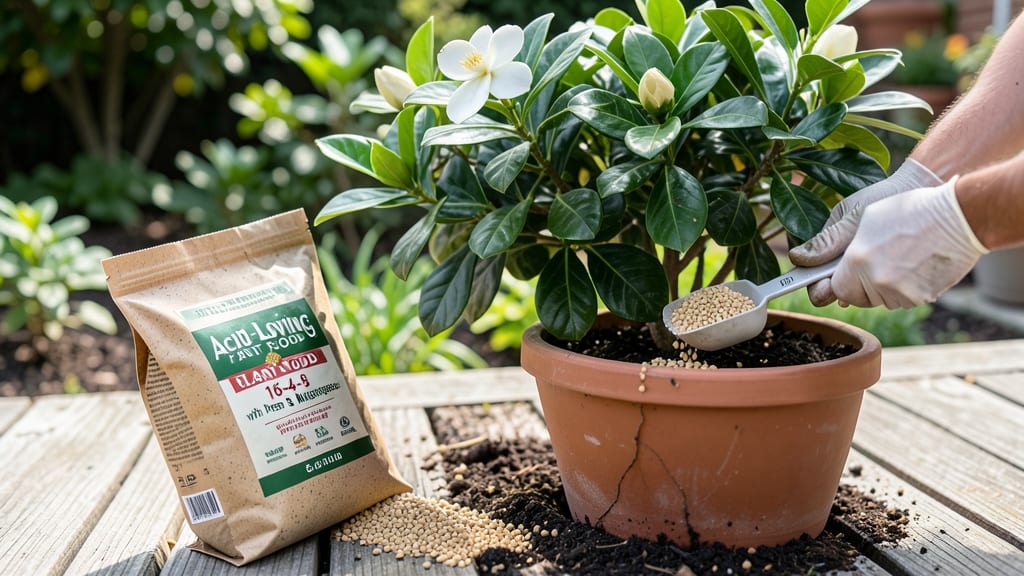
Feeding potted gardenias 🌸 the right acidic fertilizer is the key to those fragrant blooms you love — but most gardeners overdo it, burning roots and stunting growth.
You’ve probably noticed your gardenia’s leaves yellowing or dropping buds despite your best care. The issue? A mismatch between what these acid-loving plants need and what you’re giving them. Too much fertilizer means salt buildup; too little means weak stems and sparse flowers.
The solution lies in a precise feeding schedule tailored for containers, where nutrients leach out faster than in garden beds.
In this guide, I’ll walk you through the best fertilizers for potted gardenias, from organic options like citrus bloom to synthetic blends designed for acid-loving plants.
You’ll learn exactly when to feed, how to adjust for pH, and the warning signs of over- or under-fertilizing — so you can keep your gardenia thriving without the guesswork.
Ready to transform your potted gardenia from struggling shrub to showstopper? Let’s dive into the science-backed schedule that’s worked for thousands of container gardeners — including a few simple fixes for plants that are already on the decline.
Best acid-loving fertilizers for potted gardenias: pH and nutrient breakdown
Potted gardenias thrive when their soil stays between pH 5.0 and 6.5, but most garden soils run neutral (pH 7.0). The key to vibrant blooms lies in choosing fertilizers that lower pH while delivering essential nutrients—without harming delicate roots.
Organic options like citrus bloom and fish emulsion work slowly, while synthetic iron sulfate provides quick acidification. Let's break down which fertilizers work best for your container-grown gardenias and how to spot when they're hungry (or overfed).
Gardenias are heavy feeders but sensitive to salt buildup in pots. That's why I recommend two types of fertilizers: one for acidifying the soil and another for balanced nutrition.
For example, I use iron sulfate to drop pH levels quickly, then follow up with Azalea/Camellia fertilizer (specifically formulated for acid-loving plants) to provide nitrogen, phosphorus, and potassium. The combination keeps my gardenias blooming from spring through fall.
Here’s how to choose the right fertilizer for your potted gardenias based on their current needs:
| Fertilizer Type | pH Impact | NPK Ratio | Best For | Application Rate | Signs of Deficiency |
|---|---|---|---|---|---|
| Iron Sulfate (Synthetic) | Drops pH 1.0-2.0 points per application | 0-0-0 (pure acidifier) | Quick pH correction (yellowing leaves) | 1 tsp per gallon of water (monthly) | Yellow leaves (chlorosis) |
| Citrus Bloom (Organic) | Lowers pH 0.5-1.0 points over time | 4-3-3 + micronutrients | Slow-release blooms (spring/fall) | 1 tbsp per 1 gallon (every 6 weeks) | Stunted growth, fewer buds |
| Fish Emulsion (Organic) | Mild acidification (pH 6.0-6.5) | 5-1-1 (high nitrogen) | Leafy growth (early spring) | 1 tbsp per 1 gallon (every 4 weeks) | Brown leaf tips (nitrogen burn) |
| Azalea/Camellia Fertilizer (Synthetic) | Maintains pH 5.0-6.5 | 8-3-9 or 10-10-10 | Balanced blooms (year-round) | 1 tbsp per 1 gallon (every 6 weeks) | Pale green leaves (magnesium deficiency) |
| Peat Moss (Organic Amendment) | Lowers pH 0.5-1.0 points long-term | N/A (soil amendment) | Soil structure (mix into potting soil) | 1 part peat to 3 parts soil | Compacted soil (root rot risk) |
Notice how iron sulfate is the fastest way to correct high pH, while peat moss provides long-term acidification. I’ve found that combining these with a balanced Azalea fertilizer gives my gardenias the perfect mix of nutrients and acidity.
For example, if your gardenia’s leaves turn yellow between the veins (a classic sign of iron deficiency), a foliar spray of chelated iron works faster than soil amendments.
One mistake I’ve seen gardeners make is overapplying synthetic fertilizers, which can raise soil salinity in pots. Always flush the soil with water after fertilizing to prevent salt buildup. For organic options like fish emulsion, I dilute it to half-strength to avoid burning roots.
Pro tip: Test your soil’s pH every 3-4 months using a simple test kit—gardenias won’t bloom if the pH drifts above 6.5.
Here’s how to adjust your feeding based on what you observe:
- <
Monthly fertilizing schedule: when and how to feed potted gardenias
Potted gardenias thrive on a seasonal feeding schedule that matches their natural growth cycles. Unlike in-ground plants, container-grown gardenias face nutrient leaching and limited root space, so precise timing and fertilizer types make all the difference.
I’ve learned the hard way that overfeeding in winter can actually kill new growth before frost arrives—so let’s get this right.
Gardenias love acidic, balanced fertilizers with ratios like 8-3-9 or 10-10-10, but the key is applying them at the right time. Too much nitrogen in summer can burn roots, while skipping spring feeds delays blooms.
Below, I’ll break down the exact schedule I follow, including how to adjust for foliar sprays vs. soil drenches for maximum results.
🌱 Seasonal Fertilizing Guide for Potted Gardenias
- 🌱 January–February: No fertilizer—gardenias are dormant. Focus on light pruning and checking soil moisture.
- 🌿 March: Light feed with half-strength acidic fertilizer (e.g., 10-10-10). Encourages root growth before blooming season.
- ☀️ April–May: Full feed every 4–6 weeks with 8-3-9 or Azalea fertilizer. Use foliar spray (diluted) for extra phosphorus to boost blooms.
- 🌞 June–August: Reduce to every 6–8 weeks. Switch to low-nitrogen fertilizer (e.g., 5-10-10) to prevent leafy growth over blooms.
- 🍂 September–October: No fertilizer. Let the plant harden off for winter. Remove spent blooms to redirect energy to roots.
- ❄️ November–December: Dormancy care. Water sparingly and avoid fertilizers. Move pots to protected shade if temperatures drop below 40°F.
💡 Pro Tip: Always water before fertilizing to prevent root burn!
For foliar sprays, mix 1 tsp liquid fertilizer (like citrus bloom) in 1 gallon of water and apply in the early morning. This method is great for quick nutrient uptake, especially if your gardenia shows signs of yellowing leaves (a classic iron deficiency).
I’ve seen blooms double in just 2 weeks after switching to foliar feeds mid-summer!
If you notice crispy leaf edges after fertilizing, flush the soil with water for 10 minutes to leach excess salts. Gardenias in pots are sensitive to salt buildup, so always use rainwater or distilled water for mixing fertilizers.
And remember: less is more—these tropical beauties prefer gentle feeding over heavy doses.
One of my biggest mistakes was using high-nitrogen lawn fertilizer on a gardenia—it produced leaves instead of blooms! Stick to acid-loving plant formulas, and your gardenia will reward you with scented blooms from spring to fall. Happy growing!