
Light Requirements
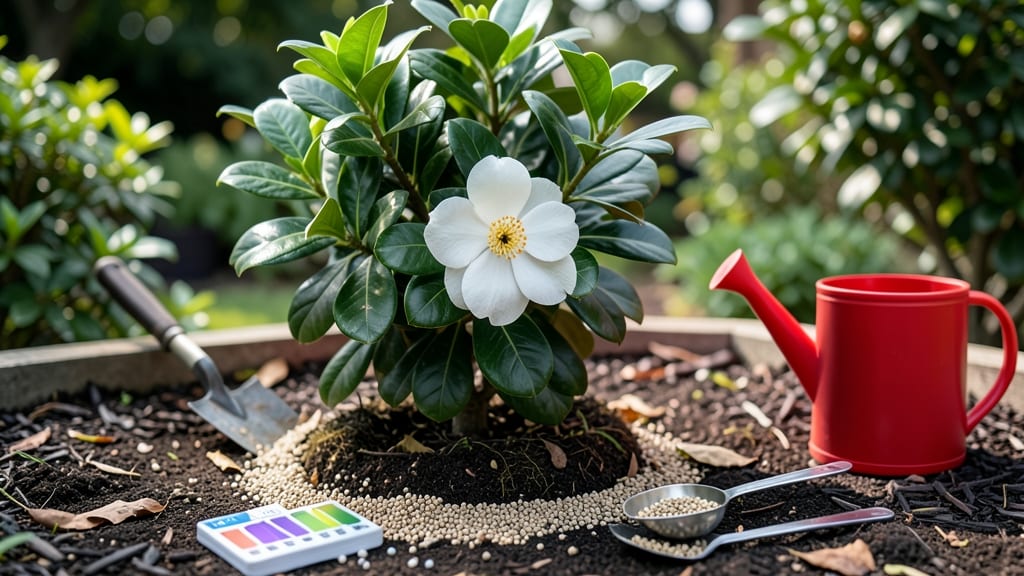
Your gardenia’s fertilizer requirements are the hidden key to those fragrant blooms you’ve been dreaming of—because the wrong mix can leave you with lush leaves and no flowers.
Struggling to get your gardenia to bloom? The secret might be hiding in your soil—not just the fertilizer you're using, but how you use it. Gardenias are divas of the plant world, demanding precise care to reward you with intoxicating fragrance.
Too much nitrogen, and you’ll end up with foliage but no scent. Too little, and your plant might just sulk.
In this guide, I’ll break down the exact fertilizer ratios (think 6-6-6 or 8-3-9) your gardenia craves, how to test and adjust that all-important soil pH, and when to feed—because timing matters just as much as the product.
We’ll also cover organic swaps like coffee grounds and fish emulsion, so you can keep your plant happy without breaking the bank.
Ready to turn your gardenia into a blooming superstar? Let’s dive into the step-by-step schedule that’ll have you smelling like a tropical paradise in no time.
The perfect fertilizer mix: N-p-k ratios and soil pH for gardenia blooms
Gardenia plants thrive when their fertilizer mix matches their natural soil preferences. These acid-loving shrubs need a delicate balance of nutrients, especially during their blooming season. The key lies in understanding N-P-K ratios and maintaining the right soil pH—typically between 4.5 and 5.5.
Too much nitrogen can lead to lush foliage but fewer blooms, while the wrong pH stunts growth entirely.
For gardenias, the ideal N-P-K ratio is often 3-1-2 or 6-3-4, emphasizing phosphorus for blooms and potassium for root health. Organic options like composted pine needles or fish emulsion work well, but synthetic fertilizers labeled for acid-loving plants can also deliver results.
Always check the label to avoid high-salt formulations that can damage roots.
| Requirement | Specification | Notes |
|---|---|---|
| N-P-K Ratio | 3-1-2 or 6-3-4 | Phosphorus boosts blooms; potassium strengthens roots. |
| Soil pH | 4.5–5.5 | Test with a pH meter or litmus paper. |
| Fertilizer Type | Organic or Acidic-Specific | Avoid high-salt or alkaline fertilizers. |
| Application Time | Spring & Fall | Skip summer/winter; plant is dormant. |
| Frequency | Every 6–8 Weeks | Reduce to half-strength in fall. |
Testing your soil pH is non-negotiable. Gardenias wilt or drop buds if the pH drifts above 6.0. Use a digital pH meter or home test kit for accuracy.
If your soil is too alkaline, amend it with sulfur or peat moss. For organic gardeners, pine bark fines or composted leaves help maintain acidity naturally.
I once struggled with my gardenia’s yellowing leaves until I realized the soil pH had crept to 6.5. After adding elemental sulfur and switching to a 3-1-2 fertilizer, the plant rebounded within weeks. The lesson? Monitor pH and adjust fertilizers seasonally to match your gardenia’s needs.
Synthetic fertilizers like Miracle-Gro Azalea/Camellia are convenient, but organic options can be just as effective. Fish emulsion (1-2-0 ratio) or worm castings provide slow-release nutrients without the risk of salt buildup.
For a DIY approach, mix coffee grounds (used, not fresh) with compost and work it into the soil—it’s acidic and nutrient-rich.
Over-fertilizing is a common mistake. Too much nitrogen (the first number in N-P-K) leads to leafy growth at the expense of flowers. If your gardenia is putting out all foliage, no blooms, cut back on nitrogen-heavy fertilizers like lawn food or blood meal.
Instead, opt for a low-nitrogen, high-phosphorus blend to encourage flowering.
For container-grown gardenias, fertilize every 4–6 weeks during the growing season but flush the soil with water monthly to prevent salt buildup. In-ground plants need less frequent feeding—every 6–8 weeks—but still require the same acidic soil conditions.
Always water thoroughly after fertilizing to help nutrients reach the roots.
If your gardenia’s leaves turn brown at the edges, it could signal over-fertilization or drought stress. Yellow leaves with green veins often mean iron deficiency, common in alkaline soils. In this case, use an iron chelate fertilizer and retest your soil pH.
Remember, gardenias are light feeders compared to heavy bloomers like roses. A little goes a long way—think of it as a gentle nudge rather than a heavy meal. With the right N-P-K balance and acidic soil, your gardenia will reward you with fragrant blooms all season long. 🌸
Step-by-step fertilizing schedule: when, how much, and what to avoid
Timing your gardenia's fertilizer schedule is like conducting a symphony—too much or too little throws off the whole performance. Start feeding in early spring (February-March) when new growth begins, and continue through fall until October. This aligns with your gardenia's natural blooming cycle, ensuring those fragrant flowers arrive on cue.
For liquid fertilizers, always dilute to half-strength to avoid burning delicate roots. A common ratio is 1 tbsp per gallon of water for most acidic plant fertilizers. Apply this mixture directly to the soil, keeping it 2 inches away from the stem to prevent foliage damage.
Think of it as a gentle rain shower for your plant's roots.
- Over-fertilizing causes leaf burn and stunted blooms—stop feeding if you see crispy edges.
- High-salt fertilizers (like some synthetic mixes) build up in soil, harming roots over time.
- Fertilizing dormant plants (winter months) wastes nutrients and stresses the shrub.
- Skipping pH checks—gardenias need acidic soil (pH 4.5–5.5); test before feeding.
Your gardenia's feeding schedule should follow this rhythm: feed in spring (February-March), skip summer (June-August), then light feed in fall (October). This mimics natural growth patterns, preventing nutrient overload during heat stress.
For example, a 6-6-6 fertilizer in spring promotes lush foliage, while a low-nitrogen blend in fall supports root strengthening.
Watch for yellowing leaves or brown leaf tips—these are red flags. Yellowing often means overwatering or nitrogen excess, while brown tips signal underwatering or salt buildup.
Adjust your routine immediately: flush the soil with water if you suspect salt damage, or reduce fertilizer strength by half for the next application.
In Zone 9b climates, gardenias are evergreen year-round, but they still enter a relative dormancy in summer. This is why we skip fertilizing during June-August—your plant is conserving energy.
Instead, focus on deep watering and mulching to protect roots from heat. Think of summer as your gardenia's "siesta" time.
For potted gardenias, halve the fertilizer amount since roots have limited soil volume to absorb nutrients. Always water thoroughly before fertilizing to prevent root burn. And remember: organic fertilizers like fish emulsion or compost tea break down slowly, reducing the risk of overfeeding.
It's like feeding your gardenia a balanced, home-cooked meal instead of fast food.