
Watering
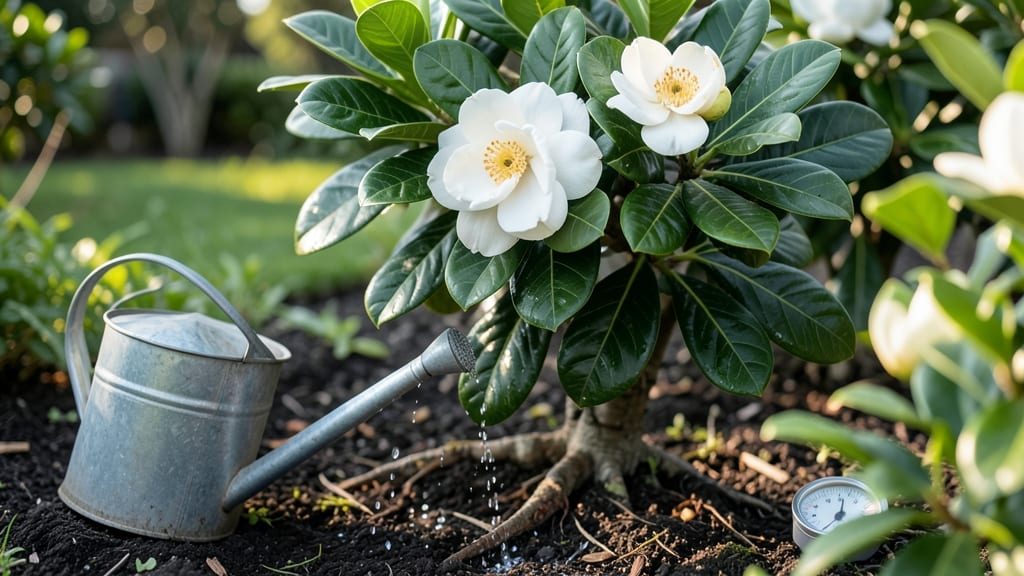
Your gardenia’s water requirements are the secret to those fragrant blooms you’ve been dreaming of—get it wrong, and you’ll end up with drooping leaves or worse, root rot.
Striking the perfect balance in watering your gardenia can mean the difference between lush, fragrant blooms and wilting leaves—or worse, deadly root rot. Too much or too little moisture, and your plant sends out distress signals faster than you can react.
Gardenia 🌸 thrives on consistently moist soil, but it hates soggy roots. The key is deep watering—soaking the top 2-3 inches—while ensuring excess water drains away. In hot summer months, you might need to water every 1-2 days, while winter slows things down to once a week.
Here’s what you’ll discover: how to read your gardenia’s signals, adjust for containers vs. in-ground plants, and tweak your schedule for humidity or seasonal shifts—so your shrub stays happy, healthy, and blooming.
How much water does a gardenia need for optimal growth?
Gardenia plants thrive when their soil moisture stays consistently damp but never soggy. The key is maintaining top 2-3 inches of soil at a slightly moist level—like a wrung-out sponge. Too much water causes root rot, while too little triggers bud drop and leaf scorch.
I’ve learned that gardenias send clear signals when their water needs aren’t met, so paying attention to their foliage and blooms is just as important as sticking to a schedule.
Your gardenia’s watering needs shift with the seasons and climate. In summer heat, I water mine daily or every other day, while in winter dormancy, I reduce frequency to every 7-10 days.
Container-grown gardenias dry out faster than in-ground plants, so they often need more frequent watering. Understanding these variables helps prevent both overwatering and underwatering, keeping your plant healthy and blooming.
Visual indicators are your best friends when adjusting watering habits. If the leaves start to yellow or wilt, it’s often a sign of overwatering or poor drainage. Conversely, crispy leaf edges or drooping flowers scream for more moisture. I always check the soil with my finger before watering—if it feels dry just below the surface, it’s time to hydrate. This simple habit saves my gardenias from stress.
| Season | Watering Frequency | Soil Moisture Goal | Visual Cues |
|---|---|---|---|
| Spring | Every 2-3 days | Top 2 inches damp | New growth appears |
| Summer | Daily or every other day | Top 1-2 inches damp | Leaves may wilt by afternoon |
| Fall | Every 3-5 days | Top 2-3 inches slightly moist | Bud formation begins |
| Winter | Every 7-10 days | Top 3 inches dry | No new growth, dormant |
| Potted Gardenias | Every 1-2 days | Top 1 inch damp | Container soil dries faster |
For in-ground gardenias, I’ve found that mulching with 2-3 inches of organic mulch (like pine bark or shredded leaves) helps retain moisture and regulate soil temperature. This layer acts like a blanket, reducing evaporation and keeping roots cool.
I always apply mulch after watering to ensure it doesn’t draw moisture away from the soil. In containers, I use pots with drainage holes and mix in perlite or sand to improve aeration.
Morning watering is my golden rule—it allows excess moisture to evaporate during the day, reducing the risk of fungal diseases like powdery mildew. Avoid watering in the evening, as damp foliage overnight can invite pests and rot.
I also use a soaker hose or drip irrigation for deep, slow watering, which encourages roots to grow deeper and strengthens the plant’s resilience.
Adjusting for humidity levels is another critical factor. Gardenias love 60-70% humidity, so in dry climates, I mist the leaves lightly or place a tray of water near the plant. Grouping gardenias together also creates a microclimate that boosts humidity naturally.
If you notice buds dropping before opening, it’s often a sign of low humidity or inconsistent watering—both stress factors for this tropical beauty.
One common mistake I see is watering on a strict schedule without checking the soil. Gardenias in shade or cool climates may need less water, while those in full sun or hot zones will demand more.
Always dig your finger into the soil to gauge moisture—this simple check prevents over- or underwatering. If the soil feels dry at 1 inch deep, it’s time to water; if it’s still moist, wait another day.
When your gardenia is blooming season (typically spring to early summer), it’s extra sensitive to water fluctuations. I increase frequency slightly during this period, ensuring the soil never dries out completely.
A good rule of thumb is to water until you see moisture draining from the bottom of the pot or 2-3 inches into the soil** for in-ground plants. This ensures the roots get the hydration they need without sitting in waterlogged conditions.
Finally, remember that container size matters. A small pot will dry out faster than a large one, so upgrade containers as your gardenia grows. I’ve had success with 15
Signs of overwatering vs. underwatering in gardenias (with fixes)
Your gardenia’s leaves tell a story—one that’s easy to misread if you’re not familiar with the subtle clues. Yellowing leaves and mushy stems scream "too much water," while crispy edges and drooping blooms whisper "not enough."
The difference between these two scenarios can mean the difference between a thriving shrub and a sad, struggling plant.
I’ve seen gardeners panic when their gardenia’s leaves turn yellow, assuming it’s underwatering—only to discover they’ve been drowning the roots. Conversely, others water sparingly, thinking they’re being cautious, and end up with brittle, thirsty plants. Let’s decode these signals so you can act fast and save your gardenia.
Gardenia Watering Balance
| Issue | Signs | Fixes |
|---|---|---|
| Overwatering |
|
|
| Underwatering |
|
|
💧 Key Tip: Stick your finger 2 inches into the soil—if it’s damp, wait to water.
If your gardenia’s leaves are turning yellow but the stems feel firm, you’re likely dealing with overwatering. This is a classic sign that the roots are suffocating from too much moisture.
My first move? I stop watering immediately and check the pot for drainage holes. If there aren’t any, it’s time to repot into a container with better airflow and well-draining soil.
On the flip side, if the leaves feel crispy to the touch and the blooms are wilting, your gardenia is thirsty. The fix here is simple but requires consistency: water deeply until you see moisture seeping from the drainage holes.
After that, let the top 2 inches of soil dry out before watering again. Mulching around the base of the plant helps retain moisture and keeps roots cool.
One mistake I’ve seen gardeners make is assuming that because their gardenia is in a pot, it needs less water. Potted gardenias dry out faster than in-ground plants, so they often need water every 1-2 days in hot weather.
If you’re unsure, lift the pot—if it feels light, it’s time to water. If it’s heavy, wait another day.
Seasonal changes also play a huge role. During summer, your gardenia might need daily watering, while winter slows everything down. I adjust my schedule by reducing watering to once a week in cooler months.
Pay attention to your gardenia’s growth patterns—healthy leaves and buds mean you’re on the right track.
Remember, gardenias are sensitive to both extremes. The goal is to keep the soil consistently moist but never soggy. With these fixes, your gardenia will bounce back from overwatering or underwatering in no time—ready to reward you with those fragrant blooms you love. 🌸