
Light Requirements
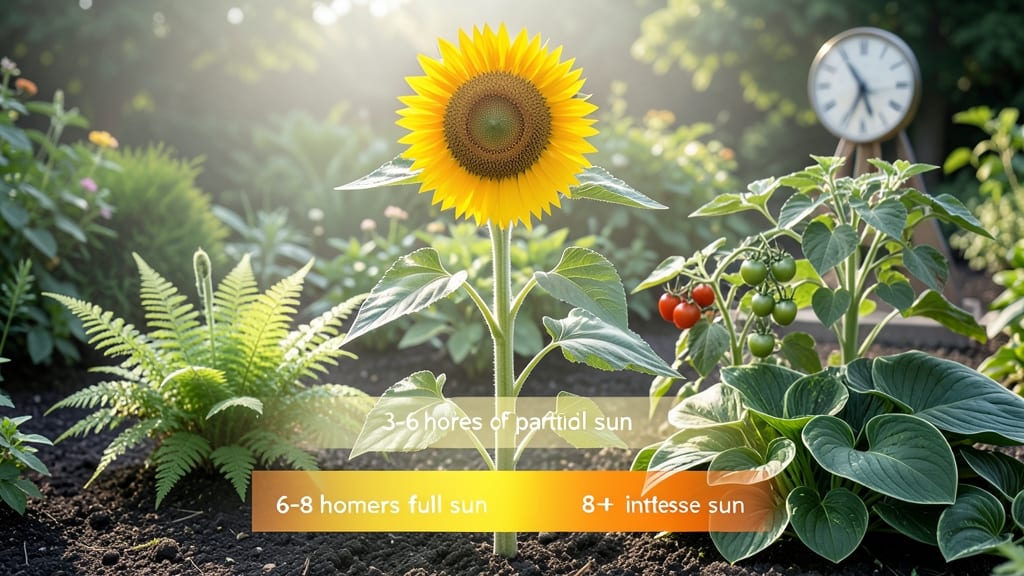
A garden needs 6 to 8 hours of sunlight daily to thrive, though some varieties handle less—getting this wrong can stunt growth or even kill your plants.
Struggling to decide where to place your plants? The right amount of sunlight can mean the difference between a thriving garden and a struggling one—yet most gardeners get this critical factor wrong.
Too little light and your 🌱 garden will grow leggy and weak; too much, and leaves will scorch. The key is matching your plants' needs to your space's natural light, whether that’s full sun, partial shade, or a bright indoor spot.
Below, I break down the exact sunlight ranges for different plants, how to measure your garden’s light, and simple fixes if your greens aren’t getting enough (or too much) sun.


Sunlight requirements by plant type: full sun vs. partial shade vs. low light
Understanding your garden's sunlight patterns is the first step to creating a thriving space. Most plants fall into three broad categories based on their sunlight needs: full sun (6+ hours), partial shade (3-6 hours), and low light (under 3 hours).
Misplacing a plant can lead to stunted growth, poor flowering, or even death—so let's break down the essentials to get it right.
Start by checking plant labels or seed packets, which often include sunlight requirements. For example, a tomato plant labeled "full sun" needs at least 6 hours of direct sunlight daily, while a hosta labeled "partial shade" thrives with morning sun and afternoon shade.
Ignoring these guidelines is a common mistake, but with a little planning, you can optimize every inch of your garden.
Here’s a quick reference to help you visualize the differences between these categories and the plants that thrive in each:
Plants like tomatoes and peppers are classic full-sun lovers and will produce the best yields when placed in the sunniest spot. These plants need intense light to fuel their growth and fruit production, so avoid placing them under trees or near tall structures that cast long shadows.
If your garden lacks natural full sun, consider using reflective surfaces like white walls or mirrors to bounce extra light onto your plants.
For partial shade plants such as hostas or ferns, focus on areas that receive morning sunlight but are shielded from the harsh afternoon rays. These plants often thrive in woodland gardens or under dappled tree canopies.
Too much direct sun can cause their leaves to crisp or bleach, while too little light will result in sparse foliage and weak stems.
Low-light plants, like snake plants or peace lilies, are perfect for indoor spaces or shady corners of your garden. These varieties have adapted to thrive with minimal light, making them ideal for north-facing windows or areas blocked by buildings.
However, even low-light plants will grow better with some indirect light, so avoid placing them in completely dark spots like basements or deep shade.
Seasonal changes also play a role in sunlight exposure. In summer, days are longer, and shadows are shorter, while winter brings shorter days and longer shadows.
Adjust your garden layout accordingly—move container plants to sunnier spots in winter or provide shade cloth in summer to protect delicate foliage from intense rays. Observing your garden throughout the year will help you fine-tune plant placement for optimal growth.
Pro tip: Use a sunlight meter or a simple DIY method like a white plate to track how much sun each area receives. Place the plate in different spots for a week and mark the areas that stay dry the longest—these are your sunniest zones.
This hands-on approach ensures you’re making informed decisions about where to plant your sun-loving or shade-tolerant favorites.
By matching your plants to their ideal sunlight conditions, you’ll create a balanced and vibrant garden that thrives year-round. Start with the basics, observe your space, and don’t be afraid to experiment—your plants will thank you with lush growth and abundant blooms! 🌿
How to measure sunlight in your garden and adjust plant placement
Understanding your garden's sunlight patterns is the first step to creating a thriving space. Many gardeners assume all areas get equal sun, but microclimates and seasonal shifts can drastically change exposure.
For example, my east-facing bed gets morning sun only, while the west side bakes in afternoon heat—both require different plant choices. Let’s break down how to measure sunlight accurately so you can place every plant in its perfect spot.
Start by observing your garden over at least two weeks to account for cloudy days. Note when shadows shift—especially in spring and fall when the sun’s angle changes. A simple DIY method is to place a white stake in each zone and mark shadow lines every few hours.
This visual guide helps you map sunlight hotspots and shaded areas where only shade-loving plants will thrive.
🌞 Step-by-Step Sunlight Measurement Guide
- Step 1: Divide Your Garden Split your space into zones (e.g., front, back, north/south sides). Use stakes or spray paint to mark boundaries for clarity.
- Step 2: Track Sun Hours Daily Use a sunlight meter (or phone app) to record hours of direct sun per zone. Aim for 6+ hours for full sun, 3-6 hours for partial shade, and <3 hours for shade.
- Step 3: Account for Seasonal Shifts Summer solstice (longest day) and winter solstice (shortest day) can vary sun exposure by up to 3 hours. Adjust plant placement in early spring to test winter conditions.
- Step 4: Identify Microclimates Note areas near fences, trees, or buildings that cast permanent shade. These spots may only suit hostas or ferns, while open areas can grow tomatoes or lavender.
- Step 5: Group Plants by Needs Cluster full-sun lovers (roses, peppers) together and shade-tolerant plants (coleus, impatiens) in cooler zones. This maximizes efficiency and reduces transplanting later.
- Step 6: Supplement if Needed Use reflective surfaces (mirrors, white walls) to bounce light into shady corners. For containers, rotate pots weekly to ensure even sun exposure.
Don’t overlook vertical space—trellises and obelisks can turn shaded corners into productive areas for vining plants like cucumbers or clematis. I’ve added a trellis to my north-facing patio, turning a previously useless spot into a basil and cherry tomato powerhouse.
Even 2-3 hours of morning sun can support these plants when paired with proper support.
Seasonal adjustments are key. In winter, my south-facing beds still get 4-5 hours of sun, but by late afternoon, shadows creep in. This is perfect for winter squash or kale, which tolerate cooler temps and shorter days.
Meanwhile, my summer-blooming zinnias need relocating to sunnier spots by June to avoid leggy growth.
Pro tip: Use light-colored mulch in hot zones to reflect excess heat, and dark mulch in cooler areas to absorb warmth. I’ve seen 30% faster growth in tomatoes when using straw mulch in high-sun beds. Small tweaks like these make a big difference in plant health and yield.
Once you’ve mapped your garden, test your setup by planting a few indicator species—like marigolds (full sun) or caladiums (shade). Their success (or failure) will confirm your sunlight measurements. With this method, you’ll never guess again—just observe, adjust, and thrive.