
Watering
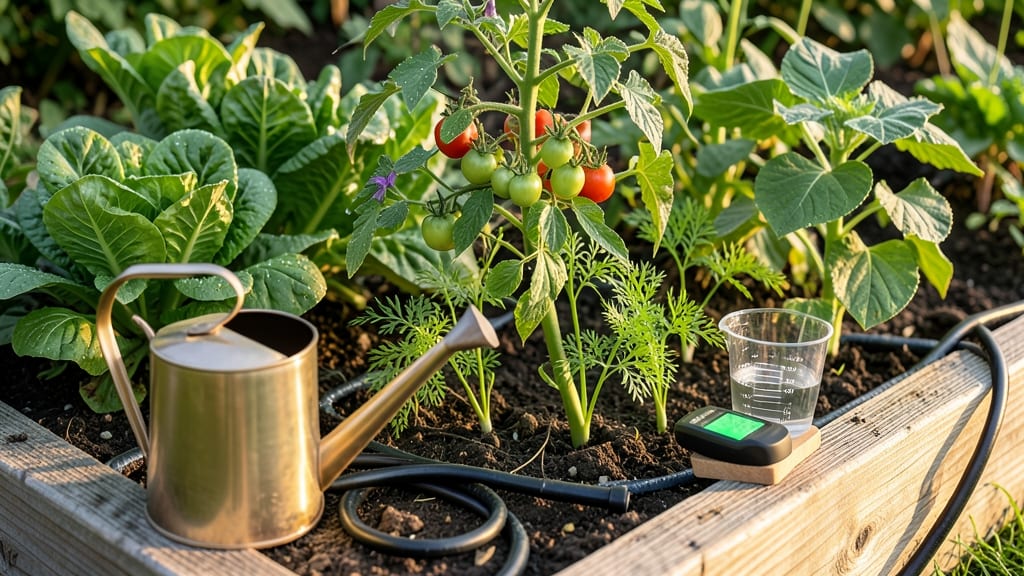
A vegetable garden needs about 1 to 2 inches of water per week to thrive, but the real secret isn’t just how much you pour—it’s when and how you deliver it.
Picture this: You’re watering every day, but your lettuce bolts to seed while your tomatoes split open like overripe peaches. That’s the watering paradox—too little and roots shrivel, too much and roots suffocate. The fix? Deep, infrequent soaks that match your soil type and the plant’s needs.
Leafy greens like spinach and kale drink up moisture fast, while root crops such as carrots and potatoes need steady hydration to grow straight.
Then there’s the climate factor: A hot, dry summer in Zone 6a demands morning watering to beat evaporation, while a rainy spring might mean skipping the hose entirely.
Below, I’ll break down the exact watering schedule for your 🥬 garden, from drought-tolerant herbs to thirsty tomatoes, plus the tools (like mulch and drip systems) that cut waste and save time. No more guesswork—just science-backed results.
Science-backed daily water requirements for common vegetables (with soil depth matters)
Watering your vegetable garden isn't just about pouring water—it's about delivering the right amount to the right depth at the right time.
Research from the University of California Cooperative Extension shows that most vegetables need 1 to 1.5 inches of water per week, but this varies wildly between leafy greens, root crops, and fruiting plants. The key?
Checking soil moisture 2 inches below the surface—this is where roots actively absorb water.
For example, lettuce and spinach thrive with shallow, frequent watering to keep their tender leaves crisp, while carrots and potatoes need deep, infrequent watering to prevent splitting. Even the time of day matters: watering in the early morning (before 10 AM) minimizes evaporation and reduces fungal diseases like powdery mildew.
Let’s break down the science so you can water like a pro.
🌱
| Plant Type | Daily Water Needs (inches) | Soil Moisture Depth Target | Best Watering Method | Climate Adjustments |
|---|---|---|---|---|
| Leafy Greens (Lettuce, Spinach, Kale) | 0.25–0.5 | Top 1–2 inches | Drip irrigation or fine mist | Increase by 20% in Zone 9+ |
| Root Crops (Carrots, Beets, Radishes) | 0.5–1.0 | Deep (4–6 inches) | Deep soaker hose or drip at base | Reduce by 30% in Zone 3–5 (clay soil) |
| Fruiting Plants (Tomatoes, Peppers, Cucumbers) | 0.75–1.25 | Top 3–4 inches | Drip irrigation + mulch | Increase by 50% in desert climates |
| Herbs (Basil, Cilantro, Parsley) | 0.25–0.5 | Top 1 inch | Hand-watering or light drip | Reduce by 20% in humid zones |
| Legumes (Beans, Peas, Soybeans) | 0.5–0.75 | Top 2–3 inches | Overhead spray (avoid wetting leaves) | Increase by 15% in windy areas |
Drip irrigation delivers water directly to the roots, reducing waste by up to 30% compared to overhead sprinklers. Studies from the USDA show that drip systems also cut down on fungal diseases by keeping foliage dry.
For leafy greens, a gentle mist or shallow drip system works best, while root vegetables benefit from deeper, less frequent watering to encourage root growth. Overhead watering can lead to leaf burn in hot climates and spreads diseases like powdery mildew.
Adjust your watering based on soil type: sandy soil drains quickly and may need daily checks, while clay soil holds moisture longer and can go 2–3 days between waterings.
Use a soil moisture meter (or the old-fashioned finger test) to check depth—stick your finger 2 inches down for leafy greens or 4–6 inches for root crops. If the soil feels dry at that depth, it’s time to water.
💧
In arid climates (Zones 7–10), evaporation rates can be double those in humid regions. Mulching with straw or wood chips retains moisture and reduces watering needs by 25–40%.
For humid climates (Zones 3–6), focus on early morning watering to prevent fungal growth, and avoid overhead sprinklers after sunset. Even rainfall affects your schedule: if you get 0.5 inches of rain, skip watering for 1–2 days to let the soil absorb naturally.
Pro tip: Group plants with similar water needs together in your garden layout. For example, pair basil and lettuce in one section and tomatoes and peppers in another. This way, you can tailor your irrigation system to each zone’s needs without overcomplicating your routine.
Consistency is key—vegetables hate boom-and-bust watering, where they go from soggy to parched overnight.
🌿
Watch for visual cues to fine-tune your watering: wilting leaves in the afternoon often mean underwatering, while yellowing leaves or mushy stems signal overwatering. For tomatoes, a sudden drop in fruit production can mean inconsistent moisture—aim for 1–1.5 inches per week during fruiting.
And if your carrots split, you’re likely watering too heavily after dry spells. The goal is steady, deep hydration, not sporadic drinks.
How to adjust watering for your climate: heat Zones, rainfall, and soil type
Your vegetable garden's water needs aren't one-size-fits-all. In arid regions like Arizona, I water my tomatoes twice daily to prevent wilting, while in humid climates like Louisiana, I reduce frequency to avoid fungal growth.
The key is understanding your USDA heat zone and soil type—they dictate everything from watering schedules to mulch needs.
First, check your soil type: sandy soils drain fast and need frequent light watering, while clay holds moisture longer but risks root rot if overwatered. I use the finger test—stick your finger 1-2 inches deep; if dry, it's time to water.
In clay-heavy gardens, I add compost to improve drainage, while sandy gardens benefit from organic matter to retain moisture.
🌱 PROS-CONS-BOX 🌱
Watering Adjustments by Climate & Soil
- ✅ Pros: Deep watering encourages strong root growth
- ✅ Pros: Less fungal disease risk
- ⚠️ Cons: Daily watering required (early morning/evening)
- ⚠️ Cons: Mulch essential to prevent evaporation
- ✅ Pros: Less evaporation = fewer waterings
- ✅ Pros: Overhead watering mimics natural rain
- ⚠️ Cons: High fungal risk (water at soil level)
- ⚠️ Cons: Avoid evening watering
- ✅ Pros: Drains excess water quickly
- ✅ Pros: Warms up faster in spring
- ⚠️ Cons: Needs daily watering (1-2 inches/week)
- ⚠️ Cons: Nutrients wash away easily
- ✅ Pros: Retains moisture for weeks
- ✅ Pros: Holds nutrients well
- ⚠️ Cons: Risk of root rot if overwatered
- ⚠️ Cons: Compacts easily (amend with compost)
Watch for wilting leaves (underwatering) or yellowing (overwatering). My peppers show stress with crispy edges—signs of salt buildup from frequent watering. For humid areas, I switch to drip irrigation at the base to keep foliage dry and prevent powdery mildew. In dry climates, I water deeply but infrequently (every 3-4 days) to encourage roots to grow downward.
Mulch is your secret weapon: straw or wood chips reduce evaporation by 30-50% and keep roots cool. I apply 3-4 inches of mulch around tomato plants in summer, which cuts my watering needs by half.
Just avoid piling mulch against stems to prevent rot. For container gardens, I water every 2-3 days because pots dry out faster—think of them like thirsty houseplants!
Create your own watering schedule calculator by tracking:
- Rainfall (skip watering if >0.5 inches fell)
- Soil type (sandy = more often, clay = less)
- Plant stage (seedlings need less than fruiting plants) I use a spreadsheet to log my garden’s needs—it’s saved my cucumbers from bolting during heatwaves.
Start with 1 inch per week as a baseline, then adjust based on your local evaporation rates (check your USDA climate map for guidance).
💧 Pro Tip: Use a rain gauge near your garden to measure natural water input. In my Zone 7b garden, I reduce summer watering by 20% after heavy rains. The goal? Happy plants, not soggy soil—your veggies will thank you with bigger harvests! 🌿