
Watering
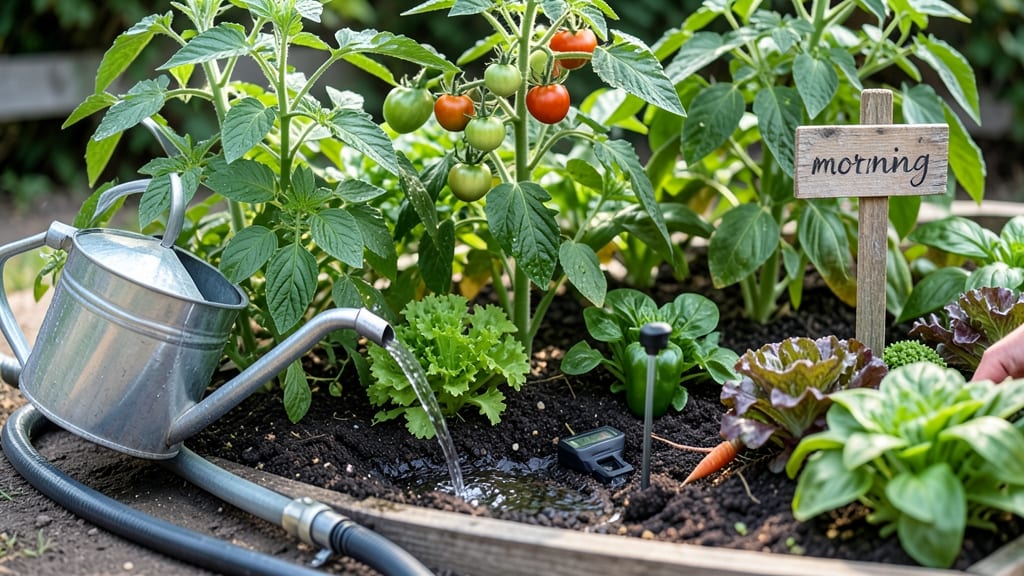
Watering your veggie garden often enough keeps roots strong and harvests bountiful—yet most gardeners overthink the schedule and end up with soggy soil or stressed plants.
Overwatering or underwatering your 🥬 garden can mean the difference between a thriving harvest and wilted disappointment—yet most gardeners guess rather than measure.
Instead of relying on memory, the key is testing soil moisture at the right depth for each vegetable type. Leafy greens need frequent, shallow drinks, while root crops prefer deeper, less frequent watering.
Below, I break down the science-backed watering frequency by plant, plus three foolproof soil tests to stop guessing and start growing with confidence.
Optimal watering frequency by vegetable type: a soil-moisture guide
Watering your vegetable garden isn't a one-size-fits-all task—each plant type has unique moisture needs that change with growth stages. Leafy greens like lettuce and spinach need frequent light watering, while root vegetables such as carrots prefer deeper but less frequent watering.
Understanding these differences prevents both drought stress and root rot. The key is testing soil moisture at the right depth for each plant category.
For herbs like basil and cilantro, shallow watering keeps their delicate roots happy, but tomatoes and peppers require deep soaking to develop strong root systems.
Even within categories, young seedlings need more frequent watering than mature plants. Let's break down the science-backed watering schedules tailored to your vegetable garden's specific needs.
Here's the essential rule: water depth matters more than frequency. A 1-inch watering for leafy greens might be too much for carrots, which need only ½ inch every 2-3 days.
Always water in the morning to reduce evaporation and fungal risks. Now, let's dive into the detailed schedule your garden needs.
| Vegetable Category | Recommended Watering Depth (inches) | Frequency (Days Between Waterings) | Soil-Moisture Test Method | Key Growth Stage Notes |
|---|---|---|---|---|
| Leafy Greens (Lettuce, Spinach, Kale) | 1-2 | Every 1-2 days | Finger test 1 inch deep | Keep soil consistently moist; avoid soggy conditions |
| Root Vegetables (Carrots, Radishes, Beets) | 1-1.5 | Every 2-3 days | Finger test 2 inches deep | Avoid soggy soil to prevent rot; deep watering encourages straight growth |
| Fruiting Plants (Tomatoes, Peppers, Cucumbers) | 1.5-2 | Every 2-3 days (more in heat) | Finger test 2-3 inches deep | Deep watering encourages root growth; increase frequency during 90°F+ weather |
| Herbs (Basil, Cilantro, Parsley) | ½-1 | Every 1-2 days | Finger test ½ inch deep | Shallow watering prevents root rot; basil needs consistent moisture but hates soggy soil |
| Alliums (Onions, Garlic, Leeks) | 1 | Every 2-3 days | Finger test 1-2 inches deep | Reduce watering as bulbs mature to improve flavor and storage life |
Your leafy greens like lettuce and spinach thrive with daily or every-other-day watering because their shallow roots dry out quickly. Use the finger test at just 1 inch deep—if it feels dry, it's time to water.
These plants prefer consistent moisture but will bolt (go to seed) if stressed by drought or overwatering. Mulching with straw helps maintain even moisture levels.
For root vegetables, the goal is to keep the soil evenly moist but not waterlogged. Carrots and beets need 1-1.5 inches of water every 2-3 days, but you must test moisture at 2 inches deep.
Soggy soil causes rot, while dry spells lead to woody, bitter roots. Drip irrigation works best for these crops to deliver water directly to the root zone without wetting the foliage.
When caring for fruiting plants like tomatoes and peppers, deep watering is non-negotiable. These plants need 1.5-2 inches of water every 2-3 days, but increase to daily during heatwaves.
The key is to water at the base of the plant, not the leaves, to prevent fungal diseases like blight. A 5-gallon bucket of water per plant, 2-3 times per week, is a good rule of thumb for mature plants.
Herbs often get overlooked, but they have specific watering needs too. Basil, for example, needs ½-1 inch of water every 1-2 days and hates soggy soil. Overwatering causes root rot, while underwatering makes leaves turn bitter.
Cilantro, on the other hand, bolts quickly if stressed, so consistent moisture is critical. Always water herbs in the morning to let excess moisture evaporate before nightfall.
Adjust your watering schedule based on weather conditions and seasonal changes. During summer, you may need to water daily for fruiting plants, while winter slows water needs to every 7-10 days.
Always check the soil before watering—if the top 1-2 inches are dry, it's time to water. Use a moisture meter for precision, especially in containers where soil dries out faster.
One common mistake is assuming all vegetables need the same amount of water. Alliums like onions need less water as they mature to develop sweet bulbs, while corn requires 1-2 inches of water per week to prevent ear rot.
Pay attention to plant signals: wilting leaves indicate underwatering, while yellowing leaves or moldy
How to perform soil-moisture tests: 3 proven methods for gardeners
Guessing when to water your veggie garden leads to wasted water or struggling plants. Instead, use soil-moisture tests to water based on real conditions—not a calendar. These simple methods help you match your watering schedule to your plants' actual needs, whether you're growing tomatoes, lettuce, or carrots.
The key is checking moisture at the right depth where roots actively grow.
Most gardeners overlook the fact that surface soil can feel damp while deeper layers remain dry—a common mistake that stunts root development. By testing moisture at the correct depth, you ensure your watering efforts reach where they matter most.
For example, leafy greens need frequent shallow checks, while root vegetables require deeper tests to prevent cracking. Let’s explore three reliable methods to get it right every time.
-
The Finger Test
Best for beginners | No tools needed -
Moisture Meter
Precision for high-value crops | Real-time data -
Visual Inspection
Quick check for busy gardeners | Plant health cues
Start with the finger test, the simplest and most intuitive method. Push your index finger 1-2 inches into the soil near your plants. If it feels dry, it’s time to water. If it’s damp, hold off for another 1-2 days.
This works for most vegetable types, including peppers and beans, and requires no special tools. For herbs like basil or shallow-rooted greens, stick your finger just 1 inch deep—these plants dry out faster.
For gardeners who want precision, a moisture meter takes the guesswork out of watering. These handheld devices provide instant readings of soil moisture levels, often with color-coded scales or digital percentages.
I recommend using one for high-value crops like tomatoes or cucumbers, where overwatering or underwatering can drastically affect yield. Insert the probe 2-3 inches deep for most vegetables, and adjust your watering schedule based on the reading.
For example, a reading below 40% moisture typically signals it’s time to water.
When you’re short on time, rely on visual inspection to assess your garden’s needs. Look for wilting leaves or dry soil cracks, which are clear signs your plants need water. Conversely, yellowing leaves or mushy soil indicate overwatering.
Pay attention to the soil surface—if it’s crumbly and dry, your plants likely need a drink. This method is less precise but works well for quick daily checks, especially in container gardens where soil dries out faster.
Combine these methods for the most accurate results. For instance, use the finger test in the morning to check moisture levels, then confirm with a visual inspection of your plants’ health.
If you’re using a moisture meter, calibrate it to your soil type—sandy soil dries out faster than clay, so adjust your thresholds accordingly. Remember, the goal is to keep the soil consistently moist (not soggy) at the root zone, which varies by plant type.
By mastering these soil-moisture tests, you’ll water your veggie garden like a pro—saving water, preventing stress on your plants, and maximizing your harvest. Start today with just one method, and soon you’ll have a watering routine tailored to your garden’s unique needs.
Your plants will thank you with healthier growth and bigger yields! 🌱