
Watering
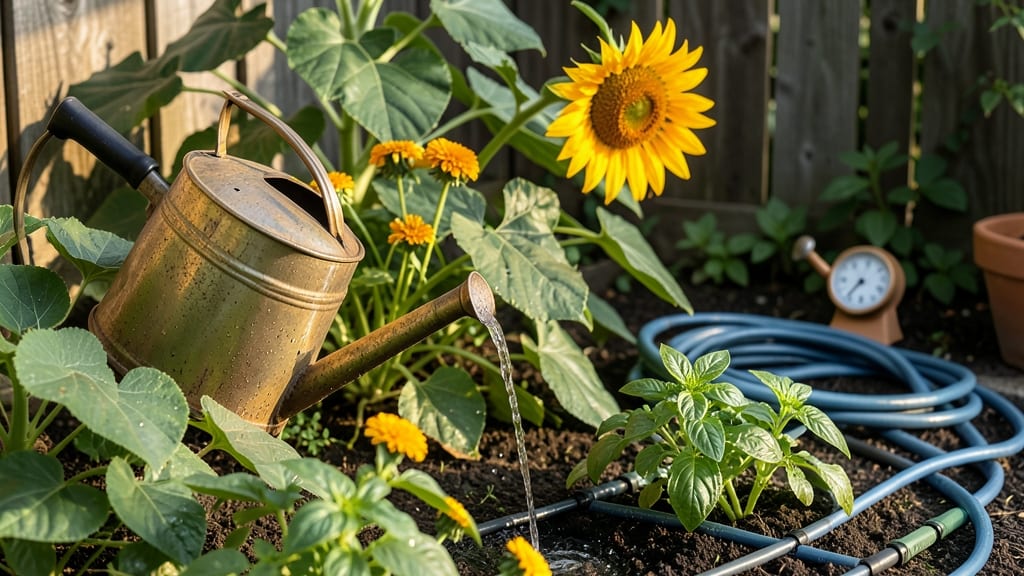
To water your garden in summer often enough without drowning it, focus on deep, infrequent soakings that hit 6-12 inches down—not light sprinkles that evaporate by noon.
Picture this: You walk out to find your 🌱 garden plants wilting by midday, not because you forgot, but because you watered at the wrong time or for the wrong reason.
The truth? Most summer watering guides oversimplify—what works for tomatoes fails tomatoes for basil, and a dry climate needs a totally different approach than a humid one.
Here’s the game-changer: Instead of guessing by days, you’ll learn to read your soil, recognize plant stress signals, and adjust for heatwaves or rain delays.
We’ll cover everything from morning vs. evening watering to how often to water 10+ common garden plants, so you can keep your garden thriving without wasting a drop.
By the end, you’ll have a customizable schedule that saves water, prevents root rot, and keeps your plants happy—no more crispy leaves or soggy soil surprises.
Summer watering schedule by plant type: when to water 10+ common garden plants
Summer watering isn’t one-size-fits-all—your tomatoes and succulents have wildly different needs. The key is understanding deep-watering triggers: when to water based on plant type, soil moisture, and weather conditions.
Overwatering suffocates roots, while underwatering stresses plants into early dormancy. Let’s break down 10+ common garden plants and their precise watering schedules to keep them thriving under the blazing sun.
Most gardeners make two critical mistakes: watering based on a calendar instead of soil conditions, or assuming all plants need the same amount. For example, basil wilts in dry soil within hours, while lavender thrives on neglect.
The solution? Check soil moisture 1-2 inches deep—if it’s dry, water; if damp, wait. Pair this with deep-watering techniques (1-2 inches per session) to encourage strong root growth and drought resistance.
Your tomatoes and peppers are heavy drinkers—water them deeply every morning to prevent blossom end rot and keep fruits juicy. Use a soaker hose or drip irrigation to deliver water directly to roots, reducing evaporation.
For herbs like basil, shallow but frequent watering mimics their Mediterranean roots, while succulents need a soak-and-dry cycle to avoid rot.
Drought-tolerant plants like lavender and rosemary thrive on neglect, but even they need a drink during heatwaves over 90°F. Mulch with straw or wood chips to retain moisture and regulate soil temperature.
Pro tip: Water early in the morning (before 10 AM) to minimize evaporation and fungal risks like powdery mildew.
Watch for visual cues beyond wilting: yellowing leaves often signal overwatering, while crispy edges mean underwatering. For container plants, check soil moisture daily—they dry out 3x faster than in-ground plants. Adjust your schedule based on weather forecasts: increase frequency during heatwaves and reduce after rain.
Overwatering is just as deadly as underwatering. If your soil stays soggy for days, reduce watering and improve drainage with sand or perlite. For sandy soil, water more frequently but shallowly, while clay soil holds moisture longer—water deeply but less often.
Always water at the base of plants, not overhead, to protect leaves from sunburn and fungal infections.
Regional differences matter too. In arid climates (
5 Key signs your garden needs water (beyond the calendar)
Your garden plants don’t come with a built-in water meter, so you’ll need to learn their silent SOS signals. Ignoring these early warning signs can lead to stunted growth or even plant death—especially during summer heatwaves.
The trick is to act before leaves crisp or soil cracks appear.
Most gardeners rely on a calendar-based schedule, but that’s a recipe for disaster. Soil moisture, plant type, and weather shifts change daily. Instead, focus on visual cues and physical tests to determine when your garden truly needs water.
Visual Cues vs. Tool-Based Methods
- 🌱 Wilting leaves (even in morning)
- 🌿 Dull, gray-green foliage
- 🪴 Soil pulling away from pot edges
✅ Pros: Free, no tools needed
❌ Cons: Late-stage signs, subjective
- 💧 Moisture meter readings
- ✂️ Soil probe depth test
- 🌡️ Thermometer checks (soil temp)
✅ Pros: Precise, early detection
❌ Cons: Requires tools, slight learning curve
💡 Tip: Combine both methods for optimal results—use visual cues daily and tools weekly.
Start by checking the top 2-3 inches of soil with your finger. If it feels dry and crumbly, your plants need water.
For deeper-rooted plants like tomatoes or roses, dig down 6 inches—if it’s bone-dry, water immediately. Container plants dry out faster, so test their soil daily during heatwaves.
Watch for leaf curl or yellowing edges, which often signal underwatering stress. Some plants, like succulents or lavender, naturally wilt in heat but bounce back when hydrated. Others, like peppers or cucumbers, show distress faster. Morning wilting that doesn’t recover by afternoon is a red flag.
Use a moisture meter for accuracy, especially in sandy soil (which drains quickly) or clay soil (which holds too much moisture). Insert the probe 2-3 inches deep—readings below 30% moisture mean it’s time to water.
For organic gardeners, a simple wooden skewer test works: push it in and check for resistance.
Adjust your watering based on plant type. Vegetables like lettuce need daily water in summer, while perennials like hostas can wait 5-7 days. Always water deeply—aim for 1-2 inches per week—to encourage root growth and drought resistance.
Remember: Overwatering is just as harmful as underwatering. Yellow leaves, mushy stems, or fungal spots mean you’re drowning your plants. Let the top inch of soil dry between waterings, and always check the underside of leaves for signs of excess moisture.