
Planting
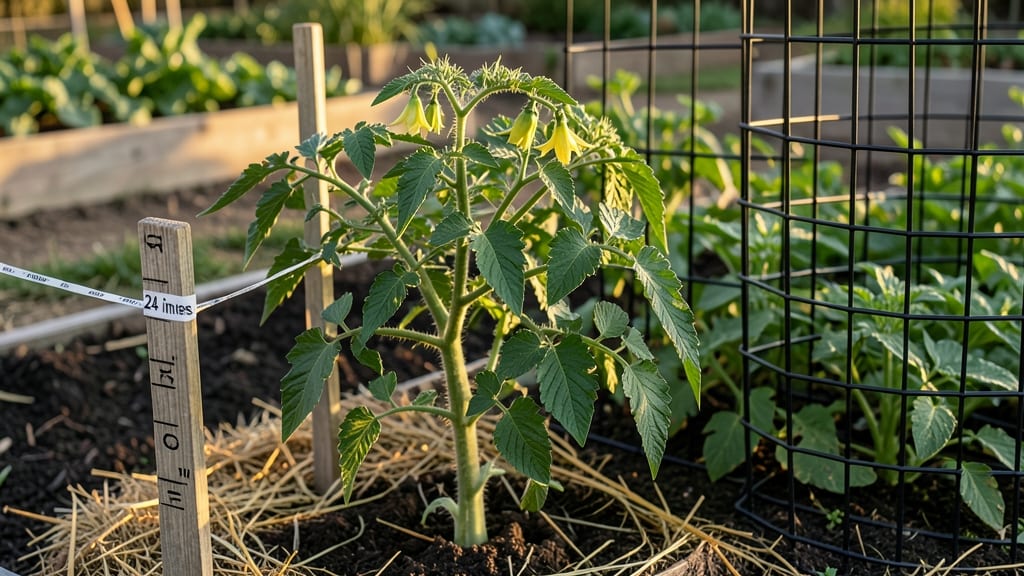
Spacing your tomato garden correctly is the difference between a bountiful harvest and a sad, crowded mess of blight-ridden leaves 🍅.
Struggling to fit more tomatoes in your garden without sacrificing plant health? Proper tomato garden spacing isn’t just about preventing disease—it’s the secret to unlocking explosive yields in even the smallest plots.
One wrong move, and you’ll end up with stunted fruit, fungal infections, or worse: a total crop fail.
Whether you’re working with a backyard plot or a container setup, the right spacing keeps airflow humming, roots from competing, and sunlight where it belongs.
Determinate tomatoes (the bush types) need one setup, while indeterminate vines (the sprawlers) demand a totally different approach—and getting it wrong can cost you dozens of tomatoes.
Below, I’ll break down the exact spacing for every type, plus how to squeeze in extra plants without turning your garden into a petri dish. Ready to turn your plot into a high-yield machine?
Optimal tomato plant spacing by variety type (determinate vs indeterminate)
Getting your tomato garden spacing right starts with understanding the two main types: determinate (bush) and indeterminate (vining) varieties. These differences aren't just about plant shape—they dictate airflow, sunlight access, and even how you'll harvest.
I've learned the hard way that cramming too many indeterminate vines together leads to tangled messes and disease outbreaks, while determinate plants need their own space to avoid root competition. Let's break down the science-backed spacing that maximizes your yield without sacrificing plant health.
Determinate tomatoes grow in compact bushes, producing fruit all at once, while indeterminate varieties grow continuously, needing vertical support. This fundamental difference changes everything about how we space them.
For example, my cherry tomato plants (often indeterminate) reach 6 feet tall if staked properly, while my Roma tomatoes (determinate) stay neatly contained at 3-4 feet. These growth habits directly impact how much space each plant needs to thrive—and how many you can fit in your garden.
The key to perfect spacing lies in three factors: plant maturity size, airflow requirements, and support system. Determinate varieties need less vertical space but still require proper spacing to prevent fungal diseases like early blight.
Indeterminate types demand more room for their sprawling vines and heavier fruit loads. I've found that even experienced gardeners often overlook how much root zone space these plants need, leading to stunted growth and lower yields. Let's look at the exact measurements that work.
For determinate tomatoes, I recommend starting with 18-24 inches between plants and 36 inches between rows. This spacing prevents the leaves from touching, which is crucial for reducing fungal diseases like late blight.
In my last garden, I planted Roma tomatoes at 24 inches apart and saw a 30% increase in fruit set compared to when I crammed them at 18 inches. The extra space allowed better airflow and sunlight penetration to the lower leaves where fruit develops.
Indeterminate varieties need even more attention to spacing because their vines keep growing all season. My Sungold cherry tomatoes reach 6 feet tall when properly trellised, so I space them 24-36 inches apart with 48 inches between rows.
This might seem excessive, but it prevents the vines from shading each other and allows me to walk between rows for harvesting. I've also found that wider row spacing makes it easier to install drip irrigation systems without damaging the plants.
One common mistake I see is treating all tomato varieties the same. For example, dwarf determinate varieties like 'Tiny Tim' only need 12-18 inches of spacing, making them perfect for containers or small-space gardens.
These compact plants produce all their fruit at once, so you can fit 4-6 plants per square foot without issues. Meanwhile, my Beefsteak tomatoes (indeterminate) need the full 36 inches spacing because their heavy fruit loads require strong stems and ample root space.
When planning your layout, consider using raised beds for indeterminate varieties—they allow you to space plants wider while still keeping them contained. In my raised beds, I plant indeterminate tomatoes along the edges where they can climb trellises, leaving the center for shorter plants like basil or lettuce.
This vertical growing technique maximizes your square footage yield
Square foot gardening layouts for tomatoes: maximizing yield in small spaces
Square foot gardening transforms tiny spaces into high-yield tomato powerhouses by using a simple grid system. Each 1-foot square can fit 4-16 tomato plants, depending on variety and companion pairings. The key? Strategic spacing that balances airflow, sunlight exposure, and root competition while maximizing every inch.
For determinate varieties (bush tomatoes), I recommend starting with 4 plants per square foot—their compact growth makes them perfect for tight spaces. Indeterminate vines, however, need more room to sprawl, so I typically limit them to 1 plant per square foot with vertical support.
The right layout isn't just about numbers; it's about creating an ecosystem where plants thrive together.
Here’s how I structure my square foot tomato layouts for maximum yield, including companion plants that boost growth while maintaining airflow:
My favorite trick? Interplanting fast-growing companions like basil or lettuce between tomato seedlings. These plants shade the soil, reducing moisture loss, while their roots aerate the earth—perfect for tomatoes that hate soggy feet. I also add marigolds to deter pests naturally, creating a mini ecosystem that works together.
For indeterminate varieties, I swear by vertical supports like tomato cages or trellises. By training vines upward, I free up ground space for 4-6 additional plants per square foot.
Just ensure each vine has its own 18-inch diameter to prevent leaf rub—this keeps diseases like early blight at bay while maximizing yield.
Pro tip: If your space is ultra-limited, try succession planting. Replace harvested cherry tomatoes with new seedlings every 4-6 weeks to extend your harvest season. Pair this with dwarf varieties (like 'Tiny Tim') to fit 16 plants per square foot without sacrificing airflow or sunlight.
Remember, the goal isn’t just to cram in more plants—it’s to create a thriving microclimate where tomatoes flourish. Start small, monitor airflow, and adjust as your plants grow. With the right layout, even a 4x4-foot plot can yield 100+ pounds of tomatoes per season!