
Planting
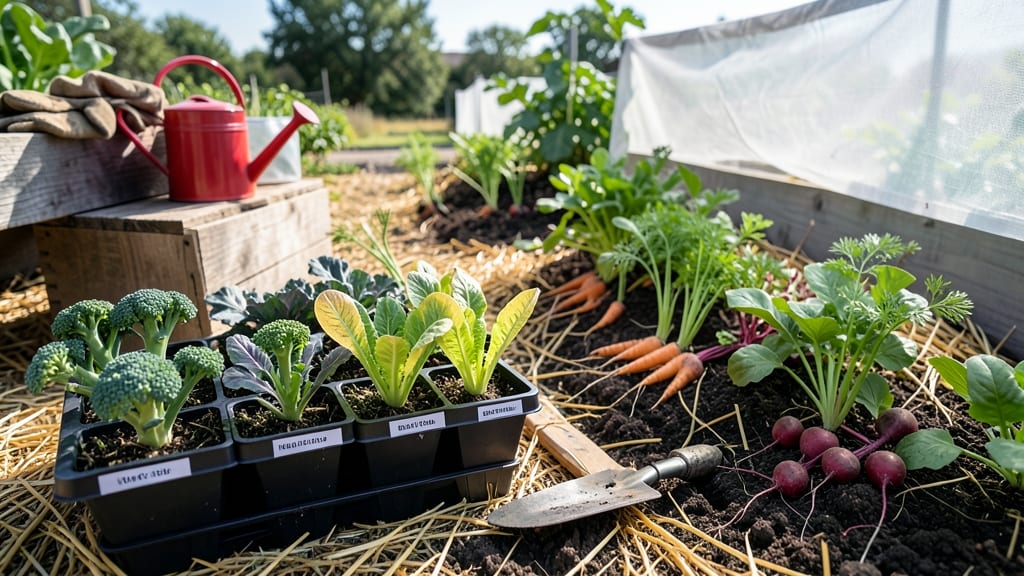
You should plant a fall garden in Texas between late July and early September to beat the worst heat while still giving crops time to mature before frost 🌱.
Texas gardeners know the heat can be brutal, but with the right timing, a thriving fall garden is absolutely possible—even in the Lone Star State’s harshest zones.
If you wait until August, you might miss the window for fast-growing crops like lettuce or radishes, while planting too early risks wilting before cooler weather arrives. The key is balancing heat tolerance with frost dates, which vary wildly from North to South Texas.
Below, I break down the exact planting timeline by zone, the fastest-growing crops for your region, and how to avoid the three mistakes that kill Texas fall gardens before they even start.
Texas fall planting calendar by hardiness zones 8a-10a: when to start seeds vs transplants
Timing is everything in Texas fall gardening, where 90°F soil temperatures can still linger well into September. The key to success? Planting cool-season crops when daytime highs dip below 85°F and nights stay above 55°F.
In Zone 8a, this means starting seeds indoors by mid-July for transplants ready by late August, while Zone 10a gardeners can push seeds directly into soil until early October.
Your last frost dates vary dramatically across Texas—from December 1 in North Texas to January 15 in South Texas. To maximize harvests, aim to plant 6-8 weeks before frost, adjusting for your specific zone.
For example, broccoli needs 75 days to mature, so Zone 8a gardeners should transplant by mid-August while Zone 10a can wait until early October.
| Zone | Start Seeds Indoors | Transplant Outdoors | Direct Sow Window | Last Frost Date |
|---|---|---|---|---|
| 8a | Mid-July | Late August | July 15 - Aug 15 | Dec 1 |
| 8b | Late July | Early September | July 20 - Aug 20 | Dec 15 |
| 9a | Early August | Mid-September | Aug 1 - Sep 1 | Jan 1 |
| 9b | Late August | Late September | Aug 15 - Sep 15 | Jan 15 |
| 10a | Early September | Early October | Sep 1 - Oct 1 | Jan 31 |
For cool-season vegetables like broccoli and kale, I recommend starting seeds indoors 4-6 weeks before transplanting. These plants thrive in 50-70°F soil and can tolerate light frosts once established.
In my Zone 9a garden, I've found that transplanting broccoli by mid-September gives me harvests through December, while direct-sown carrots in early August mature just in time for Thanksgiving.
Herbs like cilantro and parsley are heat-sensitive but perfect for fall. I start cilantro seeds directly in the garden by early September in Zone 8a, using shade cloth to protect seedlings from 90°F+ afternoons.
These herbs prefer partial shade in summer but full sun once temperatures drop below 80°F. For parsley, I transplant seedlings in late August to avoid bolting from summer heat.
Carrots are another cool-season favorite that benefits from loose, well-drained soil. In Texas, I direct-sow them by mid-August in Zone 8a and early September in Zone 10a. The key is keeping soil consistently moist—drought stress causes forked roots.
I use mulch to maintain even moisture and prevent cracking during our unpredictable fall rains.
Don't overlook heat tolerance thresholds when selecting varieties. Some plants like Swiss chard can handle 90°F days if given afternoon shade, while lettuce bolts quickly above 80°F.
For my Zone 9b garden, I choose heat-tolerant varieties like 'Black Seeded Simpson' lettuce and 'Winterbor' kale, which can withstand 85°F+ temperatures better than standard varieties.
Watering strategy shifts dramatically in fall. While summer requires daily deep watering, fall crops need consistent moisture without waterlogging. I water my fall garden in the early morning to reduce evaporation and fungal risks.
In Zone 10a, where humidity lingers, I space waterings to every 3-4 days once temperatures fall below 85°F.
Protect your fall garden from early freezes by using row covers or cold frames when nighttime temps drop below 35°F. In my experience, <
How to extend your Texas fall garden season with heat-resistant varieties
When Texas summer refuses to let go, traditional fall crops like lettuce or spinach can wilt before they even sprout. But by choosing heat-resistant varieties and using smart planting strategies, you can keep harvesting well into winter.
The secret? Succession planting with fast-growing, drought-tolerant crops that thrive in lingering summer heat.
I’ve tested these five top performers in my own North Texas garden—each one delivers continuous harvests even when temperatures hover in the 90s. These varieties won’t just survive; they’ll outperform traditional cool-season crops if planted correctly. Let’s dive into the specifics so you can maximize your fall garden’s potential.
- 1 Malabar Spinach – Grows 3x faster than regular spinach in heat, thrives in 95°F+ with daily harvests possible. Plant July 15-August 15 for fall harvests.
- 2 Swiss Chard – Heat-tolerant with bright red stems that add color to your garden. Start seeds August 1-September 1 for winter harvests. Cut-and-come-again leaves regrow quickly.
- 3 Black-Eyed Peas – Drought-resistant and ready in 50-60 days. Plant July 1-August 15 for fall harvests. Succession plant every 2 weeks for continuous pods.
- 4 Okra – Texas-native that loves heat and produces pods for 100+ days. Plant April-June or August-September for fall harvests. Thrives in poor soil with minimal water.
- 5 Cilantro – Bolt-resistant varieties like ‘Santo’ stay fresh in heat. Sow August 15-September 15 for slow bolting. Harvest leaves every 2 weeks to encourage regrowth.
For succession planting, I recommend staggering your plantings every 10-14 days starting in mid-July. This ensures a continuous harvest as older plants mature while younger ones fill the gap.
For example, plant Malabar spinach on July 15, then again on July 25 and August 5—this way, you’ll have fresh leaves ready by early September.
Pro tip: Use shade cloth (30-50%) over seedlings during the hottest part of the day (12 PM–4 PM) to protect them from heat stress. This small investment can mean the difference between a thriving garden and a failed one.
Once established, most of these crops will self-shade as they grow taller.
Don’t forget to mulch heavily with straw or wood chips to retain moisture and regulate soil temperature. In my Zone 8b garden, mulching reduced watering needs by 40% while keeping roots cool.
Pair this with drip irrigation set on a timer, and you’ll have a low-maintenance system that works even when you’re busy.
With these heat-resistant varieties and smart planting strategies, your Texas fall garden can stay productive well past the first frost. Start with just one or two crops to test what works best in your microclimate, then expand next season. Happy gardening!