
Picking
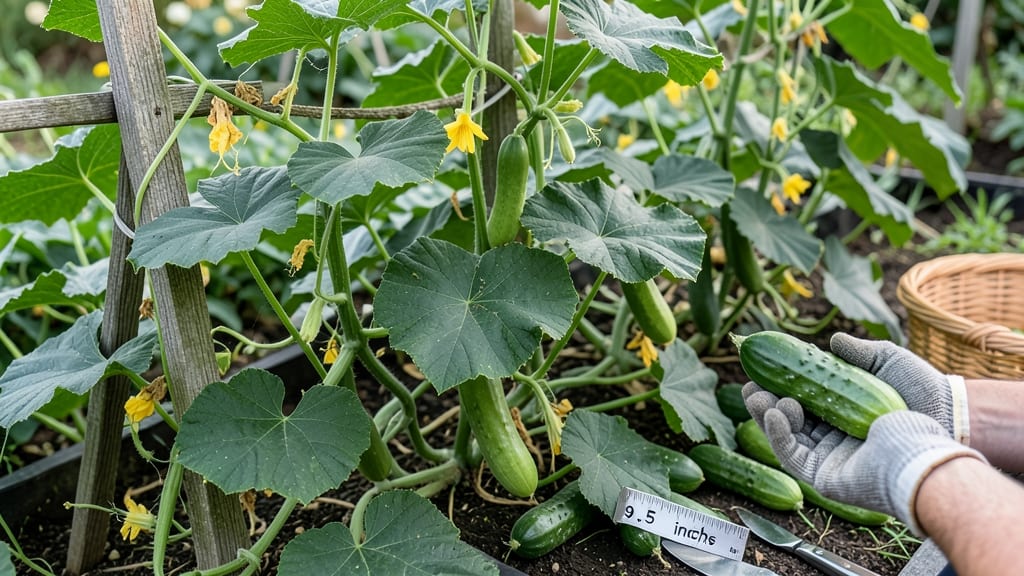
To pick cucumbers from your garden at the perfect moment means snagging crisp, flavorful fruit before bitterness sets in—usually when they’re 6–8 inches long and still glossy green.
Nothing beats the taste of fresh cucumbers straight from your garden—but timing your harvest wrong means bitter, seedy disappointments. Master these size-based tricks to ensure crisp, flavorful cucumbers every time. 🥒
Most gardeners wait too long, letting cucumbers grow past their prime. The key is checking size, skin firmness, and the stem end color—all clues that tell you exactly when to grab them.
In this guide, I’ll break down the 3 size-based tricks for ideal harvest timing, plus how often to pick to keep your plants producing all season.


Cucumber size matters: the perfect harvest window for crunchy, seedless fruit
Timing your cucumber harvest by size is the secret to avoiding those bitter, seedy disappointments that ruin fresh garden cucumbers. The 3-6 inch range is your golden zone for slicing varieties, where flavor peaks and seeds remain tender.
But did you know pickling cucumbers have their own ideal window? Let’s break down exactly when to harvest for maximum crunch and sweetness.
Size isn’t the only factor—variety type plays a huge role. Slicing cucumbers like 'Straight Eight' or 'Marketmore' shine at 6-8 inches, while pickling varieties such as 'Boston Pickling' or 'National Pickling' should be harvested at 2-3 inches.
Harvesting at the right size prevents overgrowth, which leads to woody texture and bitter compounds developing.
Here’s the science: Cucumbers produce cucurbitacin (the bitter compound) when left too long on the vine. This happens after 75 days of growth, turning your crisp veggie into a tough, unappetizing mess.
But harvest too early, and you miss the full flavor development. The 3-6 inch window balances sweetness, crunch, and seed tenderness perfectly.
For slicing cucumbers, aim to harvest when they reach 6 inches—this is when their skin thickens just enough for storage but hasn’t lost its crispness.
If you’re growing heirloom varieties like 'Lemon Cucumber', watch for a slight yellowing at the blossom end (the end opposite the stem) as a secondary cue. This signals peak ripeness without bitterness.
Pickling cucumbers demand even more precision. Their 2-3 inch size window is critical—they’ll turn leathery and seedy if left on the vine beyond 3 inches. The key here is frequency: Check your plants every 2-3 days during peak production (June–August) to avoid missing this narrow window.
Pro tip: Use a small mesh bag clipped to the vine to catch tiny cucumbers that might fall.
Texture is your best friend when judging cucumber ripeness. A perfectly ripe cucumber should feel firm but slightly yielding when gently squeezed—like a baseball. If it’s rock-hard, it’s underripe; if it’s mushy, it’s overripe.
For bush varieties, which produce fruit closer to the stem, use a soft touch to avoid bruising the delicate skin.
Don’t ignore the stem end color either. When the blossom end (the end that faced the flower) turns yellow or brown, it’s a clear sign your cucumber is ready. This change happens naturally as the fruit matures and stops growing.
For dark green varieties, this color shift might be subtle, so pair it with the size check for accuracy.
One common mistake I see in gardens is waiting too long for cucumbers to "get bigger." But larger doesn’t always mean better—it often means bitter and seedy.
For example, a 'Suyo Long' cucumber left to grow beyond 12 inches will develop a woody core and large, hard seeds, making it inedible. Stick to your variety’s ideal size range, and you’ll enjoy cucumbers that taste like they came straight from a farmers' market.
Finally, adjust your harvesting schedule based on your local climate. In hotter regions (like USDA Zone 9+), cucumbers mature faster—sometimes in as few as 45 days.
3 Pro tips to tell when cucumbers are ready (beyond just size)
Checking cucumber size is a great starting point, but the real secret to perfect harvests lies in subtle visual and tactile clues. I’ve learned that even cucumbers of the same size can vary wildly in readiness—some still tough and seedy, others already past their prime.
These three pro tips will help you spot the ideal moment to pick, ensuring maximum flavor and crunch every time.
First, pay attention to the blossom end (the end opposite the stem). When it turns from bright green to a yellowish-brown hue, that’s your cue the cucumber is ready.
This color change signals the fruit has stopped growing and reached peak sweetness. I always double-check this spot before making my final decision—it’s the most reliable indicator I’ve found.
- 1. Skin Color Shift: Look for deep, even green (or variegated) skin with no yellowing. Overripe cucumbers develop yellow patches or soft spots—these are past their prime.
- 2. Spines vs. Bumps: Mature cucumbers have soft bumps (not sharp spines) along their ridges. Run your thumb gently over the skin—if it feels smooth with slight texture, it’s ready.
- 3. The Thump Test: Hold the cucumber and give it a light tap on a hard surface. A hollow, crisp sound means it’s perfectly ripe. A dull thud? It’s overripe.
Don’t overlook the texture test—this is where many gardeners go wrong. A ripe cucumber should feel firm but slightly yielding when you press your thumbnail into the skin. If it leaves a dent, it’s underripe; if it feels mushy, it’s overripe.
I’ve learned to trust this tactile cue more than anything else, especially in hot summers when cucumbers ripen quickly.
Another common mistake? Waiting too long because you think bigger is better. Overripe cucumbers develop a seedy, bitter taste and tough skin, while underripe ones stay hard and bland. For slicing varieties, aim for 6–8 inches—pickling cucumbers should be harvested at their full size (usually smaller, like 2–4 inches).
I always check the variety’s guidelines first to avoid disappointment.
Pro tip: Harvest in the morning when cucumbers are cool and crisp. This is when their flavor and texture are at their peak.
I’ve noticed that afternoon heat can make them slightly softer and less flavorful, so timing your harvest right matters just as much as picking at the right stage.
If you’re still unsure, remember this: consistent harvesting is key. The more you pick, the more your plants will produce. And when in doubt, err on the side of picking early—you can always use smaller cucumbers in salads or pickles, but you can’t un-ripe a bitter one. Happy harvesting! 🥒