
Picking
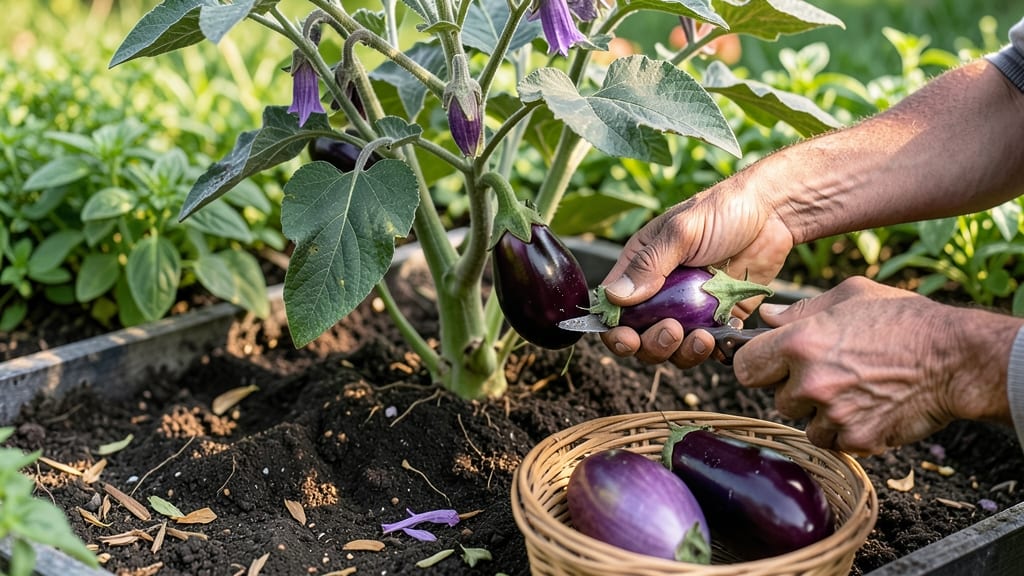
To pick eggplant from your garden at the perfect time means catching it when the skin is firm, the color is deep, and the flavor is at its peak—before it turns bitter or mealy.
Picking too early or too late can ruin your harvest, leaving you with eggplant that’s tough, bland, or even inedible.
The right moment is all about visual cues: a glossy, vibrant hue and a size that matches your variety, whether that’s 6-8 inches for standard types or smaller for compact ones.
Climate plays a role too—warmer regions like USDA Zone 6a may see faster ripening, while cooler areas could stretch the season. Below, I’ll walk you through the color, size, and firmness tests to ensure you never miss the sweet spot.
You’ll also discover how to adjust for heatwaves, rain delays, and other factors that can throw off your harvest timing—so you can enjoy restaurant-quality eggplant straight from your garden.
How to determine eggplant ripeness by color and size
Eggplant ripeness isn't just about waiting for a specific day—it's about reading your plant's visual cues. The right color and size guarantee the best flavor, while ignoring these signs leads to tough, bitter fruit.
I've learned that even a single day past peak ripeness can turn your harvest from gourmet to garden-store quality.
Most gardeners focus on purple eggplants, but varieties come in green, white, and striped colors too. Each type has unique maturity signals, and understanding these will help you avoid common mistakes.
For example, a green eggplant like 'Tianjin' changes from pale to deep green, while a white variety like 'Casaba' develops a creamy hue with purple streaks.
Here's a quick visual guide to help you identify the perfect moment to harvest based on color and size:
For purple eggplants, the color shift from light lavender to a rich, deep purple is your biggest clue.
I always check for glossy skin—this indicates the fruit has reached peak sweetness. Green varieties like 'Ichiban' turn from pale to a vibrant green, while white types develop creamy tones with purple accents.
Size matters just as much as color. Most standard purple eggplants should be 6-8 inches long when ready, while long varieties like 'Black Beauty' can reach 12-18 inches.
I've found that harvesting at the upper end of the size range often means better flavor, but never let them get too large or the seeds become bitter.
One common mistake I see is waiting too long for color to develop in cooler climates. If your eggplants aren't darkening as expected, check the temperature—they need warmth (75°F+) to develop full color. In my Zone 6a garden, I often harvest based on size first, then verify color.
Pro tip: Morning harvests work best because the fruit is cool and firm. If you pick in the afternoon, the skin may feel softer due to heat. I always use a sharp knife or pruners to avoid damaging the plant, leaving about 1 inch of stem attached to prevent spoilage.
Remember that variety affects timing. A fast-maturing 'Fairy Tale' eggplant might be ready in 60 days, while a large 'Rosa Bianca' could take 100 days. Always check your seed packet for specific guidance, but trust your eyes and fingers—they won't steer you wrong.
When in doubt, cut one open to check the seed cavity. At peak ripeness, it should be small and pale. If you see large, dark seeds, it's past prime. This simple trick has saved me from wasting countless eggplants over the years.
The firmness test and other pro tips for perfect harvest timing
When it comes to eggplant, firmness is your best friend. The skin firmness test is a foolproof way to determine if your eggplant is ready for harvest. Gently press your thumb against the fruit—if it feels firm and doesn’t dent easily, it’s time to pick.
Overripe eggplants will have soft, yielding skin that’s a dead giveaway they’ve passed their prime.
But don’t stop there! The stem separation test is another pro trick. Hold the eggplant gently and twist it near the stem—if it snaps cleanly with a slight crack, you’ve got a winner.
This indicates the fruit has fully matured and is ready to be harvested. If the stem pulls away without snapping, it’s not quite there yet.
⚠️ callout-warning ⚠️
Heat waves can trick your eggplant into ripening too fast, leading to bitter flavors and tough skin. If your garden is experiencing 90°F+ temperatures, check for ripeness 2-3 days earlier than usual. Heavy rain before harvest can dilute flavor—wait 24-48 hours after rain to pick for the best taste. Always harvest in the morning when skin is coolest for accurate firmness testing.
Environmental factors play a huge role in eggplant ripeness. Hot, dry weather speeds up maturation, so you might need to harvest sooner than expected. On the flip side, cool, cloudy days can slow things down. Pay attention to your local climate—if you’re in a hotter region, your eggplants may mature faster than those in cooler areas.
Don’t ignore the color cues either. While firmness is key, a deep, glossy purple, black, or white (depending on variety) is another sign of readiness. Pale or uneven coloring means it’s not quite time.
Pro tip: White eggplants like ‘Casaba’ should have a creamy, even hue, while striped varieties like ‘Italian Long’ need bold, consistent stripes.
Timing is everything when it comes to eggplant. If you wait too long, the seeds inside will harden, making the fruit tough and seedy. But if you pick too early, you’ll end up with small, underdeveloped fruit that lacks flavor.
The golden window is when the fruit is at its peak size (usually 6-8 inches long for most varieties) and the skin is firm but not rock-hard.
For the best results, harvest your eggplants in the morning when temperatures are cooler. This ensures the skin is firm and makes it easier to judge ripeness. Use a sharp knife or pruning shears to cut the stem, leaving about 1 inch of stem attached.
This helps prevent bruising and extends the fruit’s shelf life. Store your freshly picked eggplants in a cool, dark place for up to a week.