
Planting
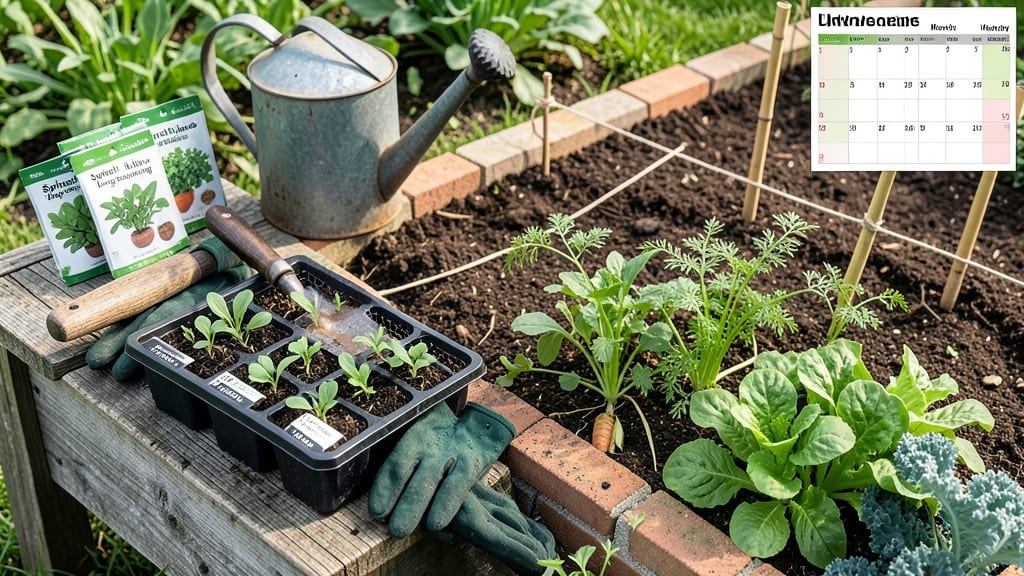
Planting a garden in Utah requires timing that accounts for 120–200 frost-free days and dramatic shifts between desert heat and mountain chill.
Utah’s unique climate—with its high desert elevations and sudden temperature swings—can turn gardening into a high-stakes guessing game. Plant too early, and frost will wipe out your seedlings; wait too long, and your summer harvests will suffer.
Most Utah gardeners miss the soil warmth factor, which is just as critical as frost dates. A cool spring morning might feel safe, but the ground could still be too cold for seeds like beans or squash to germinate.
In this guide, I’ll break down the exact planting windows for Utah’s microclimates—from the Wasatch Front to Southern Utah—plus soil temperature rules and drought-resistant plant picks to set you up for a thriving summer garden.
Utah’s frost-free deadlines by region: when to plant cool vs warm-season crops
Utah’s diverse geography—from the high deserts of Southern Utah to the Wasatch Front valleys—creates wildly different planting windows. In St. George (Zone 7b), you can plant warm-season crops like tomatoes by February 15, while in Cache Valley (Zone 6a), wait until May 1 to avoid frost.
These regional differences mean your last frost date could vary by 6 weeks across the state. Let’s break down the exact planting windows for your specific corner of Utah.
Cool-season crops like lettuce, spinach, and peas thrive when soil temps stay below 70°F. In Northern Utah (Zones 5-6), plant these by March 15 for spring harvests, while Southern Utah gardeners can start as early as January 1.
Warm-season crops—peppers, eggplants, and squash—need soil temps above 60°F and can only go in after your last frost date, which ranges from April 15 in Salt Lake City to May 15 in Ogden.
Here’s your region-specific guide to frost-free deadlines, with last frost dates, first frost averages, and ideal planting windows for both cool and warm-season crops:
Elevation plays a huge role in Utah’s planting deadlines. For every 1,000 feet gain in altitude, expect your last frost date to shift 3-5 days later. If you live at 7,000 feet in Park City, add 2 weeks to the Salt Lake Valley timeline.
Conversely, low-desert areas like Moab (Zone 7b) can plant 4-6 weeks earlier than the Wasatch Front. Always check your local microclimate—urban areas like Salt Lake City can be 5-10°F warmer than rural spots just 10 miles away.
For warm-season crops, wait until soil temps hit 60°F+ for peppers and 70°F+ for tomatoes. Use a soil thermometer to confirm—air temps can be misleading. In Northern Utah, this often means waiting until late May for heat-loving plants.
Meanwhile, Southern Utah gardeners can start tomatoes in March under row covers to jumpstart growth. Pro tip: Hardening off seedlings for 7-10 days before transplanting helps them survive Utah’s temperature swings.
Don’t forget about fall planting! Utah’s first frost arrives earlier in high-elevation areas (late September in Ogden) than in desert regions (mid-November in St. George). Plant cool-season crops like kale or radishes by August 1 in <
Soil temperature rules for Utah gardens: the hidden factor most gardeners miss
Most Utah gardeners check the air temperature before planting, but soil warmth is the real key to germination success. In Utah’s rocky or sandy soils, air temps can feel perfect while soil stays too cold for seeds to sprout.
For example, peas need 40°F soil, but squash won’t germinate until it hits 70°F. Without testing, you might waste seeds or delay harvests by weeks.
Utah’s microclimates add another layer of complexity. High desert areas like Salt Lake Valley warm slower than St. George’s lower elevations. Even in the same yard, soil under black mulch can be 10°F warmer than bare ground.
Skipping soil temp checks means guessing—and that’s a risky game in Utah’s unpredictable spring weather.
- Test soil temp at 6 AM (coolest time) with a DIY thermometer (place a thermometer in wet soil for 30 mins).
- Peas & spinach germinate at 40-45°F—plant these first in late March for Wasatch Front.
- Beans & corn need 60°F+ soil—wait until mid-April in northern Utah or March in southern regions.
- Squash & tomatoes require 70°F+—don’t plant until late May in high desert areas.
- Extend warm soil in rocky areas by covering beds with black plastic 2 weeks before planting.
- Use straw mulch (3-4 inches) to retain 5-10°F more warmth in sandy soils like those in Cache Valley.
For DIY soil thermometers, grab a thermometer (or repurpose an old one), wrap it in aluminum foil, and bury it 2 inches deep in moist soil.
Check readings daily—soil temps can swing 15°F in 24 hours during Utah’s spring transitions. Pro tip: Morning readings are most reliable for planting decisions.
Utah’s sandy soils (common in Davis County) warm faster but lose heat quickly. To compensate, plant heat-loving crops like okra or sweet potatoes only after June 1.
For rocky soils in Park City, add compost to improve heat retention—this can add 5-8°F to soil temps compared to untreated ground.
Don’t let Utah’s false springs fool you. Just because air temps hit 70°F in March doesn’t mean soil is ready. I once planted cucumbers in early April in Salt Lake City—only to have them rot in 50°F soil.
Always test soil temp for 3 consecutive days before planting warm-season crops.
Use these soil temp rules to time your Utah garden perfectly: cool crops first (peas, lettuce), then warm crops (tomatoes, peppers) only when soil hits their thresholds. With this approach, you’ll avoid the #1 mistake Utah gardeners make—planting too early and losing seedlings to cold soil. 🌱