
Planting
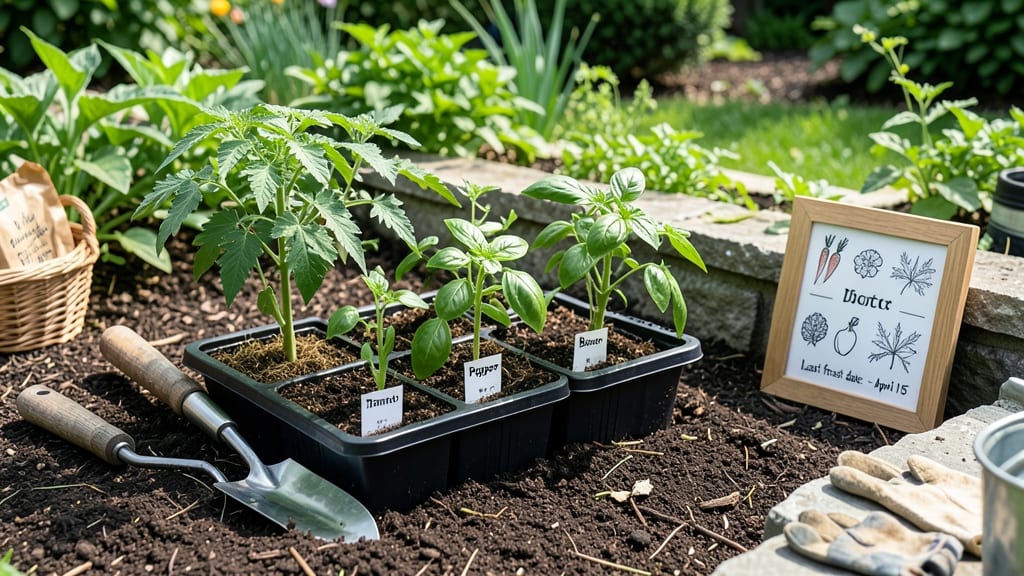
To plant a vegetable garden in NJ, time your seeds and seedlings between mid-April and mid-June for spring or August to September for fall, aligning with your last frost dates.
New Jersey’s unpredictable spring weather can make or break your vegetable garden—planting too early risks frost damage, while waiting too long cuts your harvest season short.
Cool-season crops like lettuce 🥕 and spinach thrive when planted 4-6 weeks before the last frost, while warm-season favorites such as tomatoes and peppers need to wait until 2-4 weeks after the danger of frost has passed.
Below, I’ll break down the best planting windows for your region, how to adjust for microclimates, and the most common mistakes to avoid for a bountiful harvest.
NJ last frost dates by plant type: critical timing for peak vegetable yields
New Jersey’s last frost dates vary dramatically between North Jersey (Zone 6b) and South Jersey (Zone 7a), creating a 3-4 week difference in planting windows.
In northern NJ, the average last spring frost hovers around April 15-20, while southern NJ typically sees its last frost by April 1-10. Understanding these dates helps you time cool-season crops for early harvests and warm-season crops for maximum growth before summer heat sets in.
For cool-season vegetables like spinach, kale, and peas, planting 4-6 weeks before your region’s last frost ensures they mature before summer heat stress.
Meanwhile, warm-season crops such as tomatoes, peppers, and cucumbers need to wait until 2-4 weeks after the last frost when soil temperatures consistently stay above 55°F (13°C). Microclimates—like urban heat islands or protected garden beds—can shift these dates by 1-2 weeks earlier or later.
Key takeaway: Use local frost data (check NJAES frost maps) and adjust for your specific microclimate. For example, a south-facing slope warms faster than a shady low spot, allowing you to plant warm-season crops 5-7 days earlier in those areas.
In North Jersey, where frosts linger longer, prioritize hardy cool-season crops like kale and cabbage for early spring plantings. These can handle light frosts and even improve in flavor after a touch of cold.
For South Jersey, where the growing season starts earlier, you can squeeze in two harvests of warm-season crops by planting early varieties in May and succession plantings in June.
For warm-season crops, soil temperature matters more than air temperature. Use a soil thermometer to confirm the ground is warm enough—tomatoes and peppers won’t germinate well in cold soil.
If your soil is still chilly after the last frost, consider using black plastic mulch to warm it up 2-3 weeks faster than bare soil.
Another pro tip: Extend your season by using row covers or cold frames to protect warm-season seedlings from late frosts. I’ve successfully planted tomato seedlings in early May in North Jersey under a floating row cover, giving them a 2-week head start before removing the cover once temperatures stabilize.
Don’t forget about fall planting, which can be just as productive as spring. In NJ, the first frost typically arrives between October 30 (North) and November 15 (South). Plant cool-season crops like spinach and radishes
How to adjust planting dates for NJ’s unpredictable weather patterns
New Jersey’s variable spring temperatures can throw off even the most experienced gardener. One year, you might be planting by mid-April, and the next, a late frost hits in May.
The key is flexibility—knowing how to adjust planting dates without sacrificing your harvest. I’ve learned to rely on soil temperature guides and protective gear to extend my growing season safely.
Start by checking the average last frost date for your specific NJ region—North Jersey typically runs 2-3 weeks later than South Jersey. But don’t let averages dictate your timeline.
Instead, use frost-free date calculators like the ones from the NJAES (New Jersey Agricultural Experiment Station) to get a more precise estimate based on recent weather patterns.
⚠️ callout warning
Even if spring feels warm, a late frost can kill tender seedlings overnight. Tomatoes, peppers, and eggplants are especially vulnerable. Always have row covers or cold frames on hand to protect young plants. For leafy greens, use microclimate advantages like south-facing slopes to plant earlier.
For warm-season crops like tomatoes and peppers, I wait until the soil temperature consistently stays above 60°F—usually 2-3 weeks after the average last frost date. A simple soil thermometer ($10 at garden centers) takes the guesswork out of it.
Meanwhile, leafy greens like spinach and kale can handle cooler temps, so I plant them 4-6 weeks before the last frost, often as early as March in South Jersey.
Protective measures are your best friend when pushing planting dates. Row covers (lightweight fabric) can raise soil temps by 5-8°F, letting me plant tomatoes 2 weeks earlier without risk.
For cold frames, I’ve seen gardeners in North Jersey grow peppers and basil from late April by covering seedlings at night. Just remember to ventilate on warm days to prevent overheating.
Don’t forget about succession planting—it’s how I keep my garden productive all season. After harvesting early radishes or lettuce, I replant with fast-growing crops like bush beans or turnips. This way, even if the first planting fails, I’ve got a backup.
And for fall crops, I use the first frost date (usually October 30 in North Jersey) to calculate when to sow cool-season crops like broccoli or carrots for an October harvest.
My biggest lesson? Trust the data, but stay flexible. If your soil thermometer shows 55°F when you planned to plant tomatoes, wait another week—your plants will thank you. With these strategies, you’ll maximize your NJ growing season no matter what Mother Nature throws your way. 🌱