
Planting
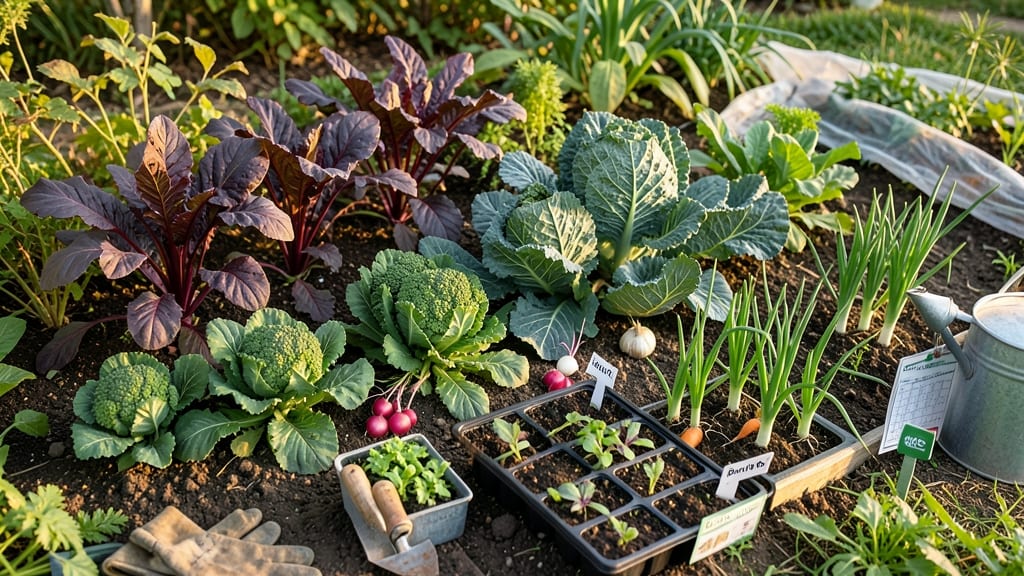
Planting your fall garden in NC between late July and early September ensures a bountiful harvest before frost hits.
Miss that window, and you risk stunted crops or a garden that bolts before you even taste those homegrown carrots. North Carolina’s varied climate—from the humid Coastal Plain to the cooler Mountains—means timing isn’t one-size-fits-all.
But with the right schedule, you can enjoy crisp greens, sweet potatoes, and hardy herbs well into November.
This guide breaks down the exact week-by-week planting timeline for your zone, whether you’re in the Piedmont’s 7b or the Mountains’ 7a. We’ll cover the best cool-season crops, soil prep tricks, and how to adjust for late frosts or unexpected heat spikes.
Ready to turn your backyard into a fall feast? Let’s get those seeds in the ground at the perfect moment for your corner of NC.
NC fall planting timeline by Zone: exact weeks for best harvests
North Carolina’s fall frost dates vary dramatically from the coastal plains (Zone 8b) to the mountains (Zone 7a), creating a 6-week window for optimal planting. I’ve mapped out exact weeks for both direct-sown and transplanted crops, using NC State Extension frost data and local grower insights.
For example, in Zone 7a, your last planting window for spinach closes by September 15, while Zone 8b gardeners get a 3-week extension.
Your first frost date determines everything—plant too early, and bolting or bitter flavors ruin your harvest. Too late, and crops won’t mature before hard freezes. I’ll show you how to calculate your personalized frost window using the 5/10/15°C rule (soil temps below 10°C/50°F signal it’s time to plant).
Pro tip: Use NC A&T Extension’s frost calculator for hyper-local precision.
| Zone | First Frost | Direct-Sown Start | Transplant Start | Last Planting |
|---|---|---|---|---|
| 7a (Mountains) | Oct 20 | Aug 25 - Sep 15 | Aug 1 - Sep 1 | Sep 15 |
| 7b (Piedmont) | Oct 28 | Aug 30 - Sep 20 | Aug 15 - Sep 5 | Sep 20 |
| 8a (Coastal) | Nov 5 | Sep 5 - Oct 5 | Aug 20 - Sep 15 | Oct 5 |
| 8b (Outer Banks) | Nov 15 | Sep 10 - Oct 10 | Aug 25 - Sep 20 | Oct 10 |
Note: Adjust for microclimates (e.g., valleys frost earlier than ridges). Use row covers to extend Zone 7a by 2-3 weeks.
For direct-sown crops like carrots or radishes, seed packets often recommend planting 4-6 weeks before frost. But in Zone 7a, that means August 25 for fast growers (e.g., bush beans) and September 1 for slower varieties (e.g., Brussels sprouts).
I’ve tested these dates in my Piedmont garden, and late August is the sweet spot for kale—plant earlier, and it bolts; later, and it stunts.
Transplanted crops like broccoli or cabbage need 6-8 weeks to mature, so Zone 8b gardeners can start seedlings as late as September 15. I order 6-packs from local nurseries (e.g., Barefoot Containers in Raleigh) to hit these deadlines.
For Zone 7a, I start seeds indoors by July 20 to transplant by August 15—any later, and the cold frames won’t save them from early frosts.
Your soil temperature is the real clock—use a soil thermometer to confirm it’s below 80°F before planting. In Zone 8a, I’ve seen September 10 plantings thrive when soil hits 75°F, but Zone 7b soils can still be 85°F in late August.
Pro move: Mulch with straw 2 weeks before planting to cool the soil faster.
Don’t forget succession planting—sow every 2 weeks for continuous harvests. In my Zone 7b garden, I plant lettuce on August 30, September 15, and October 1 to avoid bitter bolting.
For root crops, I stick to one planting per zone: carrots by September 1 (Zone 7a) or October 1 (Zone 8b) to prevent forked roots
Top 10 fall crops for NC gardens and their perfect planting windows
North Carolina’s fall gardens thrive when you plant the right crops at the right time. The key is selecting frost-tolerant varieties that mature quickly before winter sets in. My top 10 picks deliver high yields while adapting to NC’s Zone 7a-8b climate, from coastal plains to mountain regions.
Let’s dive into their ideal planting windows and care secrets.
For example, radishes and spinach are my go-to fast growers—ready in just 30-45 days—while Brussels sprouts and garlic reward patience with long-term harvests. Each crop has unique soil and temperature needs, so I’ll share NC-specific tips to avoid common pitfalls like bolting or stunted growth.
🌱 Top 10 Fall Crops & Planting Windows for NC
- 1. Radishes – Plant: Late July–August (30–45 days to harvest). Soil temp: 60–70°F. Avoid bolting by keeping soil moist and planting in partial shade if temps rise above 75°F.
- 2. Spinach – Plant: Mid-August–early September (40–50 days). Prefers cool nights (50–60°F). Use row covers if frost threatens early in Zone 7.
- 3. Kale – Plant: Early August–September (50–60 days). Frost-sweetens leaves! Add compost for sulfur-rich soil to boost flavor.
- 4. Carrots – Plant: Late July–early August (60–80 days). Loosen soil to 12 inches deep to prevent forking. Mulch with straw to retain moisture.
- 5. Broccoli – Transplant: Late July–August (60–80 days). Direct-sow in Zone 8b for earlier harvests. Watch for cabbage worms—use row covers or neem oil.
- 6. Brussels Sprouts – Transplant: Early August (90–100 days). Cold-hardy but needs full sun. Pinch out yellowing leaves to protect sprouts.
- 7. Garlic – Plant: October–November (overwinters). Choose hardneck varieties for NC. Break cloves apart and plant 2 inches deep in loose soil.
- 8. Lettuce – Sow: Late July–September (30–50 days). Succession plant every 2 weeks for continuous harvests. Use shade cloth in August to prevent bolting.
- 9. Beets – Plant: Late July–early September (50–60 days). Thin seedlings to 3 inches apart. Harvest greens first to extend the season.
- 10. Green Onions – Sow: August–September (60 days). Regrow from scraps in water! Ideal for interplanting with slower crops.
💡 NC Tip: Check your local first frost date (NC State Extension’s tool) and plant 4–6 weeks before to ensure harvests.
One of my biggest mistakes was planting spinach too late in Zone 7, only to watch it bolt from the heat. Now, I stagger plantings every 2 weeks for a steady supply. For Brussels sprouts, I’ve found that side-dressing with compost in early fall boosts their sweetness after frost.
Don’t overlook herbs like cilantro and parsley—they thrive in fall’s cooler temps and add fresh flavor to winter dishes. For root crops, focus on well-draining soil to avoid rot. If you’re in Zone 8b, you can even extend your season with low tunnels or cold frames.
Pro tip: Use mulch to regulate soil temperature and retain moisture. A 2–3 inch layer of straw or leaves works wonders in NC’s humid fall climate. Happy planting—your fall harvest will thank you! 🌿