
Tools
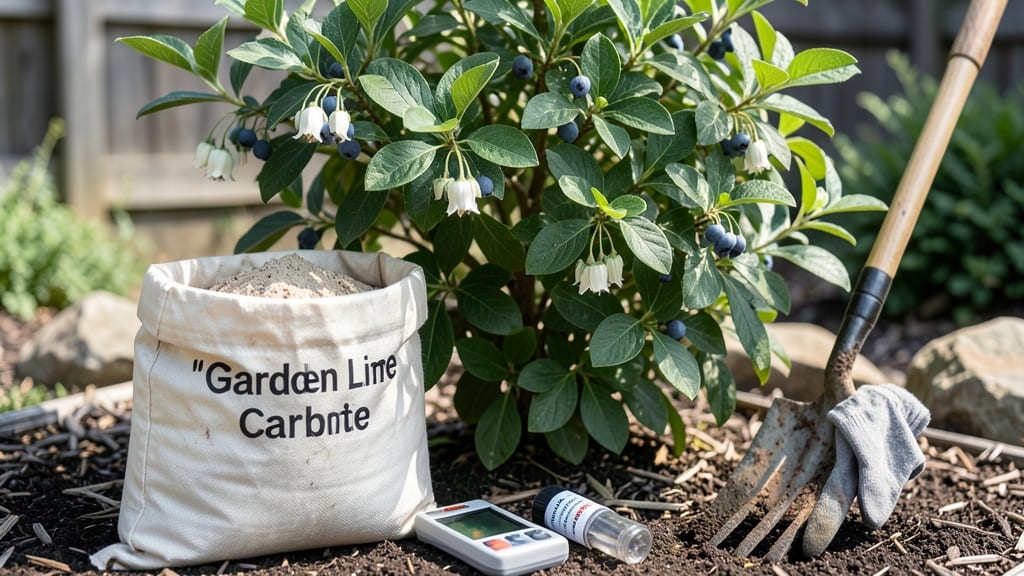
Putting lime in your garden at the right time—like fall or early spring—can save your acid-loving plants from stunted growth and yellowing leaves.
Struggling with soil that feels too sour or plants that just won’t thrive? The key to fixing it lies in timing.
Applying lime too late in the season won’t give it enough time to work its magic before planting, while adding it too early can wash away before roots absorb it.
Most gardeners aim to adjust soil pH 2-3 months before planting, giving the lime time to break down and raise alkalinity naturally. In USDA Zone 6a, that means fall (September-October) or early spring (March-April) for best results.
Below, I’ll walk you through how to test your soil, calculate the right amount, and avoid common mistakes that turn your garden into a lime desert instead of a thriving ecosystem.
Best times of year to apply lime for optimal soil pH balance
Timing is everything when it comes to applying lime to your garden. The wrong season can leave your soil unevenly treated or even harm your plants. For most gardeners, the ideal window is either late fall or early spring, when soil is workable and plants aren't actively growing.
This gives lime time to integrate fully before the next growing season begins.
Why these seasons? Fall application (after first frost) allows lime to break down over winter, while spring application (before last frost) ensures your soil is ready for planting.
Both times minimize leaching risks and maximize absorption. For acid-loving plants like azaleas or blueberries, timing is especially critical—let's dive into the details.
Climate plays a huge role in how quickly lime works. In warmer climates, lime can break down faster, so fall application gives it more time to neutralize acidity before summer heat. In colder regions, spring application prevents winter freeze-thaw cycles from washing lime away before it's effective. Always check your USDA hardiness zone for localized advice.
| Season | Best Time | Why Apply Now | Plants to Target |
|---|---|---|---|
| Fall | October-November | Lime integrates over winter; avoids spring planting rush | Azaleas, Blueberries, Hydrangeas |
| Early Spring | March-April | Prepares soil 4-6 weeks before planting season | Vegetables, Lawns, New Plantings |
| Late Summer | August-September | Emergency fix for sudden pH drops (e.g., heavy rains) | Container Plants, Annuals |
For acid-loving plants, fall is often the best choice because it gives roots time to adjust gradually to the new pH. If you're planting blueberries or azaleas in spring, apply lime 2-3 months beforehand—this prevents root burn from sudden pH shifts.
Always test your soil first; a pH below 5.5 signals it's time to lime.
In container gardens, timing matters even more because lime washed out faster in pots. Apply it in early spring and again in mid-summer if your plants show signs of chlorosis (yellowing leaves).
Use pelletized lime for containers—it dissolves more evenly. For lawns, fall is ideal because cooler temps help lime penetrate deeper before winter.
One common mistake? Applying lime in summer heat. High temperatures cause lime to break down too quickly, leading to uneven pH levels. If you must lime in summer, do it early morning or late evening and water thoroughly afterward.
Also, avoid liming right before a heavy rain—it can wash away before it works.
Pro tip: Mark your calendar! If you lime in fall, note the application date so you don’t reapply too soon. Lime takes 2-6 months to fully adjust soil pH, depending on your soil type. Clay soils hold lime longer than sandy soils, so adjust your timing accordingly.
For vegetable gardens, aim for a pH of 6.0-7.0—this range supports most crops.
Don’t forget to re-test your soil 3-4 months after liming. A soil pH test kit (available at garden centers) makes this easy. If your pH is still too low, you may need to reapply lime—but never exceed the recommended rate for your soil type.
Over-liming can lock out essential nutrients like iron and manganese, harming your plants more than helping.
For regional adjustments, consider your local climate. In the South, where winters are mild, fall application works year-round. In the North, where winters are harsh, spring application is safer. Always follow package instructions for lime application rates, which vary by product type (pelletized vs. powdered).
With the right timing, lime can revitalize your soil and give your plants the perfect growing conditions.
Ready to take action? Grab your lime and soil test kit, pick your season, and get ready to transform your garden's health! 🌱
How to test your soil and determine if lime is needed
Before adding lime to your garden, you must test your soil’s pH. Lime only works if your soil is too acidic—typically below 6.0. Without testing, you risk over-liming, which can lock out essential nutrients like iron and manganese, harming your plants instead of helping them.
Most garden centers sell DIY soil test kits for around $10-$20, or you can send a sample to a lab for precise results. For quick checks, use a pH meter or litmus paper strips.
I recommend testing in spring or fall when soil is most active and results will guide your lime application timing.
When to Put Lime in Garden
- Test soil pH first—aim for 6.0-7.0 for most gardens
- Apply lime 2-3 months before planting (fall or early spring)
- Use pelletized lime for even distribution in sandy soil
- Work lime into top 6 inches of soil for best absorption
- Add lime before a heavy rain—it washes away before roots absorb it
- Over-apply—1-2 pounds per 100 sq ft is usually enough for most soils
- Use lime on acid-loving plants (azaleas, blueberries) without testing first
- Apply lime during drought—moisture helps it break down effectively
Once you have your pH results, calculate how much lime to add. Sandy soil needs more lime (up to 3x) because it drains faster, while clay soil holds lime longer and requires less.
For example, if your pH is 5.0, you’ll need about 5 pounds of lime per 100 sq ft for clay soil, but 10-15 pounds for sandy soil.
Spread lime evenly over the soil surface using a broadcast spreader or by hand. For container gardens, mix lime directly into the pH soil. Water the area lightly after application to help it settle into the topsoil. Avoid tilling immediately—let it sit for 1-2 weeks before planting or tilling.
After applying lime, retest your soil in 3-6 months to confirm the pH change. Lime takes time to work, and your goal is a slow, steady adjustment. If your soil pH is already 7.0 or higher, skip the lime entirely—your plants may be suffering from alkaline shock instead.
Remember, lime adjusts pH but doesn’t add nutrients. Pair it with compost or organic matter to improve soil structure and fertility. For acid-loving plants, consider sulfur instead if your soil is too alkaline.