
Advice
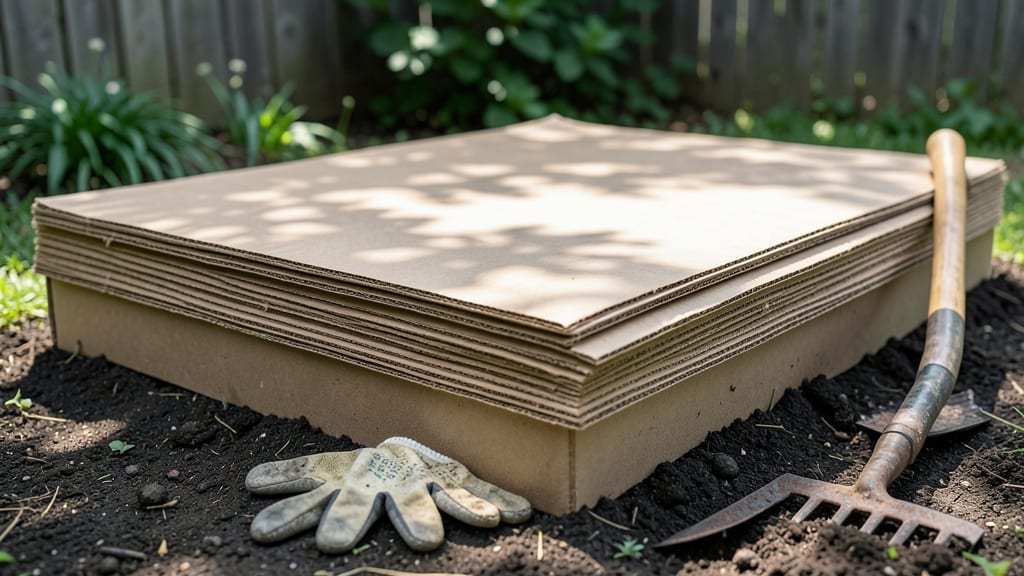
You can use cardboard in your garden safely when it's plain, unbleached, and free from tape or staples, as it breaks down into compost while blocking weeds and holding moisture—just tear it into strips first to help it decompose faster and prevent suffocating plant roots.
Cardboard's cellulose fibers make it an excellent soil amendment when prepared correctly. 🌱 Microbes in the soil break it down over time, enriching the earth with organic matter while creating a natural weed barrier.
The key is proper preparation—removing any glossy coatings or adhesives prevents chemical contamination, and shredding improves airflow so the material composts efficiently rather than forming a dense mat. I've found that placing it directly under mulch or compost layers works best, especially in vegetable gardens where weed suppression is critical.
For best results, lay the cardboard with the printed side down to minimize ink exposure to plants, and always cover it with at least 2-3 inches of compost or mulch to encourage decomposition while protecting against pests.
Avoid using it in areas where you're starting seeds, as the decomposition process can temporarily deplete nitrogen from the soil.
💡 In This Article
- How Cardboard Decomposes in Garden Soil
- Best Practices for Cardboard Mulch in Gardening
How cardboard decomposes in garden soil
Cardboard's decomposition begins with its primary ingredient: cellulose, which makes up about 90% of its composition. When placed in garden soil, cellulose fibers become a feast for decomposer microbes like bacteria and fungi.
These microorganisms secrete enzymes that break down the long cellulose chains into simpler sugars, a process called hydrolysis. In ideal conditions, this can reduce cardboard thickness by 50% within 3-6 months, though factors like moisture, temperature, and microbial populations influence the timeline.
The breakdown process isn't just about size—it's a chemical transformation. As microbes consume the cellulose, they produce carbon dioxide and organic acids that enrich the soil. However, this microbial activity requires nitrogen, which is why cardboard alone can temporarily "steal" nitrogen from nearby plants, potentially causing yellowing leaves.
This is why gardeners often pair cardboard with nitrogen-rich materials like manure or compost to balance the equation.
The shredding process you see in many guides isn't just for aesthetics—it increases surface area by up to 300%, exposing more cellulose to microbial attack and accelerating decomposition by 2-3 times.
What you might not realize is how cardboard's structure affects decomposition. The dense, layered construction of cardboard creates air pockets that can trap moisture, leading to mold growth if not properly managed. When shredded, these air pockets break up, allowing better oxygen circulation—a critical factor for aerobic decomposition.
Without proper airflow, anaerobic conditions develop, producing unpleasant odors and slowing the process. This is why covering cardboard with 2-3 inches of compost or mulch is essential: it maintains the right moisture level while preventing mold and pests from taking over.
Temperature plays a surprisingly large role too. In warmer climates (above 70°F), cardboard decomposes noticeably faster due to increased microbial activity. I've observed that in my own garden, cardboard placed in sunny areas breaks down about 40% faster than identical pieces in shaded spots.
The printed side of cardboard contains more ink and glossy coatings that can inhibit decomposition, which is why flipping it printed-side-down is a common practice—it minimizes chemical exposure to soil microbes while still allowing breakdown to occur.
One common misconception is that all cardboard decomposes the same way. In reality, the presence of adhesives, staples, or wax coatings can create chemical barriers that persist for months or even years. These contaminants don't just slow decomposition—they can leach into soil and potentially harm plants.
That's why I always recommend using plain, unbleached cardboard from sources like cereal boxes or shipping packages, which contain minimal additives. The decomposition process becomes a delicate balance between providing organic matter and avoiding unintended chemical inputs.
For visual learners, imagine cardboard as a sponge in your garden: it absorbs and holds moisture while providing structure for soil organisms to colonize. As it breaks down, it creates tiny channels that improve soil aeration—almost like nature's own drainage system.
This dual function of weed suppression and soil improvement makes cardboard one of the most underrated tools in sustainable gardening.
The key is patience and proper preparation, as the transformation from rigid cardboard to rich compost can take anywhere from 3 months to a year, depending on your climate and soil conditions.