
Planting
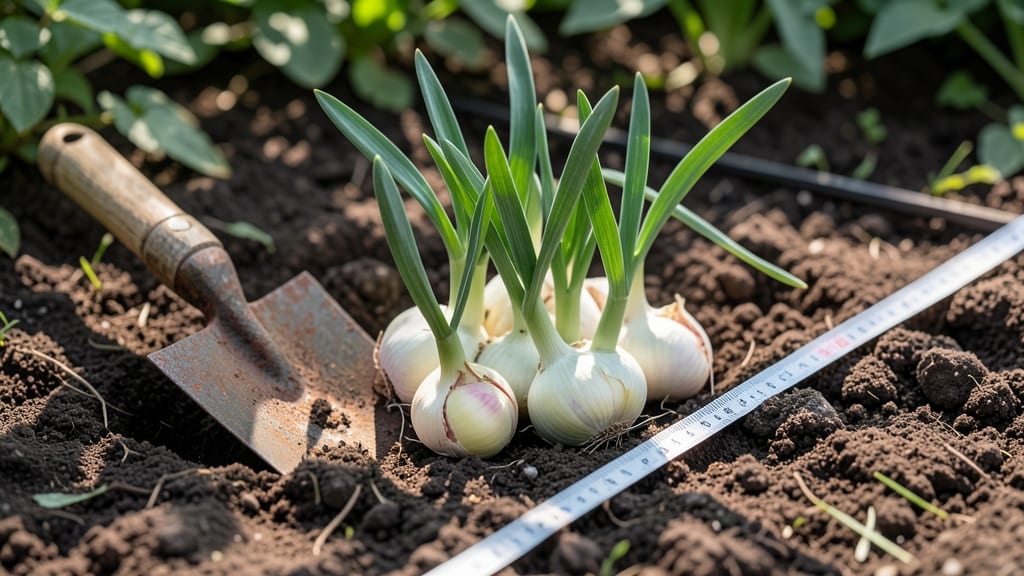
Spacing garlic in your garden with 4–6 inches between cloves is the unsung hero of a bountiful harvest — and the one mistake that turns plump bulbs into puny ones.
Picture this: You’ve prepped the soil, planted your cloves at the perfect time, and watered faithfully. Yet come harvest, your garlic bulbs are tiny, diseased, or worse—split apart.
The culprit? Overcrowding or spacing that’s too wide, both of which rob your plants of the air and nutrients they need to thrive.
Garlic 🧄 isn’t just about planting it; it’s about giving it room to grow. Too close, and you’ll battle mold and stunted bulbs. Too far apart, and you waste space on a crop that could be twice as productive.
Below, I’ll break down the exact math for hardneck vs. softneck varieties, how to adjust for your soil type, and why 6 inches is the magic number for most gardeners in Zone 6a.
Ready to turn your garlic patch from meager to magnificent? Let’s dive into the spacing secrets that’ll have your neighbors asking for cuttings.
Optimal garlic spacing by variety: hardneck vs softneck math
Garlic isn’t one-size-fits-all, and neither is its spacing. Hardneck varieties like Rocks and Porcelain need different math than softneck types like Silverskin or Artichoke. Why? Hardnecks grow taller scapes and larger bulbs, while softnecks prioritize storage life.
Get this wrong, and you’ll end up with stunted bulbs or fungal diseases from poor airflow. Let’s break down the exact measurements for both types—and how to adjust for raised beds.
First, understand the baseline rule: 4–6 inches between cloves is the starting point for most garlic. But hardnecks and softnecks diverge here. Hardnecks, with their longer stalks and bigger bulbs, need slightly more elbow room.
Softnecks, which store longer, can handle tighter quarters. Row spacing also shifts based on variety—hardnecks often need wider rows to prevent scape tangling. Let’s dive into the numbers.
For hardneck garlic, the 6-inch clove spacing and 12–18-inch row spacing create the perfect balance. Hardnecks like Porcelain and Rocks develop long scapes and large bulbs, so crowding them leads to stunted growth or broken stalks.
In raised beds, you can tighten clove spacing to 4 inches since the container limits root spread. Just ensure rows are 10–12 inches apart to avoid shading.
On the flip side, softneck varieties like Silverskin thrive with closer clove spacing (4–5 inches).
Their focus is on storage life, not scape production, so they tolerate tighter quarters. Row spacing of 8–12 inches works well for in-ground planting, but in raised beds, widen rows to 10 inches to prevent competition. Artichoke garlic, a softneck type, can even handle 3-inch clove spacing if you’re growing for braiding.
Here’s a pro tip: Elephant garlic—that giant softneck—demands extra room. Space cloves 8–10 inches apart and rows 18–24 inches apart. In raised beds, plant 2–3 cloves per hole to mimic their natural clustering.
These monsters need space to develop their massive bulbs, which can weigh over 1 pound each!
Why does this math matter? Airflow and nutrient access are everything. Too close, and you’ll see white rot or rust fungus from trapped moisture.
Too far, and bulbs split or stay small from competition. Hardnecks especially need airflow for their scape development, while softnecks rely on density for bulb uniformity. Test your soil’s drainage—if it’s heavy clay, widen spacing by 2 inches to prevent rot.
In raised beds, think of the space as a 3D puzzle. Since beds are shallower, roots compete more aggressively. For hardnecks, reduce clove spacing to 4 inches but increase row spacing to 12 inches.
For softnecks, keep cloves at 4–5 inches but space rows 10 inches apart. Mulch heavily with straw to retain moisture without smothering plants. And remember: pointy-end up is non-negotiable for all varieties!
One common mistake? Assuming all garlic is the same. I’ve seen gardeners
How to adjust garlic spacing for soil type and climate zones
Your garlic spacing needs a custom approach depending on whether your garden battles heavy clay or drains like sandy loam. The same 6-inch rule that works in dry climates can strangle your crop in humid zones.
Let’s dial in the perfect distance for your unique growing conditions to maximize those plump bulbs and minimize fungal diseases.
First, consider your soil type. Compacted clay soil requires wider spacing—think 8-12 inches between cloves—to prevent waterlogging and root rot. Meanwhile, sandy soil drains so quickly that tighter spacing (4-6 inches) works because roots won’t compete for moisture.
Rocky or stony soil? Increase spacing to 10-14 inches to give bulbs room to expand around obstacles.
🚨 WARNING: Overcrowding is the silent yield-killer ⚠️ Common spacing mistakes like planting too close (under 4 inches) lead to smaller bulbs, poor airflow, and disease outbreaks. In humid climates (zones 7-9), even standard spacing can invite white rot or rust fungus.
Wider rows (12-18 inches) improve circulation, while dry zones (3-6) can handle tighter grids (6 inches) thanks to natural drought resistance.
Climate zones demand their own tweaks. In cool, dry regions (like USDA Zone 4), space cloves 6 inches apart in rows 12 inches apart—this prevents moisture stress. But in hot, humid zones (like Zone 9), stretch that to 8 inches apart in rows 18 inches apart.
The extra space reduces foliar diseases and lets bulbs breathe.
For raised beds, adjust spacing based on bed depth. Shallow beds (6 inches deep) need tighter spacing (4-6 inches) to maximize root space, while deeper beds (12+ inches) can accommodate 8-inch spacing.
Always plant with the pointy end up—this ensures consistent growth direction, even when adjusting distances.
Pro tip: Use a spacing template made from wood or plastic to maintain consistency. Mark your rows with stakes or string to avoid guesswork. In windy areas, wider spacing (10+ inches) prevents plants from toppling over.
And if your soil is poorly draining, consider mounding rows slightly to improve airflow at the base.
Remember, garlic bulbs need room to swell underground. Overcrowding forces them to compete for nutrients, resulting in small, pungent cloves instead of the large, mild bulbs you’re after.
By tailoring your spacing to your soil type and climate zone, you’ll unlock the full potential of your garlic patch—no more patchy harvests, just consistent, high-quality bulbs year after year. 🌱