
Tools
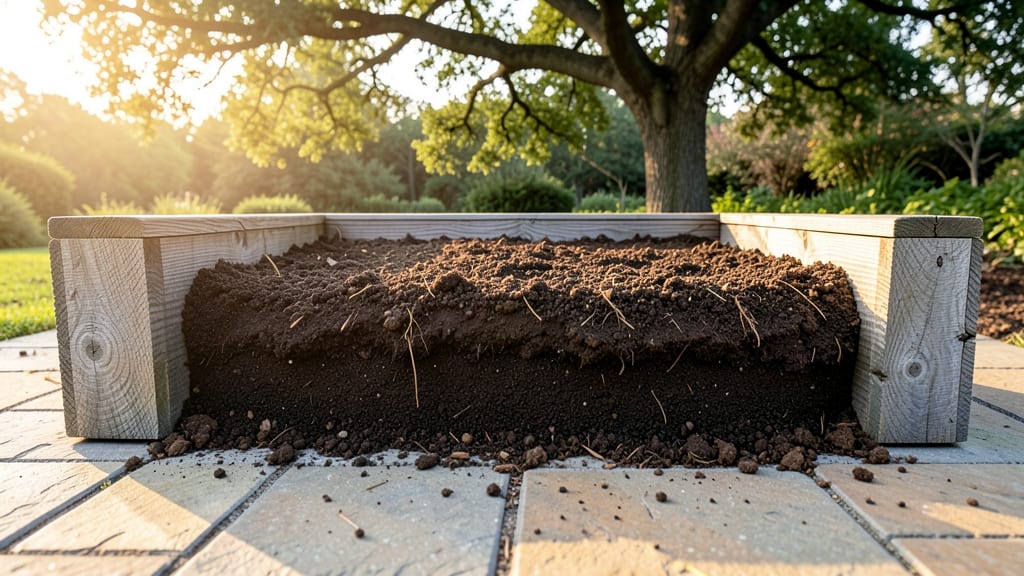
Getting your raised garden bed soil depth right is the difference between a thriving harvest and plants that just barely survive.
Picture this: you’ve spent hours building your perfect raised bed, only to watch your carrots and potatoes grow stunted because the soil wasn’t deep enough. The 12-inch rule isn’t just a suggestion—it’s the sweet spot for root space, drainage, and nutrient-rich layers that keep your plants happy and productive.
Too shallow, and your deep-rooted veggies like tomatoes or asparagus will struggle. Too deep, and you’re wasting space (and money) on soil that might not even get used.
Below, I’ll break down exactly how to layer your soil for maximum growth, adjust for different plants, and avoid the common mistakes that turn your raised bed into a science experiment gone wrong.
Ready to dig in? You’ll leave here knowing the exact soil depth for your garden, how to customize it for your plants, and why a few extra inches can mean the difference between a decent harvest and a bumper crop.
Why 12 inches of soil depth maximizes root growth & plant health
The 12-inch soil depth in raised garden beds isn’t arbitrary—it’s rooted in plant biology. Most vegetables, herbs, and flowers need at least 6-12 inches of loose, fertile soil to establish strong roots.
Shallower beds restrict growth, while deeper layers prevent issues like root binding and poor drainage. This depth ensures roots access moisture, nutrients, and oxygen while avoiding compaction.
Think of soil like a three-course meal for roots. The top 4-6 inches hold the most nutrients, the middle layer provides stability, and the bottom 6 inches act as a moisture reservoir.
Without this depth, plants struggle to develop deep taproots (like carrots or potatoes) or robust fibrous root systems (like tomatoes or basil).
Here’s why 12 inches is the gold standard for raised beds:
Poor drainage is a silent killer in shallow beds. Without 12 inches of soil, excess water pools at the bottom, suffocating roots and inviting fungal diseases.
Deep-rooted plants like asparagus or tomatoes need this space to thrive, while shallow-rooted herbs (like thyme) still benefit from the improved aeration and nutrient distribution.
Another critical factor is soil temperature regulation. Deeper beds insulate roots against extreme heat or cold. In summer, the lower layers stay cooler, while in winter, they retain warmth. This stability reduces transplant shock and extends the growing season for cool-season crops like lettuce or kale.
For root vegetables (carrots, beets, radishes), 12 inches ensures they grow straight and long without hitting hardpan or bed borders. Shallow beds force roots to grow sideways, resulting in forked or stunted produce.
Even leafy greens like spinach or swiss chard perform better with deeper soil because their roots can explore more volume for nutrients.
If you’re building a raised bed, aim for 12 inches minimum—but don’t stop there. For perennial plants (like fruit trees or rhubarb), consider extending to 18-24 inches to accommodate their long-term growth. The extra depth pays off in higher yields and longer plant lifespans.
Pro tip: Test your soil’s drainage rate by filling a container with soil and water, then timing how long it takes to drain. Ideal time? 2-4 hours. If it drains too fast, add compost; if it’s slow, incorporate perlite or sand. A well-layered 12-inch bed balances both perfectly.
Remember, healthy roots equal healthy plants. By giving your garden the right depth, you’re not just following a rule—you’re creating an environment where roots can breathe, water flows freely, and nutrients are accessible. That’s the secret to lush, productive gardens year after year. 🌱
How to adjust soil depth for different plants (vegetables vs. trees vs. herbs)
Not all plants need the same soil depth in your raised garden bed. While the 12-inch rule works for most vegetables, herbs and trees have unique requirements. For example, carrots and potatoes need deeper soil to grow their edible roots, while basil and thyme thrive in just 6 inches.
Understanding these differences ensures your plants get the perfect environment to flourish.
For vegetables, the general guideline is 12 inches of soil, but root crops like carrots or beets may need up to 18 inches. Meanwhile, herbs like parsley or chives are shallow-rooted and can do well with less.
Trees and shrubs, on the other hand, need even deeper soil—sometimes 24 inches or more—to establish strong root systems. Let’s break down the specifics so you can customize your raised bed for success.
| Plant Type | Ideal Soil Depth | Notes | Raised Bed Adjustment |
|---|---|---|---|
| Root Crops (Carrots, Potatoes, Beets) | 18-24 inches | Deep roots need space to grow | Use deeper beds or layer soil |
| Leafy Greens (Lettuce, Spinach, Kale) | 6-12 inches | Shallow roots, fast-growing | Standard 12-inch bed works |
| Herbs (Basil, Thyme, Parsley) | 6-10 inches | Mostly shallow-rooted | Add compost for fertility |
| Fruit Trees (Apple, Pear, Citrus) | 24-36 inches | Deep taproots for stability | Use tall beds or in-ground planting |
| Perennials (Asparagus, Rhubarb) | 12-18 inches | Long-lived, need deep soil | Amend soil with organic matter |
If you’re growing multiple plant types in one raised bed, consider dividing the space. For example, dedicate one side to deep-rooted vegetables like tomatoes and the other to shallow-rooted herbs.
This way, each plant gets the ideal soil depth without competing for resources. You can also use raised bed dividers or plant in rows to maximize space efficiently.
For deep-rooted plants like fruit trees or asparagus, a standard raised bed may not be enough. In these cases, opt for a taller raised bed (up to 3 feet) or plant them in the ground nearby.
If you’re committed to keeping them in a raised bed, layer the soil with a mix of compost, peat moss, and sand to improve drainage and aeration.
Don’t forget to test your soil before planting. A simple pH test will tell you if your soil is too acidic or alkaline, which can affect nutrient uptake. For most vegetables, aim for a pH between 6.0 and 7.0.
If your soil is too dense, mix in perlite or vermiculite to improve aeration and drainage. A little extra effort now will pay off with healthier, more productive plants.
Adjusting your raised garden bed soil depth based on plant type might seem like a lot of work, but it’s the key to a thriving garden.
Whether you’re growing carrots, basil, or fruit trees, giving each plant the right amount of root space ensures they grow strong and yield abundantly. Happy planting!