
Planting
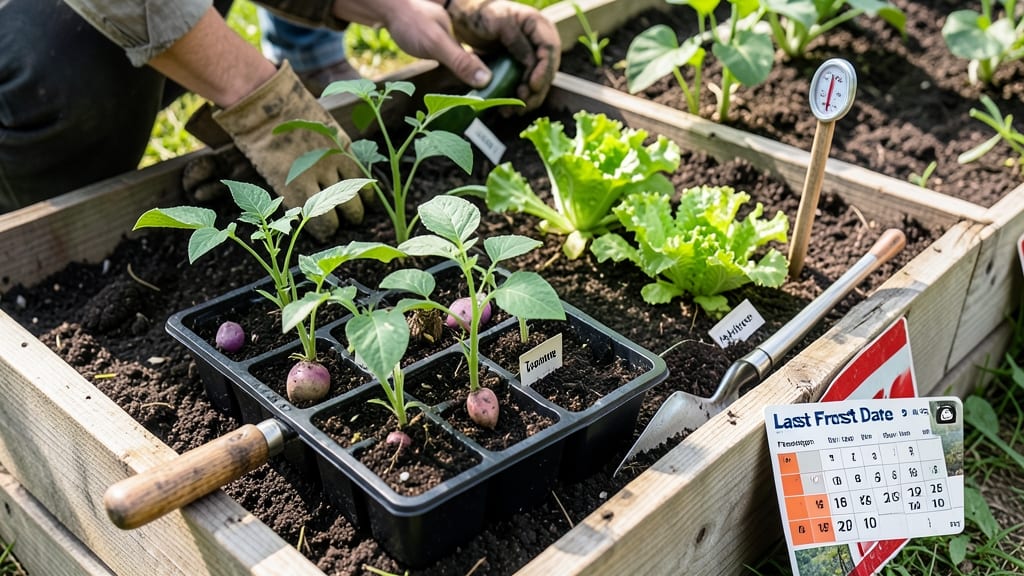
Planting a garden in New Brunswick means timing your 🌱 crops right—late April to mid-June for most warm-season plants, after the last frost.
New Brunswick’s unpredictable climate can make timing your garden planting tricky—but knowing the exact frost-free window for each plant type means the difference between a thriving harvest and wasted seeds.
With USDA Zone 5b conditions, you’ll want to start cool-season crops like peas and lettuce as early as March, while tomatoes and peppers need to wait until soil warms to 10°C (50°F) in late May or June.
Below, I break down the best planting schedule for New Brunswick’s top vegetables, frost protection tips, and how to adjust for early or late seasons.
New Brunswick’s frost dates by region: when to start planting cool vs warm-season crops
New Brunswick’s last frost dates vary dramatically by region, making it critical to know your local averages. Fredericton typically sees its final frost around May 15, while coastal areas like Saint John can be frost-free by May 1.
Rural areas often experience later frosts, sometimes as late as June 1. These differences mean warm-season crops like tomatoes and peppers need staggered planting windows depending on where you live.
To simplify planning, I’ve broken down the USDA Zone 5b (New Brunswick’s classification) and how it aligns with regional frost dates.
For example, cool-season crops like lettuce and peas can often start as early as late March in protected beds, while warm-season crops like cucumbers and beans should wait until after your area’s last frost. Understanding these timelines helps avoid the heartbreak of frost-damaged seedlings or missed harvests.
Pro Tip: Use a soil thermometer to confirm when temperatures consistently stay above 10°C (50°F)—this is your green light for warm-season planting. In Fredericton, this usually happens by late May, while Saint John gardeners can start earlier. Rural areas may need to wait until early June.
Here’s a quick reference for New Brunswick’s frost-free windows by region, including when to plant key crops like lettuce, peas, tomatoes, and peppers:
| Region | Last Frost Date | First Frost Date | Cool-Season Crops (Lettuce, Peas) | Warm-Season Crops (Tomatoes, Peppers) |
|---|---|---|---|---|
| Fredericton | Mid-May (May 15) | Mid-October (Oct 15) | Late March–Early June | Late May–Early June |
| Saint John | Early May (May 1) | Late September (Sep 30) | Late March–Early May | Early May–Mid-May |
| Moncton | Early May (May 5) | Late September (Sep 25) | Late March–Early May | Early May–Mid-May |
| Rural Areas | Late May (May 20–June 1) | Early October (Oct 10) | Early April–Late June | Late May–Early June |
*Dates are averages; always monitor local forecasts for adjustments.
For cool-season crops, like lettuce and peas, you can start seeds indoors in February and transplant outdoors as early as late March in Saint John or early April in rural areas.
These hardy plants tolerate light frosts, so don’t rush—soil temperature matters more than air temperature. I’ve had success with spinach and kale planted in March under frost cloth, even in Fredericton.
Warm-season crops like tomatoes and peppers are far more finicky. They need consistent warmth and won’t tolerate frost, so wait until after your region’s last frost date.
In Saint John, you can plant tomatoes by early May, but in Fredericton, I wait until late May to avoid surprise frosts. For extra safety, use black plastic mulch to warm the soil faster—this can shave 1–2 weeks off your planting window.
If you’re in a transition zone (like parts of the Fundy region), consider using row covers or cold frames to extend your growing season. I’ve successfully grown cucumbers and zucchini in early May with these tools, even when the forecast called for frost.
Just be prepared to remove covers if daytime temperatures exceed 25°C (77°F) to avoid overheating.
One common mistake I see is planting warm-season crops too early and then watching them wilt in a late frost. To avoid this, check the 10-day forecast before planting and have a backup plan—like staggered sowing or a greenhouse for seedlings.
In my garden, I always plant 3 sets of tomato seeds, two weeks apart, to ensure at least one batch survives unexpected cold snaps.
For fall planting, focus on cool-season crops like broccoli, carrots, and radishes. These can handle light frosts and even taste sweeter after a frost. In Fredericton
Best planting schedule for New Brunswick’s top 10 vegetables (with adjustments for early vs late seasons)
New Brunswick’s short growing season demands precision—plant too early, and frost zaps seedlings; too late, and you miss peak harvests. My top 10 high-yield crops (potatoes, tomatoes, zucchini, beans, lettuce, carrots, peas, cucumbers, peppers, and broccoli) thrive with month-by-month adjustments for early vs late starts.
For example, potatoes can go in as early as mid-April under row covers, while cucumbers need to wait until late May when soil warms.
Use row covers or cold frames to extend seasons by 2–4 weeks in spring or fall. For instance, spinach and kale can survive light frosts, while tomatoes and peppers need all summer’s warmth.
Below is my month-by-month planting guide tailored to New Brunswick’s USDA Zone 5b, with frost-free windows and pro tips for each crop.
🌱 Key Adjustments for New Brunswick:
- Early season (March–April): Start cold-hardy crops (potatoes, peas, spinach) indoors or under covers.
- Mid-season (May–June): Plant warm-season staples (tomatoes, peppers, cucumbers) after last frost (mid-May).
- Late season (July–August): Succession plant fast growers (beans, lettuce, radishes) for fall harvests.
- Fall (September): Extend harvests with row covers for broccoli, kale, and carrots.