
Watering
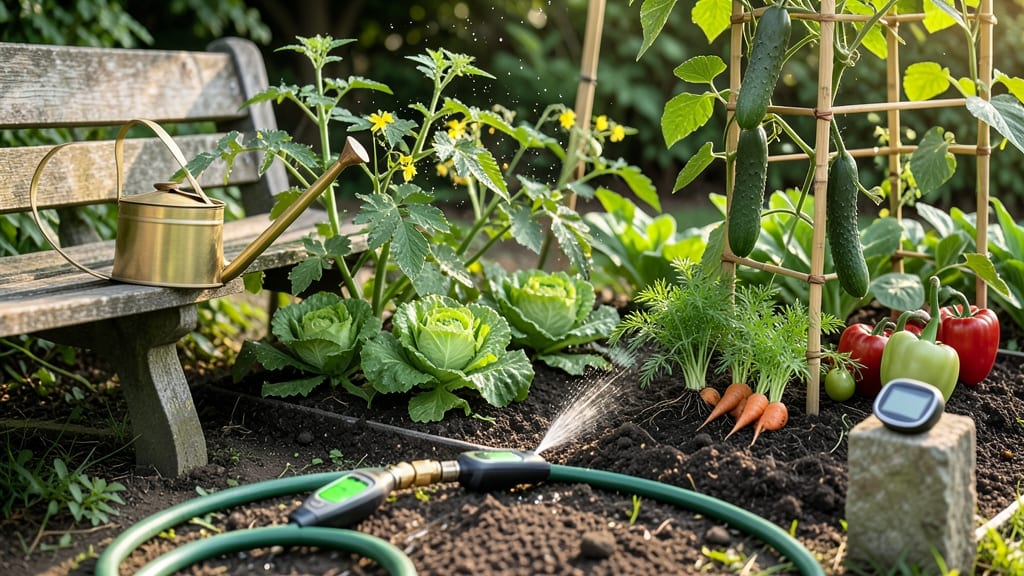
Watering your veg garden the right way keeps those 🥬 thriving—and skipping the science-backed schedule wastes time, effort, and even your harvest.
Overwatering or underwatering your vegetable garden can mean the difference between a thriving harvest and wasted effort—yet most gardeners guess instead of following science-backed schedules tailored to their plants.
Here’s the truth: leafy greens need frequent, shallow watering, while root crops like carrots or potatoes demand deep, infrequent soaks. Climate, soil type, and even mulch change the rules, so one-size-fits-all advice fails fast.
Below, I break down exactly how often to water by plant type, how to read your soil for clues, and when to adjust for heatwaves or drought—so you never over- or underdo it again.
Science-backed watering frequency by vegetable type (with soil depth guide)
Watering your vegetable garden isn't a one-size-fits-all task—each plant has unique root depth and moisture needs that determine how often you should water. For example, tomatoes with deep roots need consistent deep watering, while leafy greens prefer frequent shallow moisture.
Understanding these differences prevents wasted water and ensures a bountiful harvest.
Science shows that soil moisture at root depth is the key factor. Most vegetables thrive when the top 1-2 inches of soil stay moist, but deeper-rooted crops like carrots or squash need water reaching 6-12 inches down.
Let’s break down the watering frequency for your most common garden vegetables, tailored to their needs.
🌱 Pro Tip: Always water in the early morning (before 10 AM) to reduce evaporation and fungal risks. Avoid evening watering, which can leave foliage damp overnight.
For tomatoes and peppers, deep watering 2-3 times per week encourages strong root growth and prevents blossom end rot. These plants need 1-1.5 gallons of water per plant during hot weather. If your soil feels dry 2 inches down, it’s time to water again.
Leafy greens like lettuce and spinach have shallow roots, so they need frequent light watering—almost daily in hot climates. Overwatering here is just as harmful as underwatering; aim for moist but not soggy soil. A good rule is to water when the soil surface feels dry to the touch.
Root vegetables like carrots and radishes require consistent moisture to prevent cracking or woody textures. Water deeply every 2-4 days, ensuring the soil stays moist to a depth of 6-12 inches.
Use a soaker hose or drip irrigation to deliver water directly to the roots without disturbing the soil.
Adjust your watering schedule based on weather conditions. During hot, dry spells, increase frequency to daily deep watering for most vegetables. In cooler months, reduce to every 3-4 days.
Always check the soil before watering—stick your finger 1-2 inches deep; if it’s dry, it’s time to water.
Mulching with straw or wood chips can reduce watering needs by 30-50% by retaining moisture in the soil. Apply a 2-3 inch layer around plants (but keep it away from stems to prevent rot). This is especially helpful for container gardens, where soil dries out faster.
Signs of overwatering include yellowing leaves, mold growth, or wilting despite wet soil. Underwatering shows as droopy leaves, crispy edges, or soil pulling away from pot sides. Adjust your schedule based on these visual cues rather than sticking rigidly to a calendar.
💧 Remember: The goal is consistent moisture, not a set schedule. Pay attention to your plants’ signals and your soil’s condition—your garden will thank you with a healthier, more productive harvest.
How to tell when your veg garden needs water (beyond the calendar)
Your vegetable garden doesn’t follow a rigid watering calendar—it communicates its needs through subtle (and not-so-subtle) signs. Leaf wilting isn’t always a cry for water; sometimes it’s a warning of overwatering. The key is learning to read your plants’ language and adjusting on the fly.
I’ve spent years watching my tomatoes and peppers signal their moisture needs, and trust me, they’re chatty when you know how to listen.
Start by checking the soil texture—it’s the most reliable indicator. Stick your finger 1-2 inches deep; if it feels dry, it’s time to water. But if it’s soggy, you’ve overdone it. Plant weight also matters: healthy veggies feel firm, while thirsty ones droop like a deflated balloon.
Even the color of leaves shifts—yellowing edges often mean too much water, while crispy, curling leaves scream for hydration.
Watering Your Veg Garden: Pros and Cons
- Encourages deep root growth 🌱
- Reduces surface evaporation 💧
- Prevents shallow fungal risks 🍄
- Leads to root rot 🍅
- Wastes water and nutrients 💰
- Attracts pests like slugs 🐌
- Reduces fungal diseases 🍄
- Allows foliage to dry ☀️
- Encourages stronger roots 🌱
- Promotes blight and mildew 🍄
- Wastes water via evaporation 💧
- Weakens plant resilience 🌱
Tools like a moisture meter take the guesswork out of watering. For $20, you can buy one that reads soil moisture levels in seconds—no more digging your fingers into the dirt. I use mine to check my container gardens daily; they dry out faster than in-ground soil.
If the meter shows dry conditions at 2 inches deep, water immediately. For leafy greens like lettuce, keep the soil consistently moist but never waterlogged.
Don’t ignore the time of day either. Watering in the early morning (before 10 AM) gives roots time to absorb moisture while minimizing fungal risks. Avoid evening watering—wet leaves overnight invite blight.
I’ve learned this the hard way with my zucchini plants, which nearly died from powdery mildew after I switched to night watering during a humid summer.
Even the weight of your plants tells a story. Lift a few leaves—healthy ones feel sturdy, while thirsty ones flop like overcooked pasta. Root vegetables like carrots and beets need deep, infrequent watering to prevent splitting, while shallow-rooted herbs like basil prefer light, frequent drinks.
Pay attention to how your garden responds: if wilting happens by midday, you’re not watering deeply enough.
Adjust your schedule based on weather and season. During summer heatwaves, I water my garden every morning, while in cooler months, every other day suffices. Mulch helps retain moisture, but check the soil beneath it—mulch can fool you into thinking the roots are hydrated when they’re not.
Always dig past the mulch layer to assess true moisture levels.